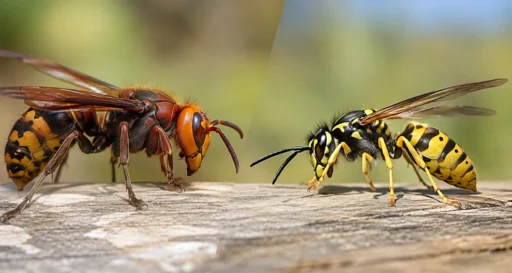
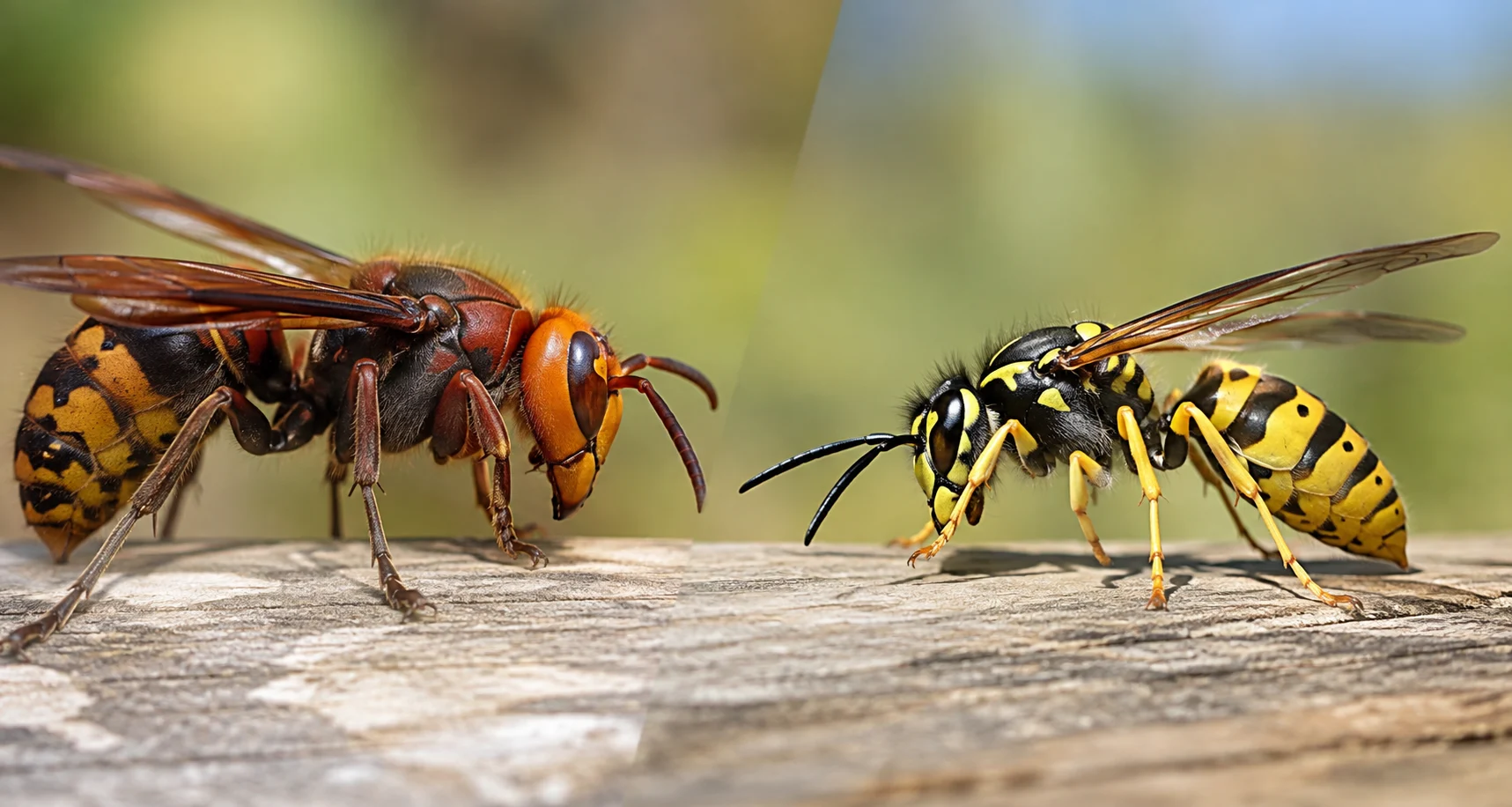
Nothing can be as frustrating as when you hear a loud buzzing noise right next to your ear during your quiet afternoon in the garden taking care of your heirlooms. It’s important to know how a Hornet vs. Wasp differs from one another if you want to maintain a safe backyard environment while at the same time keeping a healthy ecology. Although they belong to the same family of insects, hornets are just a more specific species of wasps which are generally bigger in size, have thick waistlines and special ways of building nests. Solera Gardens understands the importance of knowledge of backyard ecology to become a successful gardener.
How Can You Tell the Difference in a Hornet vs. Wasp?
It is fairly easy to distinguish between a hornet and a wasp when it comes to focusing on three major aspects: body form, coloring, and flight behavior. Although hornets belong to the species of wasps, there are many things that have made them unique and different from other insects of this type. With a careful look at these features, you will be able to determine what kind of an insect you are dealing with.
Taxonomic Background and Species
Understanding the taxonomic relationships among these animals is crucial. Both insect species have identical classifications – Hymenoptera as their order and Vespidae as their family. Horners, however, are very particular – there is just one genus of hornets, Vespa – and North America is only home to one species: the European hornet,Vespa crabro, which was introduced in the 19th century.
On the flipside, common wasps represent a huge family of creatures – they can range from paper wasps (Polistes spp.) to yellowjackets (Vespulaand Dolichovespula spp.)to numerous solo species like mud daubers, not to mention the large aerial yellowjacket wasp that everyone calls a bald-faced hornet (Dolichovespula maculata)but isn’t technically a hornet at all.
Body Shape and Size
The closest we get is the insect’s profile shape. Wasps are normally 0.5 – 1 inch long. They have the characteristic small waist between the thorax and abdomen, the body part called the petiole.
Being the largest of the wasps (typically one to two inches long) hornets are also recognizable for not having the constricted, thread-like waists of typical wasps. Their body is a much thicker, rounder, more “beefy” build from front to back than a regular wasp’s, and that makes them much more of a presence when they fly.
Coloration and Markings
Color patterns differ by region, however the fundamental differences are quite constant. Most yellowjackets, a common sort of wasp, have brilliant distinct stripes of neat yellow as well as black, as well as their bodies are smooth and also shining, with barely any kind of hair.
Hornets are generally darker as well as softer coloring. The European hornet is colored with mixed tones of red-brown, brownish, and drab yellow, whereas bald-faced hornets have striking white patterns on a black background.
Comparison of Key Characteristics
To help you quickly differentiate between these species during your daily garden walks, we have compiled their key features into a simple comparison table.
| Feature | Hornets (e.g., European Hornet) | Common Wasps (e.g., Paper Wasps, Yellowjackets) |
| Scientific Genus | Vespa | Polistes, Vespula, Dolichovespula |
| Average Size | 1 to 2 inches (2.5 to 5 cm) | 0.5 to 1 inch (1.2 to 2.5 cm) |
| Waist Shape | Broad, thick, and rounded | Very narrow, distinct “wasp waist” |
| Primary Colors | Reddish-brown, dull yellow, black, and white | Bright yellow, shiny black, deep brown, or rust |
| Nesting Style | Large, fully enclosed grey paper spheres | Open, uncovered paper combs or underground burrows |
| Defensive Radius | Large (typically highly protective near the nest) | Moderate to high (species-dependent) |
| Active Hours | Day and night (attracted to outdoor lights) | Strictly diurnal (active only during daylight) |
Understanding Nest Construction: Hornet Nest vs Wasp Nest
Another very reliable indicator of identifying this particular type of insect is simply to look for their nests. Know your Wasp nest vs Hornet nest, and you might save yourself from a very painful and unpleasant run-in with an extremely protective group of wasps while trimming back the shrubs or clearing out the garden shed.
Hornet Nest Structure
Hornet nests are completely enclosed and are often shaped like huge grey footballs or teardrops. To construct this papier-mache nest, the queen will gnaw on weather-beaten wood from fences, trees or outdoor decks and will combine the chewed-up bits with her saliva to make a firm pulp.
In late summer a nest can reach the size of a basketball and it will have a single hole at the base for an entrance and an exit. Nests are often hung in high branches, deep inside tree hollows and, less often, under large house eaves.
Wasp Nest Structure
Most wasps build entirely different homes for their kind, based on their particular genus. Paper wasp homes look like classic umbrella nests: They are small, open-fronted nests made of paper without a outer wrapping to keep you from seeing the brood cells. Paper wasps hang them under a ceiling of some kind (like your porch or deck ceiling or over your window) by a single strong silk strand.
Type Yellowjackets These wasps are found nesting underground. They construct a large paper-wrapped nest commonly under the ground. Some common spots for underground nests include under a rotten log or in a vacant rodent burrow. When you visit their site you will see a small hole on your lawn where the yellowjacket wasp is seen emerging and disappearing in the hole.
Solera Gardens Tip: Don’t cover yellowjacket nests that are in the ground with soil or rocks. Yellowjackets are tough and will burrow out another exit. The disturbance will also often provoke a fierce defensive swarm.
Are Hornets More Dangerous Than Wasps?
Seeing these insects around your property naturally has homeowners asking how safe they are and if they can be hurt. “Are hornets more dangerous than wasps? Well, that depends on your definition of danger.”
Venom Volume and Pain Levels
The Size Advantage Hornets have larger venom glands compared to wasps simply because of their size, meaning each sting delivers a higher dosage of venom. Hornet venom has a larger amount of acetylcholine, which in effect, directly causes mammalian skin’s receptors for pain to respond, making a hornet’s sting particularly painful.
A stinger, for the most part, is like wasps, they can sting several times as they have stingers with no barb; they do not sting and leave the stinger in their victim to be killed like a honey bee.
Colony Defense and Aggression
With regards to behavior, your standard yellow jacket has a far meaner temperament compared to a hornet. The yellow jacket will quite literally gang up and attack if you stumble upon one of their hidden underground nests, or disturb them whilst they are out looking for something sweet to sip on or find some delicious fallen fruit.
The hornet tends to be calmer whilst on its feeding ventures, but it is extremely territorial and defensive about the nest area. If you stray too close to the hive, which can be up to 10 feet out from the nest itself, they will react quickly and aggressively.
A Gardener’s Guide to Hornet and Wasp Identification
When gardening outdoors, having some familiarity with hornet and wasp identification skills is really useful for maintaining a happy, healthy growing season. Their behaviour as they fly amongst the garden beds can be a pretty reliable clue as to their identity.
Flight Characteristics
Even their flight pattern gives a way. Paper wasps drift lazily, flying slowly with their long hind legs dangling conspicuously behind them. They look awkward as they buzz near your rose climbing your trellis or patio containers.
European hornet-These flies powerfully and with surprising speed. Their hind legs are folded close to their bodies as they fly and their flight buzz has a deep low tone. You will easily hear European hornets above the high pitched whine of the smaller bees and wasps if you stand at your evening door or bed of flowers.
Foraging Preferences
Observing the bugs’ diet can provide identification cues. Both wasps and hornets look for animal protein to sustain their young larvae in the spring and summer months and you may witness the systematic foraging among foliage in search of soft-bodied insects.
They make a switch late in the summer and autumn months once the queen has stopped egg-laying, to consuming sugars. Yellow jackets and paper wasps will be swarming about dropped apples and ripening berries and you might find them interested in the soda pop can. The hornet will probably stick to peeling bark from tree branches and branches and of such plants as lilac or birch to feed on their juices; a process called girdling.
Why Wasps and Hornets Belong in a Healthy Garden Ecosystem
It may not be instinctive to encourage stinging creatures, but they are in fact good friends for organic gardeners and are part of good IPM.
Natural Pest Control
The efficient wasp and hornet are at the top of the food chain in the insect world and they do an outstanding job protecting gardens from thousands of pests weekly. They chase down leafhoppers, cabbage loopers, grasshoppers, tomato hornworms (the nastiest of them all, as I can attest to personally!) and aphids to name a few. By letting wasps and hornets roam your vegetable beds you should find you need less organic pest sprays or synthetic pesticides.
Minor Pollination Partners
While not having fluffy bodies of the bumblebee, wasps and hornets can help in pollination too. As they buzz about from one flower to another slurping up nectar for their energy they’ll pick up a few grains of pollen on their smooth legs and head and drop it off on the next blossom. These late bloomers especially like to sip from goldenrod (Solidago species) and asters to set seed for next year.
Common Mistakes Gardeners Make with Wasps and Hornets
Here’s what not to do, along with some practical, environment-friendly tips to control them:
- Mistake: Spraying every nest on sight.
- Solution: If a nest is located in an old oak tree, or tucked away in a forgotten corner of your yard, leave it to itself. The pests can provide your family with pest-control services for free for the whole summer and, the whole colony can die off from the cool fall air by the end of autumn.
- Mistake: Using broad-spectrum chemical sprays.
- Solution: Spraying not only killed insects, but also other important pollinators such as honey bees, lady bugs, and monarch butterflies. If you can, use manual trapping and take out locally only what needs it; if a nest is really a problem call a pest control company.
- Mistake: Leaving fallen fruit on the ground.
- Solution: Quickly clean up any dropped apples, pears and peaches from the home orchard. Rotting fruit is like an engraved invitation to foraging wasps hungry to raid the final harvest of your fruit.
Solera Gardens Tip: Prevent pest wasps and hornets from hanging out too close to your outdoor relaxation space with this clever companion planting technique: planting a cluster of strong-smelling herbs, such as spearmint, peppermint, and eucalyptus.
Frequently Asked Questions
Do hornets die in the winter?
Yep, for all intents and purposes, most of the colony meets a grisly demise in late fall. Only the recently mated queens endure this fate as she’ll hibernate inside hollowed-out logs, under the bark of old trees, or even safe in a warm attic, ready to lay her foundation to an entirely new nest of offspring when spring rolls around-meaning old nests are no longer viable real estate for this lone lady.
What should I do if a hornet gets in my house?
Don’t swat at the insect. Many hornets will sting defensively if swatted at. Rather, open your windows and doors, turn off the lights indoors, and if it is dark outside, turn on an outdoor light. Hornets are attracted to light, and it will generally find its own way outside on its own within minutes.
Are paper wasps beneficial to a vegetable garden?
Indeed, paper wasps make great gardening partners! Their days are spent in pursuit of the caterpillars, armyworms, and beetle larvae that dine on vegetable crops; effectively and naturally serving as pest-management patrols.
How can I keep wasps away from my patio without chemicals?
Hang an imitation nest made out of fake paper around your sitting area. Several species of wasp are aggressive about maintaining their turf and don’t nest within 20 feet of another so-called nest.
Do wasps and hornets sleep?
Although wasps do not “sleep” in the way mammals do, there are distinct times that they will rest. Most common wasps become motionless at night and sleep in their nest or within their nest. The European Hornet, however, is very active in the nighttime and will hunt for moths and beetles that are active at night.
Why do wasps get so aggressive in September and October?
During the autumn, the society of wasps will start to collapse as the larvae get older and no longer feed on the protein that it was previously receiving. The worker wasps no longer have the food that was produced by larvae of sugar (known as honeydew), and as the worker wasps actively hunt other sugars they become bolder.
Are there solitary wasps that do not build nests?
Some other beneficial garden wasps are indeed completely solitary. You’ll never see the cicada killer or the thread-waisted mud dauber at a shared colony or nest, so they are remarkably non-aggressive and unlikely to sting anyone but an unwary stomper.
Conclusion
Knowing the obvious differences between a Hornet and Wasp is also so helpful for a gardener. Both insects are large and painful when they sting and both demand respect for that fact alone, but they also both act as great garden security, expert pest control, and a symbiotic relationship is what our backyard should be. Knowing how to recognize the physical shapes of a Hornet and Wasp, their habits, behaviors, and nesting situations will go a long way in ensuring that you can both exist in a similar space. Go forth and make the best chemical-free garden you can because nature will work her own sweet will to help make it happen!
For pests associated with damp storage areas, see our guide to silverfish and moisture control.
If you find ant trails as well, use our household ant identification guide to investigate the source.