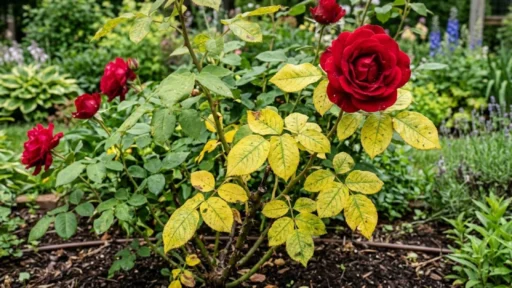
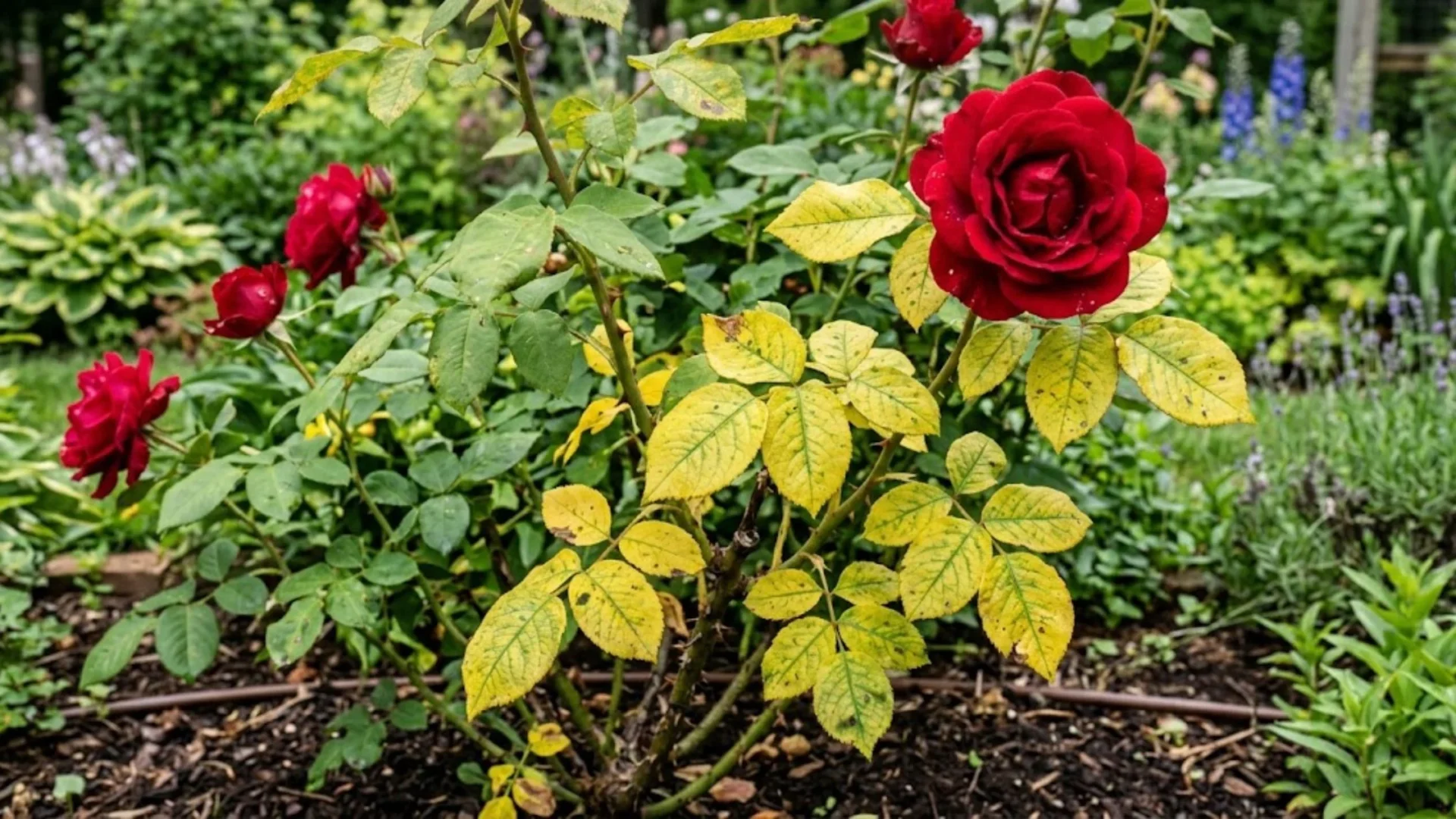
Red rose leaves usually turn yellow for one of five reasons: watering problems (most often too much water or poor drainage), nutrient deficiency (especially nitrogen, iron or magnesium), fungal disease such as black spot, pests like spider mites, or stress from heat, shade or recent planting. Some yellowing is also completely normal, such as older lower leaves dropping or fall leaf drop. Here at Solera Garden, we’ll help you read the clues your rose is giving you, so you can fix the actual cause instead of guessing, and keep yellow leaves on roses from coming back.
Start here: diagnose by where and how the leaves are yellowing
The fastest way to identify the cause is to look at which leaves are yellow and what pattern the yellowing makes. Use this table before you change anything.
| What you see | Most likely cause | Quick check |
|---|---|---|
| Yellow leaves with black or dark purple spots, often with a yellow ring, then dropping | Black spot (fungal disease) | Spots have fringed or feathery edges; often starts on lower leaves |
| Older, lower leaves turning evenly pale yellow, plant growing slowly | Nitrogen deficiency | New growth is small and pale too; plant hasn’t been fed this season |
| Young, new leaves yellow with green veins | Iron chlorosis, often linked to high soil pH | Test soil pH; alkaline soil locks up iron |
| Older leaves yellow between veins, sometimes in a V-shape from the base | Magnesium deficiency | Confirm with a soil test before treating |
| Yellow leaves, soggy soil, leaves may look limp | Overwatering or poor drainage | Soil is wet 2–3 inches down days after watering |
| Yellow, crispy leaves, dry soil, wilting | Underwatering or drought stress | Soil is dry several inches down |
| Fine yellow speckling (stippling), dusty look, fine webbing under leaves | Spider mites | Tap a leaf over white paper and look for tiny moving specks |
| Only the innermost or lowest leaves yellowing on a healthy plant | Shade or natural aging | New growth looks green and healthy |
| Yellowing in fall across the plant | Normal seasonal leaf drop | Happens as days shorten and temperatures fall |
| Sudden yellowing after planting or moving the rose | Transplant shock | New growth usually appears within a few weeks |
Tip: Turn leaves over and look at both sides. Many red rose plant problems, especially pests, show up on the underside first.
Cause 1: Overwatering or poor drainage
Overwatering is one of the most common reasons rose leaves turn yellow. When soil stays waterlogged, roots can’t get enough oxygen and stop taking up nutrients properly, even if those nutrients are present in the soil.
How to fix it:
- Stop watering until the top 2–3 inches of soil feel dry.
- Check that water isn’t pooling around the base after rain or watering.
- Switch to deep watering once or twice a week instead of frequent light watering.
- If the soil is heavy clay that stays wet, work in organic matter or consider a raised bed.
Overwatering and underwatering can look similar, since both cause yellowing and wilting. Always check the soil before you respond. Our guide to common beginner gardening mistakes explains how to tell the two apart.
Cause 2: Underwatering and heat stress
When a rose doesn’t get enough water, it sheds leaves to reduce water loss. Lower leaves often yellow and crisp first. Heat waves make this worse, especially for roses in containers or sandy soil.
How to fix it:
- Water deeply at the base so moisture reaches the root zone, not just the surface.
- Add 2–3 inches of mulch to hold moisture and keep roots cooler. Keep it a few inches away from the canes. See how to mulch a garden properly for the best materials.
- In very hot climates, a little afternoon shade can reduce stress, and it also helps protect dark red petals from scorching.
Cause 3: Nutrient deficiencies
Roses are heavy feeders, and nutrient shortages often show up first as yellow leaves. The pattern tells you which nutrient is likely involved.
Nitrogen deficiency
What it looks like: older, lower leaves turn evenly pale green to yellow, and the whole plant grows slowly with smaller leaves.
How to fix it: feed with a balanced rose fertilizer according to the label, starting when new spring growth appears. Avoid overfeeding. Too much nitrogen gives you lush leaves at the expense of blooms, and excess fertilizer can burn roots.
Iron chlorosis
What it looks like: the newest leaves turn yellow while their veins stay green.
Why it happens: iron is often present in the soil but becomes unavailable to roots when soil pH is too high (alkaline). Roses generally prefer slightly acidic soil, around pH 6.0–6.5.
How to fix it: test your soil pH first. If it’s high, gradually lower it with soil amendments and add organic matter. A chelated iron product can give a short-term improvement while you correct the pH.
Magnesium deficiency
What it looks like: older leaves yellow between the veins, sometimes leaving a green V-shape near the leaf base.
How to fix it: confirm with a soil test before adding magnesium. Epsom salt is a common remedy, but it only helps if your soil is actually low in magnesium. Adding it when you don’t need to can upset the balance of other nutrients.
The key point for all three: guessing at nutrients often makes problems worse. A soil test tells you exactly what’s missing. Our guide to testing and preparing your garden soil walks you through it.
Cause 4: Black spot and other fungal diseases
Black spot is a fungal disease that’s especially common on roses. It causes dark spots with fringed edges, the surrounding leaf turns yellow, and infected leaves drop early. Over a season, it can strip a rose bush of most of its leaves and weaken it.
How to fix it:
- Remove infected leaves from the plant and pick up fallen leaves from the ground. Bin them rather than composting them.
- Water at the base in the morning so the leaves stay dry. Wet leaves, especially overnight, help the fungus spread.
- Improve airflow by pruning crowded, crossing or inward-growing canes.
- Give the rose full sun, ideally including morning sun to dry dew quickly.
- Use a fungicide labeled for black spot if the problem keeps returning. Follow the label exactly, and start early in the season, since fungicides prevent new infections better than they cure existing ones.
- Choose disease-resistant varieties when you plant or replace roses. Our guide to 15 types of roses for your garden can help you compare rose classes.
Cause 5: Spider mites and other pests
Spider mites are tiny pests that feed on the undersides of leaves, especially in hot, dry weather. Leaves develop fine yellow speckling, look dull or dusty, and eventually turn yellow and drop. In heavy infestations you may see fine webbing.
How to fix it:
- Spray the undersides of leaves with a strong stream of water to knock mites off, repeating every few days.
- Keep the rose well-watered, since drought-stressed plants are more vulnerable.
- If the problem continues, use an insecticidal soap or horticultural oil labeled for roses, following label directions and avoiding application in hot midday sun.
When yellow leaves are normal
Not every yellow leaf is a problem. You usually don’t need to act when:
- A few old, lower leaves turn yellow and drop while new growth is green and healthy
- Inner leaves in deep shade under the canopy yellow and fall
- The whole plant yellows in fall as it prepares for dormancy
- A recently planted rose drops some leaves while it settles in
Simply remove the fallen leaves to keep the area clean.
Can yellow rose leaves turn green again?
Usually not. Once a leaf has turned fully yellow, it’s unlikely to recover, and the rose will often drop it. That’s normal. Judge whether your fix is working by the new growth: healthy, green new leaves over the next few weeks mean you’ve addressed the cause.
Rose leaf care to prevent yellowing
Good rose leaf care prevents most yellowing before it starts:
- Sun: give your rose at least 6 hours of direct sun a day.
- Water: water deeply and at the base, ideally in the morning; let the top few inches of soil dry between waterings.
- Soil: keep soil well-drained and rich in organic matter, with a pH around 6.0–6.5.
- Feeding: feed during active growth according to the label, and stop feeding several weeks before your first fall frost.
- Airflow and hygiene: prune for open growth and clear fallen leaves regularly.
- Weekly check: look at both sides of a few leaves each week so you catch problems early.
For the complete care routine, see our guide on how to grow red roses at home.
Frequently asked questions
Should I remove yellow leaves from my rose bush?
Yes, especially if they have spots, since removing them reduces the spread of disease. Healthy-looking yellow leaves that are about to drop can be removed too.
Can too much fertilizer cause yellow leaves?
Yes. Excess fertilizer can burn roots, which leads to yellowing or browning leaf edges. Water the bed deeply to help flush excess salts, and follow label rates in future.
Why are only the bottom leaves of my rose turning yellow?
Common causes are natural aging, shade from the plant’s own canopy, nitrogen deficiency, or early black spot. Look for spots first, then consider feeding if the plant is growing slowly.
Your next step
Today, check three things: the pattern on the yellow leaves, the soil moisture 2–3 inches down, and the undersides of a few leaves. Match what you find to the diagnosis table above and fix that one cause first. If you suspect a nutrient problem, test your soil before adding anything. Then watch the new growth over the next few weeks to confirm you’ve solved it.