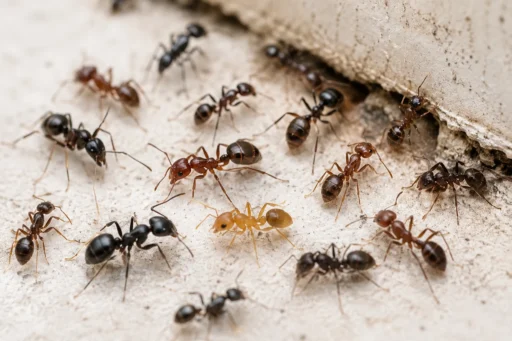
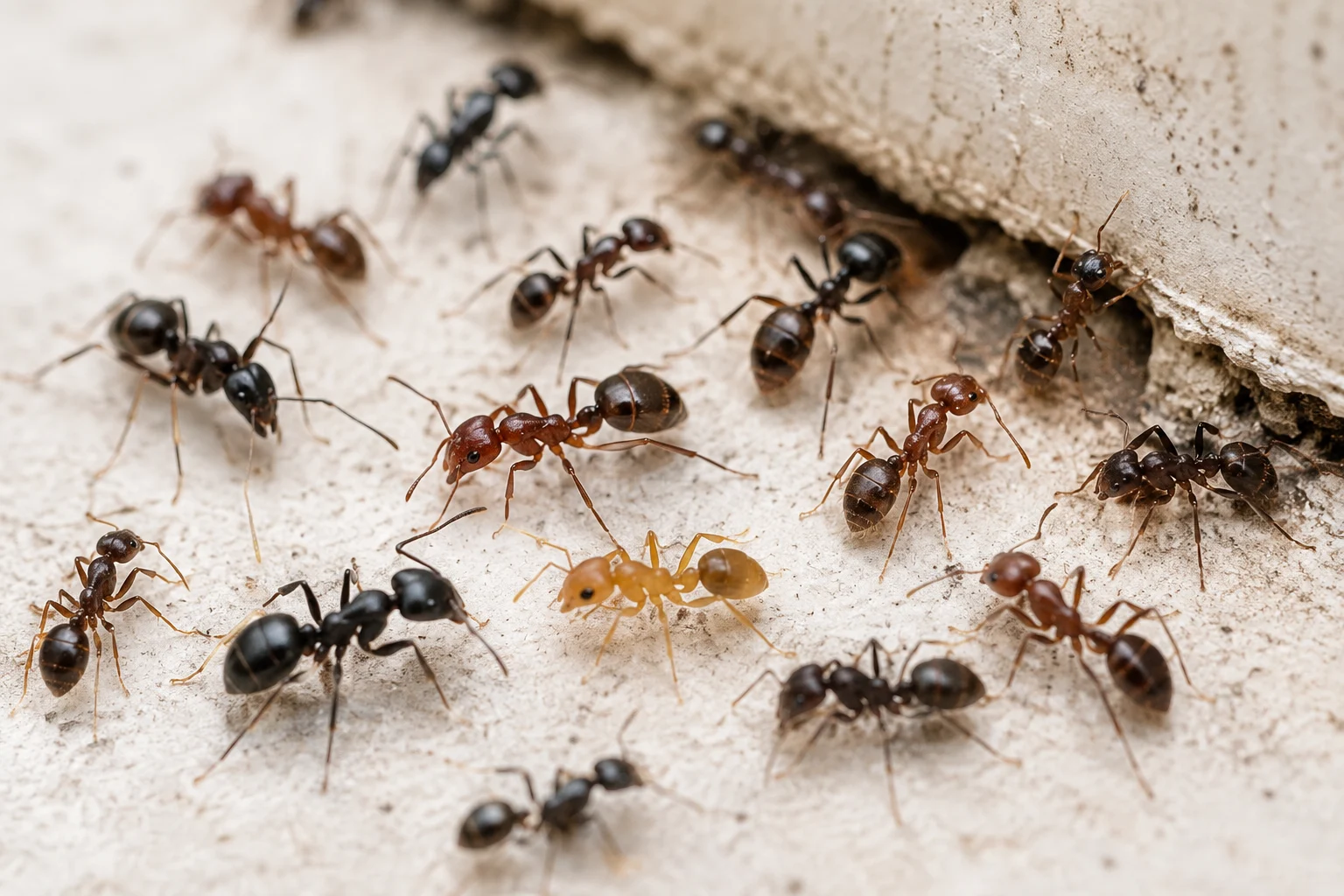
A situation where you spot an ant trail crossing through your kitchen counter or even going through your garden bed is something every gardener comes across at some point in time. However, one thing that is most important in this case is to identify what types of ant you are dealing with because each of these ants has a different nest location, food source, and ways of eliminating them. This is because if you misidentify the ant, then you would be wasting many weeks of your life on the wrong strategies. This article teaches you how to spot 10 common ants found at home and in gardens.
Are All Ants Bad for Your Garden?
Types of ants are notorious for all the wrong reasons, but things are not always like that. There are a lot of beneficial ants in the garden who will work on soil turning, will hasten the process of decomposition, and will spread seeds along the way. There are some ants that prey on soft insects, including aphid eggs and small caterpillars.
But then comes the situation where these ants get into your house, damage wooden structures, sting both you and animals, and take care of aphids that eat your plants. You know what actions you will have to undertake depending on the type of ants. It might be aggressive, careful, or nonchalant.
Prior to doing anything: it will depend on your geographical location, climate, soil composition, and colony sizes. Ants in the garden will leave on their own.
Quick Identification Table
| Ant Species | Size | Color | Signature Trait | Risk Level |
| Odorous House Ant | 1/8 in | Dark brown/black | Rotten coconut smell when crushed | Low |
| Carpenter Ant | 1/4 – 1/2 in | Black or red-black | Excavates wood galleries | High (structural) |
| Fire Ant | 1/8 – 3/8 in | Reddish-brown | Painful, venomous sting | High (health) |
| Pavement Ant | 1/8 in | Brown to black | Mounds in pavement cracks | Low |
| Pharaoh Ant | 1/16 in | Pale yellow/red | Spreads pathogens; hard to control | High (health) |
| Argentine Ant | 1/16 – 1/4 in | Light to dark brown | Massive supercolonies | Moderate |
| Crazy Ant | 1/16 – 1/8 in | Dark brown/gray | Erratic, jerky movement | Moderate |
| Ghost Ant | 1/16 in | Pale/translucent legs | Nearly invisible | Low to Moderate |
| Thief/Grease Ant | 1/16 in | Yellow to light brown | Attracted to grease and meat | Low |
| Field Ant | 1/4 – 3/8 in | Black, brown, or red | Eyes on top of head | Low |
10 Common Types of Ants to Know
1. Odorous House Ant (Tapinoma sessile)
Of all ant species within America, the odorous house ant is certainly the most common in households, earning its name from the distinct smell of a decaying coconut that it emits upon crushing. Workers have a consistent length of roughly 1/8 inches with coloration varying from dark brown to black. They are extremely persistent in their hunt and sweet things are always on top of their preferences list.
These ants may nest in any number of different spots, from spaces between the walls, beneath bathroom tiles, around leakages in the pipes, to mulches within the garden and even potted plants. These nests may comprise a maximum of 100,000 workers and several queens. This is why treating the path with spraying alone does not solve the issue.
How to get rid of odorous house ants: Focus on attacking the nest, rather than just the trail. Bait which can be carried by the workers back to the colony proves much more effective than any type of surface spray. Outside, find the source of the trail and treat the nest with an outdoor ant control product. Inside, locate and place bait where ants are foraging.
Solera Gardens Tip: Odorous house ants often move indoors after heavy rain, when their outdoor nests flood. If you notice sudden indoor activity following wet weather, check for exterior gaps around foundation walls, utility pipes, and window frames, and seal them with weatherproof caulk before the next storm.
2. Carpenter Ant (Camponotus spp.)
Carpenter ants are types of large ants that measure up to 1/4 inch to 1/2 inch in size. The most common types of carpenter ants that live in America are usually black in color, but there are other types that have a red color. Carpenter ants do not eat wood, but they bore smooth tunnels in the moist wood.
In case you see these kinds of ants in your surroundings, then you have to fix the moisture issue regardless of whether there is any problem with the ants or not. Winged ants, called swarmers, appear during the spring season and look like termites.
How to get rid of carpenter ants: Identify and eliminate any moisture source before anything else. Get rid of rotting tree stumps, piles of wood close to your home, and any dead tree limbs. The use of bait works best on small colonies of ants.
Common Mistake: Many gardeners spray the visible trail of carpenter ants and consider the job done. Because these ants can establish satellite colonies deep within wall cavities, surface treatments rarely reach the queens, and the colony rebounds within weeks.
3. Red Imported Fire Ant (Solenopsis invicta)
The fire ant is one of the most hostile and medically important native ants in North America. These pests come from South America, and currently, they are well-established in the southern and south-western parts of the United States mainly from North Carolina to California. The worker fire ant ranges in size between 1/8 and 3/8 inches and is reddish-brown in color. This pest builds its nest in the form of a domed earthen mound, without having any entrance hole in the middle.
The sting injects toxins that lead to immediate burning pain along with formation of red bumps. In case of individuals who are allergic to venom, the sting leads to potentially fatal anaphylaxis. The insects sting continuously when threatened. Fire ants are notorious for protecting aphids in gardens and also damage the roots of plants by nesting near shrubs.
How to get rid of fire ants: Two-step method is recommended. Bait should be broadcast throughout the lawn first, giving time for foragers to take it back to the queen. The mounds should then be treated separately using contact insecticides. It is important not to touch the mounds without proper protection.
Solera Gardens Tip: Boiling water should never be poured on fire ant mounds located in areas where there is already plant life growing. This heat will kill the soil microbes and could hurt plant roots. Boiling water can only be used in areas like bare soil and driveways.
4. Pavement Ant (Tetramorium caespitum and Tetramorium tsushimae)
Pavement ants are common ants found in many urban places of America. These are small insects with a slow rate of movement and are either brown or black in color while the legs and antennae are light-colored. Ants create their nests under sidewalks, driveways, patios, and concrete pavements, creating small mounds of sand by pushing soil particles upwards with the help of insects. They are known for a diverse feeding pattern as they feed on sugars, proteins, greases, and plants.
In case of houses, these insects are known to be opportunistic feeders instead of being considered as pests as they enter the house through foundation cracks looking for food. But when out in the open, the pavement ants dig holes thus causing soil displacement.
How to get rid of pavement ants: Seal cracks and openings where pipes come through the seal. Bait made into a gel or granules placed close to areas where foraging takes place and in the foundation is very effective. Do not leave crumbs on the kitchen floor.
5. Pharaoh Ant (Monomorium pharaonis)
Pharaoh ants are very small (1/16 inch), colored pale yellow to light reddish-brown, and are known to be among the toughest household ants to eliminate. Pharaoh ant colonies develop huge networks consisting of many nests and several queens located across the entire structure. In cases where the colonies come under the threat of being eliminated by sprays, they separate into different groups, an act referred to as budding.
In hospitals, pharaoh ants pose a significant risk to public health since they are capable of transmitting disease-causing organisms such as Salmonella and Streptococcus.
How to get rid of pharaoh ants: The only way it can be done is through baiting. Do not employ sprays since it makes budding worse. Use protein and sugar bait that works slow and place them at various locations along the path of the ants. It will require patience since it can take weeks for the bait to eliminate the colony of ants.
6. Argentine Ant (Linepithema humile)
The invasive bugs originate in South America and currently cause major ecological harm in the environment. The bugs are tiny in size (the range from 1/16 to 1/4 inches), medium brown in color, and fall under what is known as supercolonies. A supercolony is an enormous colony that could cover an entire city block and is made up of many queens and millions of workers.
They dominate any environment that they survive in by getting rid of all the native ant species, thus altering the whole ecosystem. They nurture their aphids and soft scale insects in the garden, thus making the pest problem worse. The bugs are mainly found in the southern and coastal parts of the United States with California being an exception.
How to get rid of Argentine ants: Because of their colony size, elimination is rarely complete. Targeted bait applications along foraging trails, combined with eliminating moisture sources and removing mulch from direct contact with the house foundation, can significantly reduce pressure. Maintaining a mulch-free zone of at least 12 inches around your foundation is highly recommended in Argentine ant territory.
7. Tawny Crazy Ant (Nylanderia fulva)
They are referred to as crazy ants because of the random and rapid movements of the worker ants in their search for food. They differ from other types of ants in that they do not use trails in their search for food, hence making them difficult to trace. They have a dark brown to black body with a little of grey in their body of 1/16 and 1/8 inches. They form colonies that may even be very big.
What sets them apart is the fact that they can affect electronic gadgets like air conditioners and junction boxes.
How to get rid of crazy ants: Seek the services of a pest management expert when there is a heavy infestation. Get rid of anything that could provide shelter outside the house like debris, leaf piles, woodpiles, and other forms of clutter.
8. Ghost Ant (Tapinoma melanocephalum)
The ghost ant is aptly named owing to the translucent appearance of their abdomen and legs that make it hard for one to spot them in light colored surfaces. The worker ants are extremely tiny (1/16 inch long), have a black head and thorax. Ghost ants require moist environments to survive, and therefore they are commonly found in Florida and Hawaii, but occasionally, in heated buildings in the north.
The ghost ant, when indoors, feeds mostly on sugary foodstuffs and usually nests in walls, potting soil and the soil at the base of potted plants. They have a coconut scent whenever they are crushed similar to the odorous house ants.
How to get rid of ghost ants: Ant lure in sweet form proves to be highly efficient. As it has been mentioned earlier that ghost ants tend to hitchhike inside by using infested plants, one should check for new indoor plants or pot herbs before taking them indoors.
Solera Gardens Tip: Another one of the factors that cause ants to be found in plants is the ghost ants. Shake your plant slightly while transferring it to another pot and then search inside the soil. Put the pot of your plant in water for 20 minutes to make the ants come out of the soil.
9. Thief Ant / Grease Ant (Solenopsis molesta)
From their names one can deduce that thief ants have a very clever approach to harassing people since they create tiny colonies which live near the colonies of other ants and steal their larvae and food sources. Thief ants fall into the category of ants that are known as the smallest pests inside homes due to their size of 1/16 inch in length and shiny light yellow to brown in color.
Unlike many indoor ants, who prefer sugary foods, thief ants like greasy and protein filled food. This kind of ants can be usually found in kitchen areas and garbage disposers. Thief ants nest in soil, rocks and rotting wood.
How to get rid of thief ants: Standard sweet baits can be ineffective. Bait should either have high protein or high fat content, or should be mixed with some peanut butter and vegetable oil. Kitchen sanitation is extremely important for successful trapping.
10. Field Ant (Formica spp.)
Like the carpenter ants, the field ants have common physical features such as their size and coloration which is either black, brown, red or bicolored. Nevertheless, field ants are distinguished by the positioning of their eyes; this is because the field ants have eyes positioned higher on their body than those of carpenter ants. Workers range in size from 1/4 to 3/8 inches long.
Field ants are mainly outdoor pests since they construct big nest mounds in lawn areas, garden beds as well as the bottom parts of trees. They hardly infest homes. They do not offer any threats to the structures of the house but are still capable of causing cosmetic damage through building nest mounds in the turf as well as their ability to sting when threatened. Similar to Argentine ants, some kinds of field ants tend to aphids in the gardens.
How to get rid of field ants: Each individual mound should be treated with insecticides, which are to be marked. In the case of lawn mounds, the mound is drenched using the suitable insecticide. By ensuring the reduction of the number of aphids on other plants, a food source for the aphids will be eliminated.
Ant Prevention Tips That Actually Work
Once you have addressed an active ant infestation, long-term prevention is about denying ants the three things they always seek: food, water, and shelter.
Eliminate food sources:
- Seal the storage containers for pantry items, even those meant for the pets.
- Clear off the countertops, stove top, and floors in order to remove all traces of food.
- Empty the garbage cans both indoors and outdoors on a regular basis.
- Rinse the food containers before putting them in the recycling cans.
Fix moisture problems:
- Fix leaking pipes beneath the sink.
- Make sure the rain gutters channel the water flow from the foundation of the building.
- Take care of any water pools that you find around your home.
- Improve ventilation in the crawl spaces and attics.
Seal entry points:
- Seal any openings in windows, doors, utility pipes, and cracks in the foundations.
- Fit door sweeps on all external doors.
- Trim the branches and shrubs to prevent any contact with your building’s exteriors since ants use them as entry points.
Garden-specific ant prevention tips:
- It is always imperative to maintain the mulch at least one foot away from the foundation of the house.
- It is important to ensure that you do not overwater the plants in your garden since water filled soil will attract nesting in these regions.
- Use proper control measures for aphids or alternatively the predators of the aphids like lady beetles to prevent the ants from feeding on them.
- Plant ant resistant plants like mint, lavender, tansy, and basil near doorways and entrance points to the garden.
Natural Remedies Worth Trying
For minor ant activity or as a complement to bait treatment, several natural approaches can help disrupt ant trails and reduce foraging pressure around your home and garden.
Diatomaceous earth (food-grade): It is supposed to be spread on the plant beds, on the walls and at the entrances. The particles of silica dioxide affect the body of the ant leading to dehydration. The spreading process should take place during the rainy season.
White vinegar spray: A mixture of water and white vinegar in the proportion of 1:1 is used where the ants walk. It is one of the best methods of controlling the ants till the bait becomes effective.
Essential oils: There are some oils which are essential for repelling the ants, including peppermint, tea tree and eucalyptus oils. They are diluted with water and are then sprayed at the entrance areas. The tea tree oil is irritating to cats.
Boiling water: When dealing with nests that have been created outside and in bare ground or concrete cracks, you should apply boiling water directly to the nest area. This method is very useful for shallow nests and smaller colonies. Boiling water should not be applied near vegetation.
Borax bait (DIY): Add 1 part borax to 3 parts granulated sugar and a small quantity of water to make paste. Sugar is used to attract the pests; the borax will be collected by the pests and will affect the whole colony. This should be kept out of reach of children and pets since borax is poisonous..
Important: Natural remedies work best for minor, localized ant activity. Established indoor infestations, carpenter ant colonies in structural wood, fire ant mounds, or pharaoh ant networks should be handled with targeted bait products or by a licensed pest control professional.
When to Call a Professional
Most household ant problems respond well to thorough identification, targeted bait, and the prevention steps above. However, there are situations where professional intervention is the smarter choice:
- Indoor carpenter ants particularly if there is any presence of frass (wood shavings).
- Fire ant colonies close to the areas where children play or any other place where the nest could be disturbed by people or animals.
- Pharaoh ants in any building because of their potentiality for disease transmission and possibility of worsening the situation by using sprays.
- Ant infestation that has lasted for four to six weeks after identifying the species and using baits.
- Holes in the structure and hollow wood in areas where ants have been spotted.
A licensed pest management professional can accurately identify the species, assess the scope of the infestation, and apply targeted treatments that are both more effective and less disruptive than broad-spectrum sprays.
Frequently Asked Questions
What is the most common ant found in homes?
The odorous house ant (Tapinoma sessile) is widely considered the most common household ant across the United States. It is recognized by its small size (about 1/8 inch), dark brown to black color, and the distinctive rotten-coconut odor it releases when crushed.
How do I know if I have carpenter ants or termites?
The features that distinguish ants are their pinched waist, elbowed antennae, and wings which are not of the same length. On the other hand, the distinguishing features of termites include their broad and straight waist, beaded antennae, and wings of the same length. Ants create galleries which are smooth and clean and at times may remove frass from the galleries. The termites eat wood and leave mud tubes behind.
Why do ants suddenly appear in large numbers?
An abrupt rise in the activity of ants is usually caused by changes in any of the following three factors: food availability, weather or nesting location. The rain may cause the outdoor nest of ants to get soaked, hence moving indoors. Ants usually seek out water during hot and dry weather.
Are ants beneficial in the garden?
Yes, but in limited quantities. Ants are associated with soil aeration, decomposition of organic matter, seed dispersal, and consumption of some pests. Nevertheless, there are instances where ant species are known to affect crops, property, or even people due to their stinging behavior or because they feed and defend honeydew producers.
Do ant colonies die in winter?
Very few ants die in winters in temperate regions. Rather, they are inactive and enter a sort of hibernating condition, going deep under the soil below the frost line. As spring arrives and the soil gets warm, they start becoming active again; this is why ants are seen in abundance in spring.
Can I use essential oils to get rid of ants?
Eucalyptus oil and peppermint oil act as pheromone trail blockers that hinder the foraging activities of ants. They should be used in conjunction with baits to help in the control of ants or as a preventive method rather than as a stand-alone solution to the infestation problem.
How long does it take to get rid of an ant infestation?
If proper identification is done, and effective, slow-acting baits are used, most minor to moderate ant infestations should improve in 1 to 2 weeks. Larger infestations or infestations that involve more than one colony, especially Pharaoh Ants, Argentine Ants, or Carpenter Ants, may take 4 to 8 weeks or longer to resolve.
Conclusion
Determining the Kind of ants that live in or near your house is not only important but also the key to coming up with a solution to this pest. It is highly unlikely that spraying your way through the situation will help you solve your problem, especially when it comes to pharaoh ants. If you have any odorous house ants with their coconut-like smell in the kitchen, carpenter ants living in moist wood, or fire ants in the garden, the first step should be determining the exact species.
Start with careful observation, use the identification table above to narrow down your species, and match your treatment to the ant’s biology and behavior. Pair targeted bait with practical ant prevention tips like sealing entry points, reducing moisture, and managing garden aphids, and you will find that most ant infestations resolve reliably and stay gone. At Solera Gardens, we believe that understanding your garden ecosystem, pests included, is what separates a frustrating battle with nature from a confident, informed partnership with it. You have the knowledge now to take back control.
For pests associated with damp storage areas, see our guide to silverfish and moisture control.
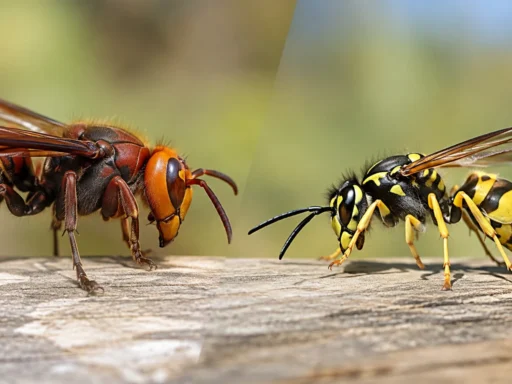
For flying insects around the property, our hornet and wasp identification guide covers the differences.