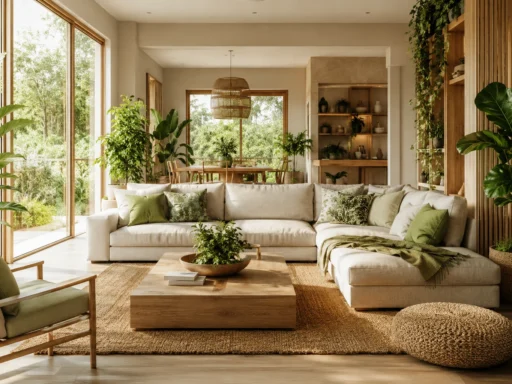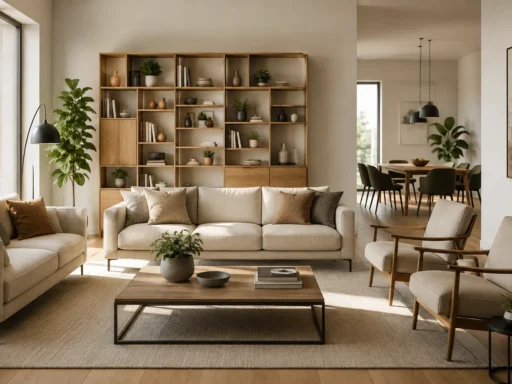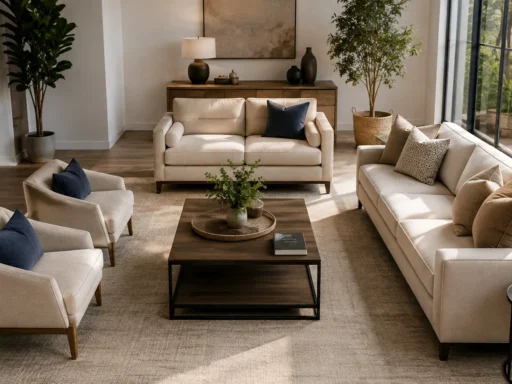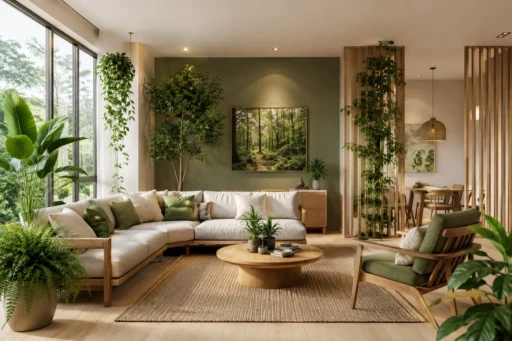
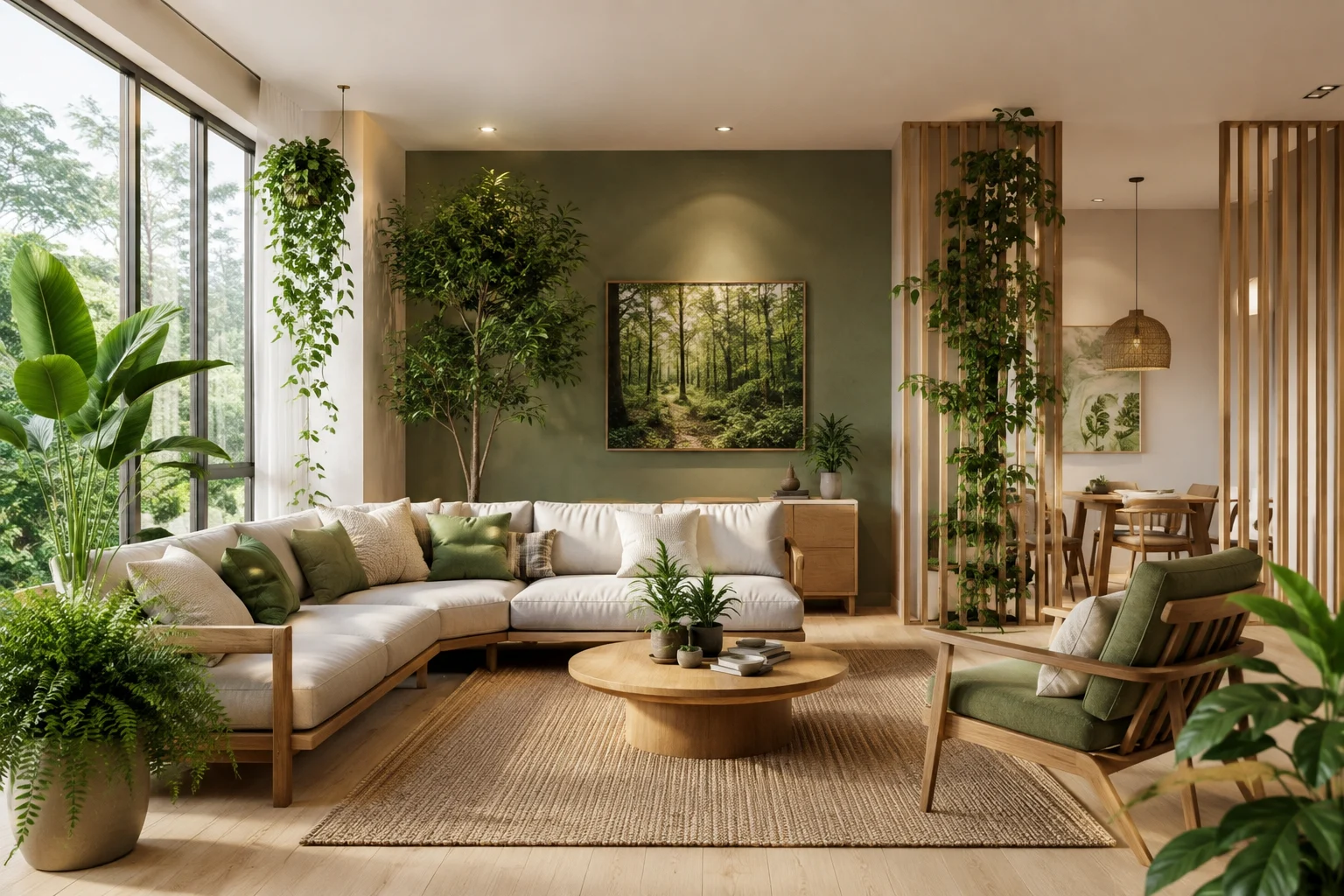
The key to arranging furniture indoors is balancing human comfort with a room’s relationship to natural light and living plants. Start by identifying your room’s natural focal point — a fireplace, a television, or a big window that would suit plants well — and map out your walking paths, keeping at least 30 to 36 inches of clearance for movement.
At Solera Gardens, we see a home as more than walls and furniture — it’s an ecosystem. Biophilic design, the practice of weaving our innate connection to nature into indoor spaces, lets you arrange a home that benefits you psychologically while keeping your plants alive and thriving.
How Do I Layout My Living Room Furniture?
Good furniture layout starts with understanding your room’s architecture and light. The living room is the nucleus of a home — it’s where people socialize, relax, and where the largest indoor plants usually live.
Defining Focal Points and Traffic Flow
Every good layout starts with a focal point. Whether it’s a fireplace, a window, or a home entertainment system, your seating — sofas and easy chairs — should face it.
Pathways need to be clear and logical. Large furniture should never block the route to another room, and every pathway should keep roughly 3 feet of clearance so people aren’t bumping into corners.
Incorporating Living Greenery
Rather than treating houseplants as an afterthought, factor them into the furniture plan itself. A leafy Swiss cheese plant (Monstera deliciosa) placed next to an armchair softens the sharp lines of the furniture and turns the spot into a reading nook that feels wrapped in nature. Nested plant stands let smaller plants rise to meet the height of your sofa cushions, so the greenery reads as part of the room’s composition rather than an accessory.
Solera Gardens Tip: If you’re placing plants near seating, make sure nothing obstructs natural traffic flow or poses a hazard. Keep hard, stiff-leaved plants away from paths where young children or pets pass through.
What Is Biophilic Design?
Biophilic design is the practice of incorporating natural elements — plants, natural light, organic materials, and views of nature — directly into the built environment, based on the idea that humans have an innate, evolved need to connect with the natural world. The concept builds on the biophilia hypothesis popularized by biologist E.O. Wilson, and it’s since been formalized into practical guidance, including the widely cited “14 Patterns of Biophilic Design” framework developed by Terrapin Bright Green, which outlines specific ways buildings and interiors can support that connection.
In a furniture layout, biophilic design shows up in concrete ways: orienting seating toward natural light rather than away from it, choosing plant placement based on real light conditions instead of just looks, using natural materials like wood and stone in your furniture choices, and leaving sightlines to windows and greenery uninterrupted by tall furniture. The light-zoning approach below is really biophilic design applied directly to a floor plan — matching furniture and plants to the light each part of a room actually receives.
Furniture, Light, and Plant Zoning: A Practical Guide
The most common mistake in combining interior design with houseplants is choosing plant placement for aesthetics alone, ignoring what each plant physiologically needs. The fix is to plan your furniture layout around your room’s natural light zones from the start.
Every room breaks down into three zones based on distance from windows, and each one calls for different furniture and different plants:
| Light Zone | Distance from Window | Ideal Furniture | Best Plant Companions | Care Considerations |
| Direct Light | 0–2 feet (0–60 cm) | Low console tables, plant stands, light accent chairs — avoid bulky furniture that blocks the light | Succulents, cacti, citrus plants, Jade (Crassula ovata) | Rotate pots every few weeks for even growth. Avoid leather sofas here — UV exposure fades and cracks leather over time. |
| Bright Indirect Light | 2–5 feet (60–150 cm) | Main sofas, sectionals, coffee tables, armchairs | Monstera, Fiddle-Leaf Fig (Ficus lyrata), Peace Lily, indoor palms | This is prime seating territory — bright light without direct glare. Sheer curtains help soften harsh afternoon sun. Watch that tall plants don’t cast shadows over reading chairs or desks. |
| Moderate to Low Light | 5+ feet (1.5+ m) or shaded corners | Bookshelves, media consoles, storage chests, wardrobes | Snake Plant, ZZ Plant (Zamioculcas zamiifolia), Pothos, Cast Iron Plant | Soil dries more slowly in low light — ease up on watering. Dust leaves regularly, since dust blocks what little light these plants get. |
Keep furniture 3 to 6 inches off the wall for an open look, and leave 12 to 18 inches of clearance around windows so air can circulate and reduce the risk of mold.
Home Furniture Layout for Every Room
Each room’s layout should follow its actual purpose, not just a generic arrangement template. If you’re working with limited square footage anywhere in the home, our companion guide, the ultimate guide to Indoor Furniture Layout for Small Spaces, covers specialized strategies for tight quarters — the room-by-room approach below assumes more typical square footage.
The Living Room: Balance and Breathing Room
To balance a living room’s space, avoid pushing every piece against the wall. Floating the sofa toward the center of the room creates a comfortable seating area, with enough space behind it for a slim console table.
The Bedroom: Restful Sanctuaries and Low-Light Air Purifiers
A bedroom should support rest, starting with keeping the bed away from vents or heating equipment — nobody sleeps well in a direct airflow path. Add a nightstand beside the bed and place a Peace Lily (Spathiphyllum wallisii) on it for a low-maintenance touch of green that also tolerates the room’s typically lower light.
The Home Office: Maximizing Productivity with Biophilic Placement
Position your desk near a window to take advantage of natural light, but angle it at 90 degrees to the window rather than facing it directly, which prevents glare on your screen. Keep a snake plant within your line of sight — it needs virtually no maintenance and adds a calming, natural element to a workspace.
Solera Gardens Tip: Never place computers, printers, or paper shredders directly under a hanging plant. Watering spills happen, and electronics don’t forgive them. Move hanging plants before watering, or use a deep saucer to catch runoff.
The Best Indoor Plants to Integrate into Your Furniture Layout
Choosing the right plants matters just as much as choosing the right furniture. Here are our top picks for working greenery directly into a layout.
Why We Selected These Varieties
Each of these plants was chosen for how reliably it survives typical indoor conditions, plus how well it complements common furniture arrangements. These are accessible, easy-to-grow options for most households.
Best for Beginners: Snake Plant (Sansevieria trifasciata). Mature Height/Spread: 2 to 4 feet tall, 1 to 2 feet wide. Toxicity: Mildly toxic to cats and dogs (can cause nausea and vomiting if ingested). Why it fits: Its upright, architectural leaves act as natural sculpture. Place it in tight corners where wide furniture leaves little floor space.
Best for High-Light Focal Points: Fiddle-Leaf Fig (Ficus lyrata). Mature Height/Spread: 6 to 10 feet tall indoors, 3 to 5 feet wide. Toxicity: Toxic to pets (sap can cause skin irritation and gastrointestinal distress). Why it fits: It functions as a living piece of statement furniture. Use it to fill a high-ceilinged corner next to a large window, or to flank a fireplace.
Best for Shelves and Cabinets: Pothos (Epipremnum aureum). Mature Height/Spread: Vines can trail 10 feet or more. Toxicity: Toxic to pets (contains calcium oxalates). Why it fits: Perfect for softening the hard, horizontal lines of bookshelves, tall wardrobes, or entertainment centers. Let the vines cascade down to add movement against rigid wood furniture.
Best for Low-Light Corners: ZZ Plant (Zamioculcas zamiifolia). Mature Height/Spread: 2 to 3 feet tall and wide. Toxicity: Toxic to pets (all parts are toxic if ingested). Why it fits: Glossy, deep green leaves reflect available light, brightening dark, empty corners next to heavy wooden armoires or entertainment consoles.
Common Furniture Layout and Indoor Gardening Mistakes
Even experienced designers and gardeners run into the same handful of problems when combining furniture and live plants.
Mistake 1: Blocking vital sunlight. A tall bookshelf or high-backed chair positioned in front of a window shades the whole room and starves other plants of light.
The solution: put tall furniture on the wall opposite the windows, and use low benches or daybeds directly in front of the glass instead.
Mistake 2: Placing plants in HVAC draft zones. Plants positioned near heating vents, AC units, or drafty doors experience temperature stress, leading to leaf drop, browning tips, and stunted growth.
The solution: keep fragile foliage at least 3 feet from vents and doors. If leaves start dropping when you switch on winter heating, that’s your cue to relocate the plant.
Mistake 3: Forgetting floor and surface protection. Watering plants over expensive wood furniture or carpet without protection leads to water rings, wood damage, mold, and ruined flooring.
The solution: use heavy-duty plastic or glazed ceramic trays under every plant, with cork pads or felt coasters underneath those trays for extra protection.
Frequently Asked Questions
How do you arrange furniture in a rectangular living room?
Break the rectangle into distinct zones so it doesn’t read as a long corridor. Place the sofa along the longest wall to visually divide the space, and put a console table or tall planters behind it to anchor a secondary zone.
Where is the best place to put a couch in a living room?
Near the room’s focal point, with at least 30 inches of clearance behind or around it, and positioned so it doesn’t block natural light from the windows.
How do you layout a room with multiple focal points?
Start with the primary focal point — say, a fireplace — then treat secondary focal points, like a large window filled with plants, as anchors for additional seating areas.
What is the golden rule of furniture placement?
Function before form: keep at least 3 feet of clear walkway throughout the room, then arrange furniture for visual balance based on size and available light.
How far should furniture be from walls and windows?
Keep furniture 3 to 6 inches from the wall for an open feel, and leave 12 to 18 inches of clearance around windows so air can circulate and reduce the risk of mold.
Can you put a sofa in front of a window with plants?
Yes, as long as the sofa back is low enough to let light through. Flank it with plant stands on either side to work greenery into the same window zone.
How do I choose the right size rug for my furniture layout?
Choose a rug large enough that the front feet of all major furniture pieces sit on it — this grounds the room and defines the seating area. For dining rooms, the rug should extend about 24 inches beyond the edge of the table on all sides.
Is feng shui the same as biophilic design?
No, though they overlap. Feng shui is a traditional Chinese practice focused on arranging a space to balance and direct energy flow (“chi”), often through furniture placement, mirrors, and clutter control. Biophilic design is a modern design approach grounded in environmental psychology, focused specifically on maximizing genuine contact with natural elements — light, plants, natural materials, and outdoor views. Many layouts that follow biophilic principles also happen to satisfy feng shui guidelines, like keeping clear pathways and avoiding furniture that blocks a room’s main entry, but the underlying reasoning behind each approach is different.
Conclusion
Learning to arrange interior furniture well is where design meets the living, breathing character of nature. Understanding how light moves through a room, keeping pathways clear, and choosing plants suited to each zone’s actual conditions comes together to create a space that works. Let your home breathe, give your plants the light they need, and enjoy the oasis you’ve built
Before moving heavy pieces, work through our step-by-step furniture layout guide to plan the arrangement.