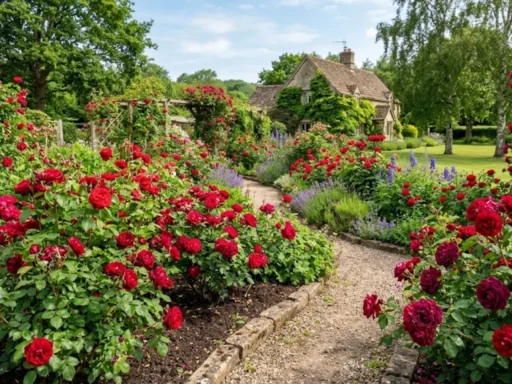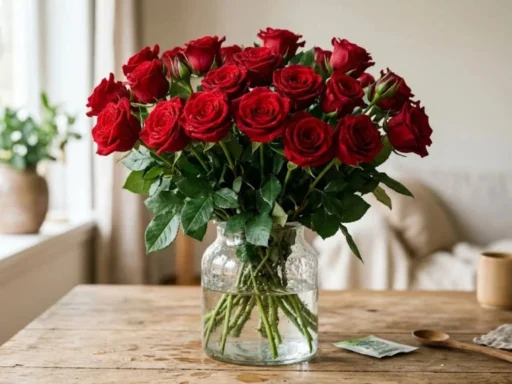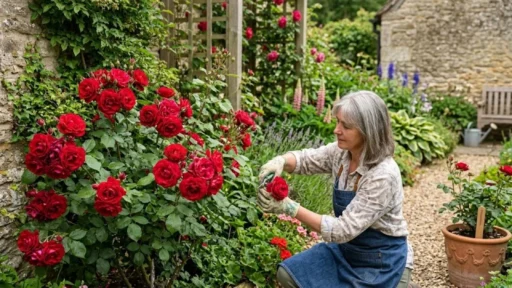
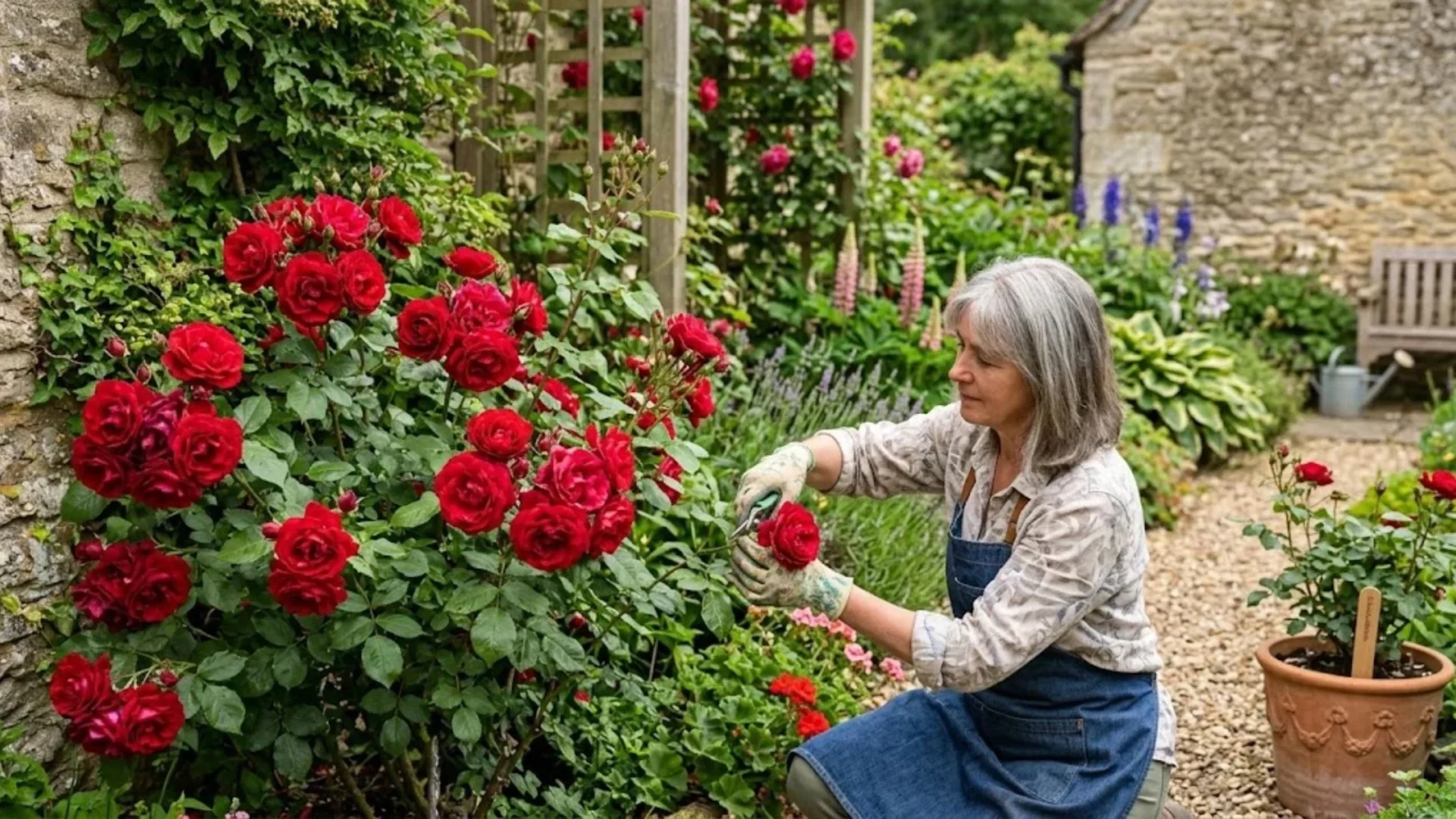
To grow red roses at home, give them at least six hours of direct sun, ideally morning sun. Plant them in well-drained, compost-rich soil with a pH around 6.0–6.5, and water deeply about once a week rather than lightly every day. Feed them from spring until about six weeks before your first frost, deadhead spent flowers, and prune in late winter or early spring. At Solera Garden, we’ve found that red roses need one extra layer of thought that other roses don’t: you’re managing the health of the plant and also the depth of its color. This guide covers both.
What makes red roses different from other roses?
Red roses grow the same way as any other rose of their class. A red hybrid tea needs the same basic care as a pink one. The difference is in how the color behaves.
The red in rose petals comes mostly from anthocyanins, the plant pigments behind many reds, purples, and blues. They respond to growing conditions:
- Heat can fade or “blue” red petals. During long stretches of hot weather, many red blooms open lighter, look washed out, or shift toward a purplish tone as they age.
- Strong afternoon sun can scorch dark reds. The petal edges on very dark red varieties can crisp or blacken, sometimes called “burning.”
- Cool nights often deepen color. Many gardeners notice that late-spring and fall flushes are a richer red than midsummer blooms.
So when you grow red roses, you’re trying to get healthy growth and good color retention at the same time. Almost every recommendation below supports one or both.
Quick disambiguation: rose of Sharon isn’t a rose at all. It’s a hibiscus (Hibiscus syriacus) with different needs. If that’s the shrub you have, follow a dedicated rose of Sharon care guide instead.
How do you choose the right red rose for your garden?
Start with how you want to use the rose, then pick a class, then pick a cultivar. Each rose class has its own habit, size, and care level. For a full breakdown, see our guide to rose classes like hybrid teas, floribundas, and shrub roses.
| Your goal | Best rose class | Red examples to look for | Care level |
|---|---|---|---|
| Long-stemmed, classic cut flowers | Hybrid tea | ‘Mister Lincoln’, ‘Chrysler Imperial’, ‘Olympiad’ | Higher |
| Lots of color in clusters | Floribunda | ‘Europeana’ | Moderate |
| Low-maintenance hedge or border | Shrub / landscape | Knock Out (red) | Lower |
| Covering a fence, arch, or wall | Climber | ‘Don Juan’, ‘Altissimo’ | Moderate |
| Patio pots and small spaces | Miniature or compact shrub | Red miniatures and compact landscape roses | Moderate |
A few practical selection tips:
- If you want fragrance, check the label. Not every red rose is scented. ‘Mister Lincoln’ and ‘Chrysler Imperial’ are known for strong fragrance. Many landscape reds have little or none.
- If you live in a hot summer climate, look for cultivars described as “heat tolerant” or “holds color.” Expect midsummer fading from most reds anyway.
- If black spot is common where you live, choose a cultivar sold as disease resistant. This decision saves more work than any spray schedule.
- Check whether the plant is grafted or own-root. This changes how deep you plant it (more on that below).
When should you plant red roses?
- Bare-root roses (dormant plants sold without soil) go in during late winter or early spring, once the ground can be worked and before the plant leafs out.
- Container roses can be planted anytime during the growing season. Spring and early fall are easiest because the plant faces less heat stress while its roots establish.
- Avoid planting in a heat wave. A newly planted rose in hot weather needs daily attention to keep from wilting.
How do you plant a red rose step by step?
1. Pick a site with morning sun
Choose a spot with at least six hours of direct sun. If you can, pick a site with full morning sun and some afternoon shade. Morning sun dries dew off the leaves quickly, which helps limit fungal disease, and afternoon shade protects dark red petals from scorching. Leave space for air to move around the plant. Don’t squeeze it against a wall or into a crowded bed.
2. Test and prepare the soil
Roses do best in loose, well-drained soil rich in organic matter, with a slightly acidic pH of about 6.0–6.5. A simple soil test tells you whether you need to adjust pH or nutrients before planting. If you haven’t tested before, our guide to testing and preparing your garden soil walks you through it. Work compost into the planting area rather than filling only the hole with rich amendments. A pocket of rich soil in a hole of clay can hold water like a bucket.
3. Dig a wide hole
Dig a hole about twice as wide as the root system and as deep as the roots need. Width matters more than extra depth, because new roots spread outward.
4. Set the planting depth correctly
- Grafted roses have a knobby bud union where the named variety joins the rootstock. In cold climates (roughly USDA zone 6 and colder), many gardeners set it 1–2 inches below the soil surface for winter protection. In milder climates, set it at or just above soil level.
- Own-root roses have no union. Plant them at the same depth they grew in the nursery pot.
- Bare-root roses: soak the roots in water for several hours first. Spread them over a small mound of soil in the hole.
5. Backfill, water, and mulch
Backfill gently and water slowly to settle the soil and remove air pockets. Then add mulch. A 2–3 inch layer keeps soil moisture even and roots cooler, and cooler roots help a red rose cope with summer heat. Keep the mulch a few inches away from the canes. See how to mulch a garden properly for material choices and common mistakes.
How do you care for red roses after planting?
Watering
Water deeply at soil level instead of sprinkling the leaves. A useful starting point is about 1 inch of water per week. You’ll need more during hot, dry weather, in sandy soil, and for roses in containers. Check the soil a few inches down before watering. If it’s still moist, wait. Wet leaves, especially in the evening, invite black spot and mildew.
Feeding
Start fertilizing when new spring growth appears. A balanced or rose-specific fertilizer, applied according to its label, works for most gardens. Repeat-blooming roses benefit from light feeding after each flush of flowers. Stop about six weeks before your average first frost so the plant isn’t pushing out tender growth that winter will kill. Too much nitrogen gives you lush leaves and fewer flowers, so don’t overdo it.
Deadheading
Remove spent blooms so a repeat-flowering rose puts its energy into new buds instead of seed. Cut just above an outward-facing leaf with five leaflets. Stop deadheading in early fall if you want the plant to start slowing down for winter.
Pruning
Do the main pruning in late winter or early spring, as buds begin to swell:
- Remove dead, damaged, and diseased canes first.
- Take out canes that cross or rub, and open the center for airflow.
- Shape the plant according to its class. Hybrid teas are usually cut back harder than shrub roses, and climbers are pruned mainly to maintain their framework.
Use clean, sharp bypass pruners and make cuts at a slight angle about ¼ inch above an outward-facing bud.
How do you keep red roses deep red instead of faded?
This is the part most rose gardening tips skip. Use this table to trace a color problem back to its likely cause:
| What you see | Likely cause | What you can do |
|---|---|---|
| Blooms open pale or washed out in summer | High temperatures | Expect it during heat waves; color usually returns in fall. Mulch and water deeply to reduce stress. |
| Petals turn purplish or bluish as they age | Normal aging, made faster by heat | Cut blooms for the vase when partly open; deadhead promptly. |
| Dark petal edges look crisp or blackened | Sun scorch on dark red cultivars | Move future plantings to morning sun and afternoon shade, or grow a more heat-tolerant red. |
| Few blooms, lots of leaves | Too little sun or too much nitrogen | Confirm 6+ hours of sun; switch to a bloom-focused fertilizer. |
| Small, sparse flowers on a weak plant | Stress from drought, poor soil, or disease | Fix watering and soil first; remove diseased foliage. |
Our practical takeaway: you can’t stop summer heat from affecting red pigments, but you can reduce how much heat stress the plant feels. Morning sun, afternoon shade, deep watering, mulch, and good soil do more for red color than any product sold to “intensify” blooms.
What pests and diseases affect red roses?
Red roses face the same problems as any other rose:
- Black spot: dark spots with fringed edges and yellowing leaves. Remove affected leaves, water at soil level, and improve airflow. Disease-resistant cultivars are the best long-term fix.
- Powdery mildew: white, powdery coating on leaves and buds, common when days are warm and nights are cool and humid. Improve air circulation.
- Aphids: clusters of small insects on new shoots and buds. A strong spray of water usually knocks them off. Ladybugs and other predators help.
- Japanese beetles: metallic beetles that chew petals and leaves in summer. Hand-pick them into soapy water in the morning.
- Deer: they’ll browse rosebuds when other food is scarce. Use fencing, repellents, or plant placement. See our guide to keeping deer away from your flowers.
If a rose develops distorted, unusually red, heavily thorny new growth in tight clusters (sometimes called “witches’ broom”), have it checked for rose rosette disease. This incurable virus spreads to nearby roses, and infected plants are usually removed entirely. Your local Extension office can confirm a diagnosis.
What does a year of red rose care look like?
| Season | Main tasks |
|---|---|
| Late winter / early spring | Plant bare-root roses; prune; pull back winter mulch as growth starts |
| Spring | Begin feeding; mulch; watch for aphids; water as rainfall slows |
| Summer | Water deeply; deadhead; monitor for black spot and beetles; expect some color fading in heat |
| Early fall | Final feeding about six weeks before first frost; enjoy richer cool-weather color |
| Late fall / winter | Stop deadheading; clean up diseased leaves; add winter protection in cold zones |
Frequently asked questions
Can you grow red roses in pots?
Yes. Choose a compact shrub, floribunda, or miniature red rose and a container of at least 15–20 gallons for full-size plants (smaller for miniatures), with drainage holes. Potted roses dry out faster and need more frequent watering and feeding than roses in the ground.
How long does a red rose take to bloom after planting?
Container roses often bloom in their first season, sometimes within weeks if they’re already budded. Bare-root roses usually take longer, often blooming later in the first summer. Expect fuller flowering in the second and third years as roots establish.
Can you grow red roses from a cut flower or a store bouquet?
Sometimes, but the results are unreliable. Florist roses are often treated and bred for greenhouse conditions. For a dependable garden plant, start with a named nursery cultivar suited to your climate.
Your next step
Before you buy, look at your garden in the morning and in the afternoon. Find a spot that gets at least six hours of sun, ideally sun in the morning and some protection late in the day, and test the soil there. Then choose a red cultivar that fits your goal and your climate. Getting the site and the variety right takes care of most of the work of growing red roses well.