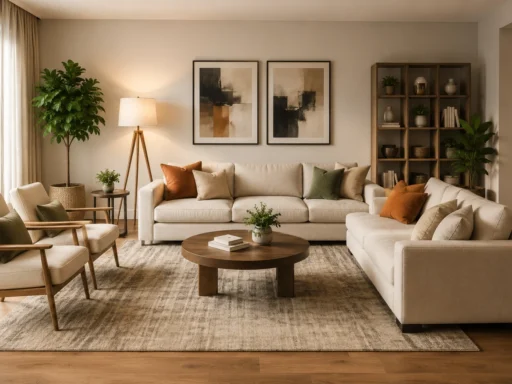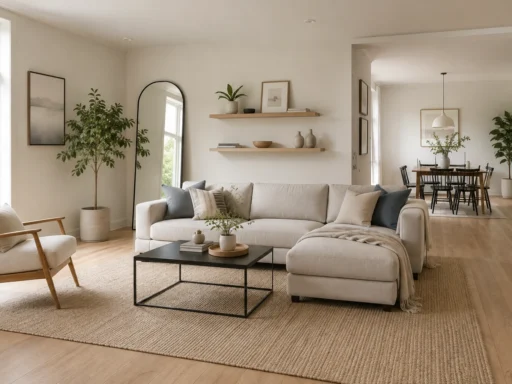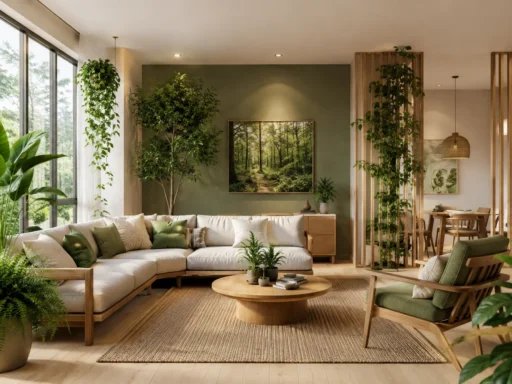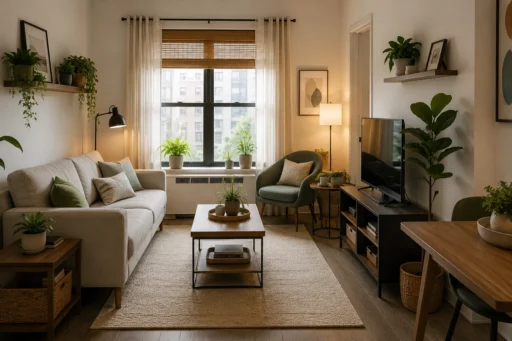
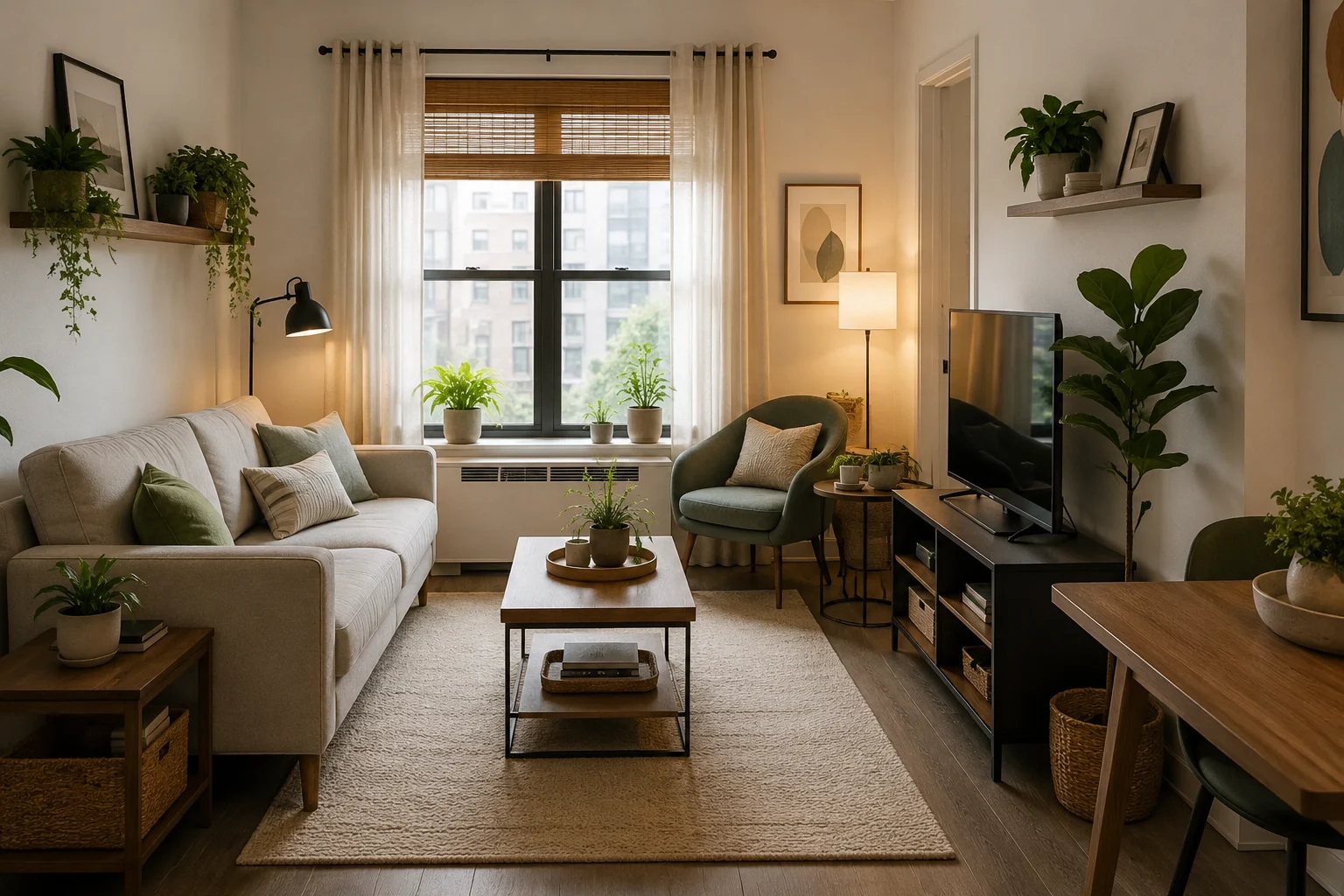
Arranging furniture in a small room can feel like solving a puzzle with too many pieces. But a compact space can still feel open, bright, and welcoming if you plan around three core principles: light, flow, and functionality. Keep walkways clear, pull furniture slightly away from the walls, and choose multi-purpose, elevated pieces that free up floor space. At Solera Gardens, we believe every home — no matter the square footage — deserves to feel spacious, airy, and connected to nature.
How Do You Arrange Furniture in a Very Small Room?
The biggest mistake people make in a small room is pushing every piece against the wall to “save space” in the middle. It seems logical, but it usually backfires — the room ends up looking flatter and smaller, not bigger. Pulling your sofa or armchair just a few inches off the wall creates depth and shadow, which tricks the eye into perceiving more room than there actually is.
Traffic flow deserves just as much attention as furniture placement. Aim for a walkway of at least two to three feet through the main path of the room. If you find yourself turning sideways or stepping around furniture to get through, it’s a sign the layout needs rethinking.
Prioritizing Natural Light and Air Circulation
Furniture placement doesn’t just affect how a room looks — it affects how it breathes. This matters even more if you’re incorporating houseplants, since light and airflow directly determine which plants will thrive and where.
Arrange seating and storage so windows stay unobstructed. This keeps the room bright and ensures plants like Dracaena trifasciata (snake plant) and Spathiphyllum wallisii (peace lily) get the indirect light and ventilation they need. Blocking a window or heat vent with bulky furniture creates a stagnant “dead zone” — and dead zones are where pests and fungal issues tend to start.
The Power of Vertical Space
When floor space runs out, look up. Tall, narrow shelves, wall-mounted ledges, and hanging planters let you display décor and greenery without sacrificing an inch of walkable floor.
Solera Gardens Tip: If you’re using vertical shelving near a window, put light-loving plants like the jade plant (Crassula ovata) on the top shelves, closest to the light source. Save the lower, shadier shelves for low-light plants such as the cast-iron plant (Aspidistra elatior).
Strategic Small-Space Furniture Arrangement for Biophilic Design
You don’t need a sunroom to bring nature indoors. Biophilic design — the practice of weaving natural elements into interior spaces — works just as well in a 150-square-foot studio as it does in a sprawling house.
Mapping Light Zones for Your Layout
Before you commit to a sofa or table placement, spend a day tracking how sunlight moves through the room. Mapping your light zones first means your furniture and your plants end up exactly where they’ll thrive.
- Bright Direct Light Zones (within 2 feet of south- or west-facing windows): Keep seating slightly back from these areas to avoid glare and heat buildup. Use this prime real estate for sun-loving plants like succulents, cacti, or bird of paradise (Strelitzia reginae).
- Bright Indirect Light Zones (3–5 feet from windows): This is the sweet spot for reading chairs, your main sofa, and popular leafy plants like fiddle-leaf fig (Ficus lyrata) or monstera (Monstera deliciosa).
- Low-Light Zones (corners and interior walls): Perfect for TV consoles or storage cabinets. Soften these darker spots with low-light plants like the ZZ plant (Zamioculcas zamiifolia) or pothos (Epipremnum aureum).
Companion Plant Pairings for Small-Space Layouts
Just like companion planting outdoors, certain indoor plants create a more balanced microenvironment when grouped thoughtfully. Try pairing a tall snake plant, a medium parlor palm (Chamaedorea elegans), and a trailing English ivy (Hedera helix) for a tiered, layered look that takes up minimal footprint but delivers maximum visual impact.
| Room Area | Recommended Placement | Purpose & Design Tip |
| Window Area | High-light plants and succulents within 0–2 ft (0–60 cm) of the window | Maximizes direct sunlight for plants that need several hours of light daily |
| Reading Corner | A comfortable chair beside the window with a small side table | Creates a bright reading nook near natural light |
| Main Seating Area | Sofa centered as the room’s anchor, with 30–36 in (76–91 cm) of clearance | Improves traffic flow and balances the room |
| Low-Light Corner | Snake plant, ZZ plant, or pothos | Adds greenery to shaded areas with minimal upkeep |
| TV / Console Unit | Positioned opposite the sofa with clear sightlines | Keeps the layout functional and uncluttered |
| Ideal Room Size | 120–180 sq ft (11–17 m²) | Balances seating, light, and plant placement without crowding |
Compact Room Furniture Layout Tips by Room Type
Every room serves a different purpose, so each one needs its own layout strategy.
The Small Living Room
Skip the bulky L-shaped sectional. A streamlined sofa raised on visible legs works much better in a small living room — seeing the floor beneath it makes the whole space feel larger and airier.
Anchor your sofa to the room’s natural focal point: a fireplace, TV stand, or a window with a good view. If you love having plants nearby, add a slim nesting table beside the sofa — easy to tuck away, and perfect for a cup of tea alongside a nerve plant (Fittonia albivenis).
The Small Bedroom-and-Home-Office Combo
With remote work now common, bedrooms are pulling double duty as offices more than ever. A backless bookcase is a great way to define a distinct “work zone” without closing off the room.
Position your desk near a window whenever possible — natural light does wonders for focus and energy. Add a wall-mounted shelf above the desk to keep surfaces clutter-free.
Solera Gardens Tip: Keep your office plants visible, not tucked in a corner. Studies show that even brief exposure to greenery during a stressful workday can lower cortisol levels and improve concentration.
For more foundational layout principles, see our guide on Indoor Furniture Layout Tips Every Homeowner Needs to Know.
How to Maximize Space with Smart Furniture Choices
Choosing the right furniture matters just as much as where you put it. In a small room, multi-functional pieces do double duty and cut down on clutter.
| Furniture Type | Space-Saving Benefit | Best Placement Strategy | Recommended Companion Plant |
| Storage Ottoman | Hides blankets and books; doubles as a footrest or extra seat | In front of the sofa as a flexible coffee table | Pothos (Epipremnum aureum) cascading from a nearby shelf |
| Drop-Leaf Console Table | Works as a slim entry table or expands into a dining surface | Flat against an open wall or behind a floated sofa | Spider plant (Chlorophytum comosum) on the corner |
| Open-Frame Bookshelf | Provides storage without visually closing off the room | As a functional divider between living and dining zones | ZZ plant (Zamioculcas zamiifolia) on the lower, shadier shelves |
| Nesting Side Tables | Expands for guests, then stacks away to save space | Beside a comfortable armchair or reading nook | Baby rubber plant (Peperomia obtusifolia) on the top table |
When shopping, favor lighter, more visually “transparent” materials — light woods like oak, or glass, metal, and acrylic pieces. A glass-top coffee table, for instance, all but disappears into the room, letting your rugs, flooring, and plants take center stage.
Common Layout and Plant Care Mistakes in Tight Quarters
Small spaces leave little room for error. Here’s what to watch for:
- Blocking natural light and vents. Keep armoires, bookcases, and large plants away from windows — they’ll starve smaller plants of the light they need. Likewise, avoid placing furniture or pots directly over heating and cooling vents, which dry out soil far too quickly.
- Overcrowding your plant collection. As tempting as an indoor jungle looks, packing too many plants together on one level restricts airflow and traps moisture on leaves, inviting fungal problems.
- Choosing the wrong furniture scale. An oversized sofa will overwhelm a small room instantly. Measure your space carefully before buying anything — a paper floor plan or painter’s tape outline can save you from an expensive mistake.
Troubleshooting Pest and Disease Issues in Dense Layouts
When plants and furniture share tight quarters, pests can spread from plant to plant fast. Watch for:
- Fungus gnats — tiny black bugs that thrive in overly wet, waterlogged soil.
- Spider mites — nearly invisible pests that leave fine, web-like webbing under leaves; they favor hot, dry air.
- Mealybugs — soft-bodied insects that look like small tufts of white cotton, usually clustered where leaves meet stems.
Preventative Action Plan
- Encourage gentle airflow. A small, quiet oscillating fan near your seating and plant areas prevents stagnant air, discourages flying pests, and keeps plants healthier overall.
- Water mindfully. Let the top one to two inches of soil dry out before watering tropical plants. Overwatering is the leading cause of root rot and fungus gnat infestations.
- Inspect regularly. Wipe down plant leaves with a damp cloth once a month to clear dust and keep photosynthesis running efficiently.
Frequently Asked Questions
Where should a couch be placed in a small living room?
Angle or center the sofa toward the room’s focal point, and keep it a few inches from the wall. If the room has a doorway, position the sofa away from that direct entry line to avoid disrupting the flow.
How do you make a small room feel bigger with furniture?
Choose furniture that can be viewed from all sides rather than pieces boxed against walls, stick to lighter colors, and use mirrors to bounce natural light around the room.
Can you put a bed in front of a window in a small bedroom?
Yes — as long as you choose a low-profile headboard or an open-frame bed. Just make sure there’s enough clearance to open the window freely without disturbing any plants nearby.
What’s the best furniture layout for a narrow, rectangular room?
Push furniture to one wall and reserve the opposite side purely for walking. This creates a functional path through the entire length of the room.
How do houseplants affect furniture arrangement in tight spaces?
Plants need consistent light, so their placement should come first — furniture should be arranged around them, not the other way around, to avoid casting shadows over anything that needs sun.
Is it better to have fewer large furniture pieces or more small ones in a tiny room?
Fewer, well-proportioned pieces almost always look cleaner than a scattering of small ones. One properly sized sofa and a single accent chair will read as more organized than several small stools and extra seating.
How do you create separate zones in a small studio apartment?
Open-backed shelving, area rugs, and intentional furniture placement can visually divide a studio into living, sleeping, and dining areas. A large floor plant, like a parlor palm, in a corner is also a simple, natural way to mark a zone transition.
Conclusion
A small room doesn’t mean giving up on style, comfort, or your love of indoor greenery. With the right multi-purpose furniture, clear pathways, and a layout built around your room’s natural light zones, you can create a space that feels open, functional, and alive. The golden rule: less is more — give your furniture, and your plants, room to breathe.
Before moving heavy pieces, work through our step-by-step furniture layout guide to plan the arrangement.
Check your arrangement against these common furniture layout mistakes, especially around walkways and access.