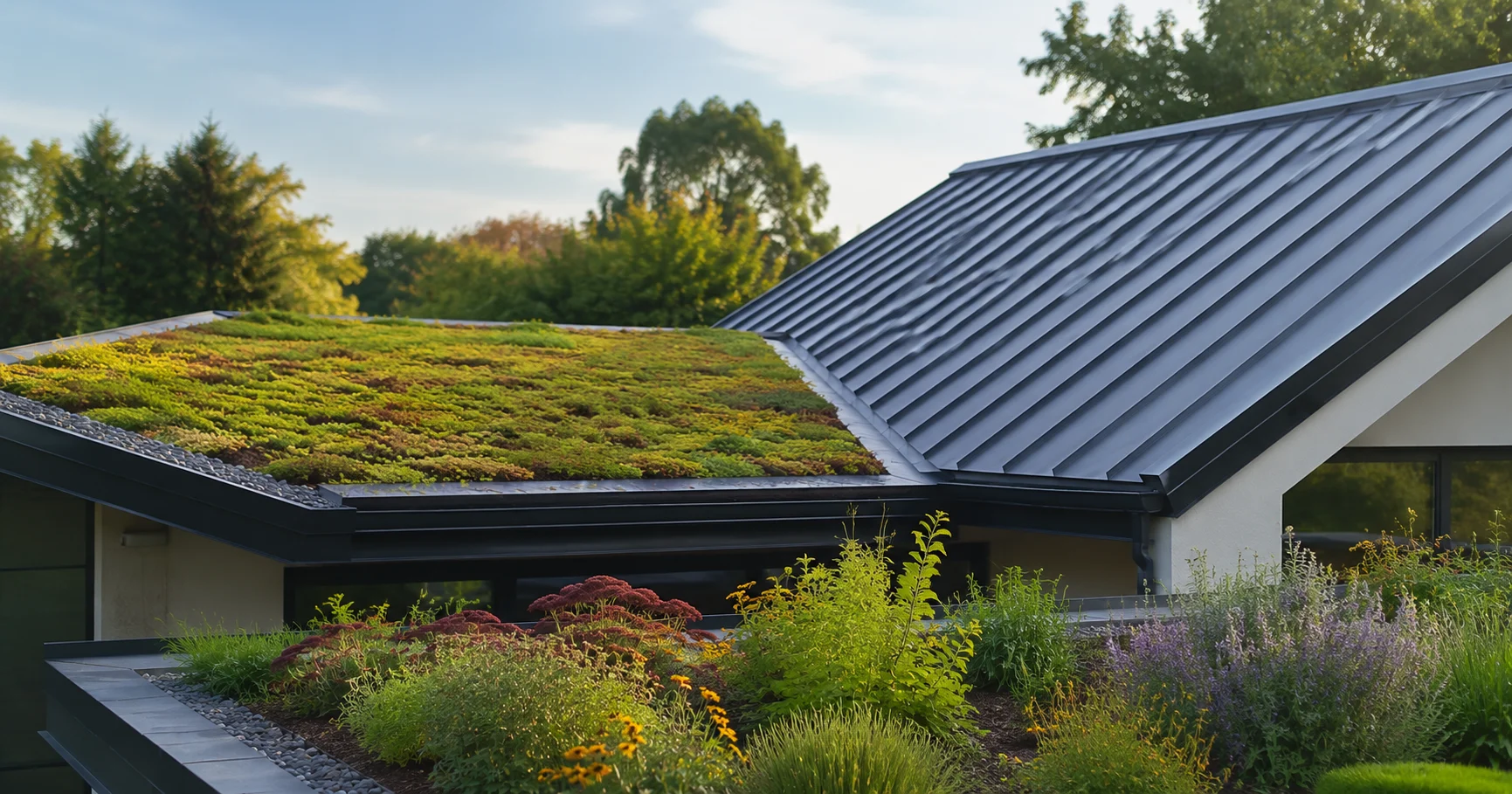
The roof of your house is the first line of defense against nature, protecting everything from your living spaces to your basement below. If you’re dealing with leaks, missing shingles, or a sagging roofline, it’s time to learn the essentials of roof replacement — including two options that pay off well beyond the roofline: a green roof and a metal roof. A normal roof replacement starts by stripping old shingles and underlayment down to the bare wood, checking the condition of that wood, and then building back up with new layers of protection. That teardown is also your one real chance to rethink your roof as part of a more eco-friendly home.
At Solera Gardens, we believe every major home renovation is a chance to strengthen your bond with nature. A roof replacement is a significant construction project with real effects on your backyard. Understand the process, choose the right materials, and protect your garden beds, and your renovation will succeed on both fronts — the house and the landscape around it.
What Are the Basics of Roof Replacement?
Understanding how a roof replacement actually works will help you make better decisions about your home, your budget, and your surroundings. Unlike simple re-shingling — where new shingles go directly over the old ones — a full replacement is a multi-stage reconstruction. It starts with a complete tear-off: every layer of old roofing, including underlayment and decking, comes off. This step matters because it’s the only point where hidden damage like water intrusion, wood rot, or sagging becomes visible.
Once the decking is confirmed sound (or repaired), the protective layers go back on in order. First, a waterproof membrane — the ice and water barrier — is installed at high-risk points like eaves, valleys, and chimneys. Next, a heavy-duty synthetic underlayment covers the entire deck as a second line of defense against wind-driven rain. Drip edges go in along the roof’s borders to keep water off the fascia boards, and valley linings are installed to handle concentrated water flow at roof intersections.
Navigating Your Roof Replacement Options
Homeowners planning a project this size have more roofing options than ever. Steep-slope asphalt shingle roofing remains the most common choice for residential homes because of its price and straightforward installation. But two other options are worth serious consideration if long-term value and sustainability matter to you: green roofs and metal roofing.
Green Roofs
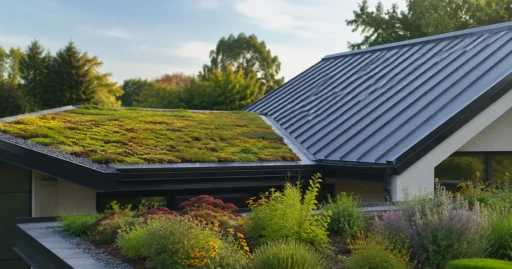
The best option for an eco-conscious home is a green roof (also called a living roof) — an extensive roofing system built from a waterproof membrane, a root barrier, a drainage layer, and lightweight engineered growing media installed directly on the roof deck. Unlike any other roofing type, a green roof absorbs stormwater and creates habitat for pollinators right on top of your house.
Plant selection is critical for a green roof to survive. Look for species that are drought-tolerant and can handle intense sun and wind with very little soil depth:
White Stonecrop (Sedum album): A mat-forming succulent for USDA zones 3–9, reaching 3–6 inches tall and 12–18 inches wide. Produces white star-shaped flowers in mid-summer that feed local bee populations.
Hens and Chicks (Sempervivum tectorum): A rosette-forming succulent for USDA zones 3–8, growing 3–4 inches tall with a 12-inch spread. Puts out reddish-pink summer flowers and tolerates rocky, poor soil.
Cooper’s Hardy Ice Plant (Delosperma cooperi): An evergreen ground cover for USDA zones 6–10, reaching 3–6 inches tall with a 24-inch spread. Produces a dense carpet of magenta, daisy-like flowers from early summer through first frost.
Just as you’d choose structural houseplants to improve an indoor space, choosing the right exterior materials is just as critical to your home’s overall design. If you’re planning to update your interior alongside your exterior, our guide to 10 Living Room Decor Ideas to Up Your Styling Game can help you carry that same natural, garden-forward aesthetic inside.
Metal Roofing
If a full green roof isn’t the right fit for your home’s structure or budget, metal roofing is the next-best eco-conscious option — and one of the most overlooked. A metal roof lasts 40 to 70 years, is fully recyclable at the end of its life, and reflects rather than absorbs solar heat, which keeps both your attic and your garden beds cooler in summer.
The real advantage for garden-minded homeowners is rainwater harvesting. Because metal sheds water cleanly without the granule runoff asphalt shingles produce, it’s the ideal roofing surface to pair with a rain barrel or cistern system. Water collected off a metal roof is cleaner and better suited for irrigating vegetable beds, ornamental plantings, or a drip irrigation system than runoff from an asphalt roof.
Selecting the Best Sustainable Roofing Materials for Your Home
The right roofing material depends on your budget, your home’s structural needs, and your local climate. Every roofing type carries trade-offs that affect not just durability but also its environmental footprint and its effect on the garden space around it.
Metal roofs, for example, are highly durable and recyclable, and the rainwater they shed can be collected for garden use. Asphalt shingles are the most affordable option but generate significant landfill waste and absorb solar heat, which can warm the microclimate of nearby garden beds.
| Material Type | Average Lifespan | Environmental & Gardening Impact | Best Use Case |
| Asphalt Shingles | 15–30 years | High heat absorption; non-recyclable in most areas; can alter surrounding microclimate. | Budget-conscious homeowners looking for traditional aesthetics. |
| Metal Roofing | 40–70 years | Highly recyclable; excellent for clean rainwater harvesting; reflects solar heat. | Homeowners seeking maximum longevity and rainwater collection systems. |
| Clay or Concrete Tiles | 50–100 years | Heavy natural materials; high thermal mass; very low chemical leaching. | Heavy structural homes in hot, dry, or coastal climates. |
| Extensive Green Roof | 30–50+ years | Absorbs stormwater; insulates the home; creates a thriving habitat for pollinators. | Flat or low-slope roofs where sustainability and biodiversity are priorities. |
Understanding the Cost of Roof Replacement
Roof replacement cost depends on several factors: the steepness (pitch) of your roof, the total square footage you need to cover, local labor rates, and the material you choose. Here’s what homeowners typically budget by material type:
- Asphalt shingles: $6,000–$15,000 for an average-sized home. The lowest upfront cost, but the shortest lifespan (15–30 years), so the cost repeats sooner.
- Metal roofing: $12,000–$25,000+, depending on panel type. Higher upfront cost, but a 40–70 year lifespan means most homeowners never pay for a roof replacement again.
- Clay or concrete tile: $15,000–$30,000+, reflecting the weight and structural reinforcement these materials often require.
- Extensive green roof: $20,000 and up, varying widely based on roof size, structural engineering needs, and plant selection.
The higher upfront cost of a sustainable roof — metal or green — comes with a real payback. A green roof acts as a natural insulator, meaningfully reducing summer energy bills, and it absorbs up to 70% of the precipitation that falls on it, according to research from the U.S. General Services Administration on green roof performance, which also cites reduced stormwater runoff and lower building cooling costs. Less runoff means less soil erosion around your foundation and better, more consistent drainage for the rest of your garden. A metal roof delivers a similar long-term return through decades of avoided replacement costs and usable harvested rainwater.
Step-by-Step Guide to the Roof Replacement Process
Replacing a roof is a loud, highly organized process. Knowing what happens at each stage helps you prepare for the noise, dust, and temporary disruption.
- Site Preparation and Safety: Roofers set up scaffolding, staging, and safety equipment. Expect a dumpster in your driveway and tarps hung from the gutters along the side of the house.
- Tear-Off of Old Materials: The old roof is lifted piece by piece with roofing forks and loaded into the dumpster. This is the noisiest, dirtiest stage of the entire project.
- Deck Inspection and Repair: Once the old roof is off, the crew lead inspects the plywood decking. Any damaged sheathing is replaced before work continues.
- Flashing and Underlayment Installation: Drip edges, valley linings, and synthetic underlayment go in, secured with plastic cap nails.
- Shingle or Material Application: The main roofing material is installed starting at the bottom eaves and working up to the ridge, with each piece nailed to local building code.
- Cleanup and Final Inspection: Your roof, gutters, lawn, and walkways are cleaned, and magnetic sweepers collect stray nails from your lawn and flower beds.
Solera Gardens Tip: Ask your roofing crew to run a magnetic roller sweep across your lawn daily after work wraps for the day. Roofing nails hide easily under mulch and ground cover and pose a real hazard to you, your lawnmower, and backyard wildlife.
Protecting Your Landscape and Garden Beds During Construction
Roofers are experts in keeping your house safe from damage — but they aren’t gardeners. Bundles of shingles, falling plywood, and constant foot traffic can do real damage to your yard if you don’t plan ahead.
Leaving specimen shrubs unshielded. Homeowners often assume construction crews will naturally avoid the plants. But branches on shrubs like Bigleaf Hydrangea (Hydrangea macrophylla) snap easily under falling debris. Cover any vulnerable plant with an A-frame tent made from wood or heavy fabric tarp before work begins.
Forgetting to prune overhanging limbs. Long branches on valuable trees, such as Japanese Maple (Acer palmatum), can get scratched by equipment or block worker access. Prune back branches before construction starts to protect the tree’s structure.
Neglecting soil compaction. Repeated foot traffic and staged materials compact garden bed soil and damage root systems. Lay plywood sheets across lawn areas and garden paths anywhere crews or materials will be moving.
Seasonal Landscape Care and Pruning
If your roof replacement falls in the middle of summer, don’t cover plants with plastic tarps — plastic acts like a greenhouse and can cook your plants in direct sun. Use breathable burlap or canvas instead. If your project is scheduled for early spring, prune back any deciduous shrubs growing close to the foundation before work starts.
Frequently Asked Questions
How long does a roof replacement take?
Most roof replacements take 1 to 3 days, though the exact timeline depends on the size of the roof, its slope, the weather, and the complexity of the structure.
Will a roof replacement damage my garden plants?
Not if you prepare ahead of time. A-frame plywood covers over fragile plants, tarps over garden beds, and clear signage around planting areas will protect your landscaping from falling debris and foot traffic.
Can any home support a green roof?
No — not every home is built to carry the weight of a green roof. Wet soil and mature plantings are heavy. Have a structural engineer assess your home before committing to this option.
What’s the cheapest material for a roof replacement?
Three-tab asphalt shingles are typically the least expensive option for an average-sized home. They cost less upfront but don’t last nearly as long as metal or tile.
How often should a roof be replaced?
Traditional asphalt shingle roofs generally need replacement every 15 to 25 years. Storm damage, poor attic ventilation, or wood rot can push that timeline up significantly.
Do green roofs attract pests or mosquitoes?
No. A properly designed and drained green roof uses free-draining soil media that doesn’t hold standing water, so there’s no opportunity for mosquitoes to breed.
What’s the best time of year to replace a roof?
Late spring and autumn are ideal. Mild temperatures let roofing adhesives bind properly without putting crews at risk in extreme heat or cold.
Conclusion
A well-planned approach to any major home renovation is what makes it succeed — for the house and for the yard around it. Understanding the roof replacement process, choosing materials wisely, and protecting your garden beds ahead of time will get you through the project with both intact.
Whether you choose a metal roof that doubles as a rainwater harvesting system or a living roof planted with bee-friendly stonecrop, the renovation you invest in can improve your entire property, not just your roofline.
For pests associated with damp storage areas, see our guide to silverfish and moisture control.