
Brown tips are usually a warning that water is not reaching the ends of the leaves consistently. The reason may be dry potting mix, low indoor humidity, damaged roots, fertilizer salts, or water-quality sensitivity. The brown tissue will not turn green again, but the plant can produce healthy new growth once the cause is corrected.
Do not reach for the watering can based on color alone. A plant in bone-dry mix and a plant with roots sitting in soggy soil can both develop dry-looking tips. Check the whole plant, the root zone, and what changed recently before choosing a fix.
First, identify the kind of browning
Leaf damage leaves useful clues. Set the plant in good light and compare several leaves, including new growth and older foliage. The pattern matters more than one damaged tip.
| What you see | Most useful next check | Common possibilities |
|---|---|---|
| Dry brown tips on many leaves | Soil moisture history, room humidity, fertilizer, and water source | Inconsistent watering, dry air, or salt buildup |
| Brown margins as well as tips | Root ball, drainage, fertilizer residue, and heat exposure | Extended drought, root injury, or excess salts |
| Bleached or tan patches on the window-facing side | Recent move and hours of direct sun | Sun scorch or heat against glass |
| Soft dark patches, wet spots, or a bad smell | Roots, stems, and drainage | Rot or disease rather than simple tip burn |
| Fine speckling, webbing, sticky residue, or bumps | Leaf undersides and stem joints | Mites, scale, or another pest |
| One old leaf turning brown while the rest looks healthy | Whether new growth is normal | Natural leaf aging |
If much of the leaf is yellow before it becomes brown, start with our guide to diagnosing yellow houseplant leaves. If the damage begins as separate circular or irregular spots, treat that as a different symptom. A spot that expands across a leaf is not the same problem as a uniformly crisp tip.
Check the root ball, not the calendar
Inconsistent watering is a common cause of brown tips. Iowa State University Extension notes that letting a houseplant remain dry for too long can brown leaf edges and tips. The answer is not necessarily to water more often. It is to water thoroughly when that species is ready, then allow the appropriate amount of drying before the next watering.
Push a wooden skewer into the mix or feel below the surface in more than one place. Lift the pot and notice its weight. A dry top inch can hide damp mix lower down, especially in a large pot or a decorative cachepot.
If the mix is very dry
Water gradually from the top so moisture reaches the entire root ball and excess exits the drainage hole. If water immediately runs down a gap at the pot wall, apply it in two or three passes several minutes apart. Old peat-based mix can become difficult to rewet, and a root-bound plant may dry much faster than it once did.
A plant that repeatedly wilts a day or two after a complete watering may need a root inspection. Dense circling roots, collapsed potting mix, or a drainage problem can make normal watering difficult. Use the signs in our houseplant repotting guide before moving to a larger container.
If the mix is still wet
Do not add more water because the tips look dry. Empty the saucer or outer pot and confirm that the drainage hole is open. Roots need oxygen as well as water. When roots are stressed by long periods of saturation, they cannot supply the leaves normally, so the top of the plant may look thirsty even while the pot is wet.
Look for a sour odor, soft lower stems, rapid leaf loss, or roots that are soft rather than firm. Those signs justify a closer root inspection. A few brown tips without decline do not automatically require emergency repotting.
Decide whether low humidity fits the timing
Dry indoor air often contributes when browning begins after the heat comes on, affects several tropical plants in the same room, or appears first on long, narrow leaves. Iowa State University Extension lists low humidity as a leading cause of brown tips and edges, especially during winter.
A room humidifier is the most direct way to make a sustained change. Use a hygrometer to see whether the air is actually dry, keep the humidifier clean, and avoid blowing mist directly onto foliage. Grouping plants may make a small local difference, but it will not transform a heated room. Pebble trays must keep the pot above the water, and their effect is limited.
Routine misting is not a dependable fix for dry air. It raises moisture around a leaf only briefly, and foliage that stays wet can encourage some leaf-spot problems. Improve the room conditions rather than repeatedly wetting the plant.
Look for fertilizer salts and mineral buildup
Fertilizer and dissolved minerals remain in the potting mix after water evaporates. Over time, concentrated salts can interfere with water uptake and injure root tips. University of Maryland Extension lists reduced growth, brown tips, lower-leaf drop, wilt, and dead root tips among the signs of soluble-salt buildup.
Inspect the soil surface, pot rim, drainage hole, and saucer for a pale crust. Then review the fertilizer label and your recent applications. A plant growing slowly in dim winter light usually needs less fertilizer than it uses during active growth.
If the pot drains freely and the plant is not suffering from root rot, leach the mix with a generous volume of plain water and let it drain completely. Remove standing runoff. University of Maryland advises using at least twice the pot’s volume of water when deliberately leaching accumulated salts. Do this over a sink or outdoors where runoff is safe, and do not fertilize immediately beforehand.
Do not try to flush a container with no drainage hole. Repot into a draining container instead. If a thick crust returns quickly, the water source, fertilizer rate, or both need attention.
Consider water quality, especially for sensitive plants
Spider plants, dracaenas, prayer plants, calatheas, and some other species can develop tip burn when exposed over time to high levels of certain dissolved minerals or fluoride. Clemson Cooperative Extension specifically notes fluoride sensitivity in dracaena, while Iowa State includes water quality among the causes of brown tips in sensitive houseplants.
Do not assume every brown tip is caused by tap water. Check watering, drainage, humidity, and fertilizer first. If the plant is a sensitive species and the same problem keeps returning, try a different water source for new growth. Rainwater collected safely, distilled water, or water treated by a system that removes the mineral in question may help. Ordinary pitcher filters do not all remove fluoride, so check the manufacturer’s specification.
Letting tap water stand can allow chlorine to dissipate under some conditions, but it does not reliably remove dissolved salts or fluoride. Softened water may add sodium and is generally a poor choice for houseplants. Change one variable at a time so the result is meaningful.
Rule out sun, drafts, pests, and disease
Think back to the week or two before damage appeared. Was the plant moved closer to a bright window? Did a heat vent begin running? Did cold leaves touch glass overnight? Sun and temperature injury tend to match the exposed side of the plant rather than forming identical tips everywhere.
Compare the location with the practical checks in our indoor plant light guide. Move a plant gradually when increasing light. Keep foliage out of the direct path of heating and air-conditioning vents.
Use a flashlight to inspect the undersides of leaves and the points where leaves meet stems. Fine webbing, stippling, cottony material, sticky residue, or shell-like bumps suggest pests. Soft, water-soaked lesions or rapidly spreading spots suggest a disease or serious tissue injury. Isolate a suspect plant and identify the problem before applying a pesticide. Brown tips alone are not a reason to spray.
A sensible two-week correction plan
- Photograph the plant. Include the whole plant, the worst leaf, and the soil surface.
- Check moisture and drainage. Correct obvious standing water or an incompletely wetted root ball.
- Pause unnecessary fertilizer. Do not feed a plant that is stressed or barely growing.
- Measure the room. Note humidity, vents, window exposure, and recent temperature changes.
- Choose one likely cause. Correct it without also changing the pot, light, fertilizer, and watering routine at once.
- Judge new growth. Old damage remains visible. Success means the browning stops advancing and new leaves open normally.
Some plants respond slowly. Date your photographs and compare them after two weeks, then again after a full new leaf has developed. If decline accelerates, the stem softens, or the root system smells rotten, stop treating the issue as cosmetic.
Can you trim brown tips off houseplant leaves?
Yes. Trimming is cosmetic and will not cure the cause, but it can improve the plant’s appearance. Clean the scissors first. Follow the natural outline of the leaf and remove only dry tissue. Leaving a very narrow brown margin helps avoid cutting repeatedly into living green tissue.
Remove an entire leaf when it is mostly dead, badly damaged, or clearly diseased. Do not strip many partly functional leaves from a stressed plant just to make it look tidy. Healthy green tissue is still contributing to the plant.
Frequently asked questions
Should I cut off brown tips before fixing the problem?
You can, but photograph the pattern first. The damage is useful diagnostic evidence, and trimming will not stop new browning if the cause remains.
Do brown tips always mean low humidity?
No. Low humidity is common, but inconsistent watering, root trouble, excess fertilizer salts, sensitive species, heat, and pests can produce similar damage. Check the root zone before buying a humidifier.
Will brown leaf tips turn green again?
No. Brown tissue is dead. The goal is to prevent the damage from spreading and support healthy new leaves.
Should I repot a plant with brown tips?
Only when the evidence points to root crowding, broken-down mix, poor drainage, severe salt buildup, or root disease. Repotting an otherwise stable plant adds stress without necessarily solving the problem.
Why do several houseplants develop brown tips at the same time?
Look for a shared change: the heating system started, humidity fell, you used the same fertilizer or water source, or watering intervals changed. A room-level cause is more likely than several unrelated diseases appearing together.
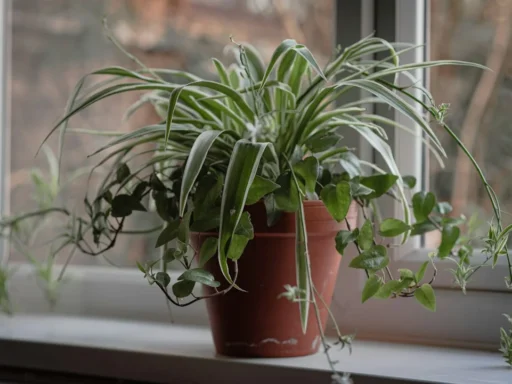
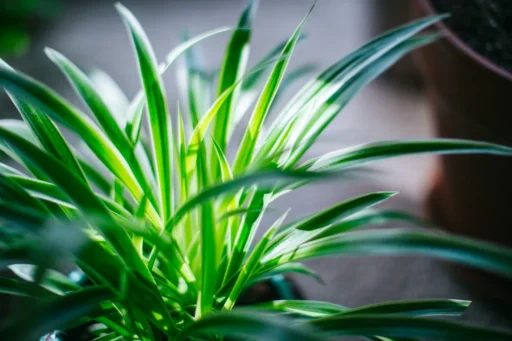
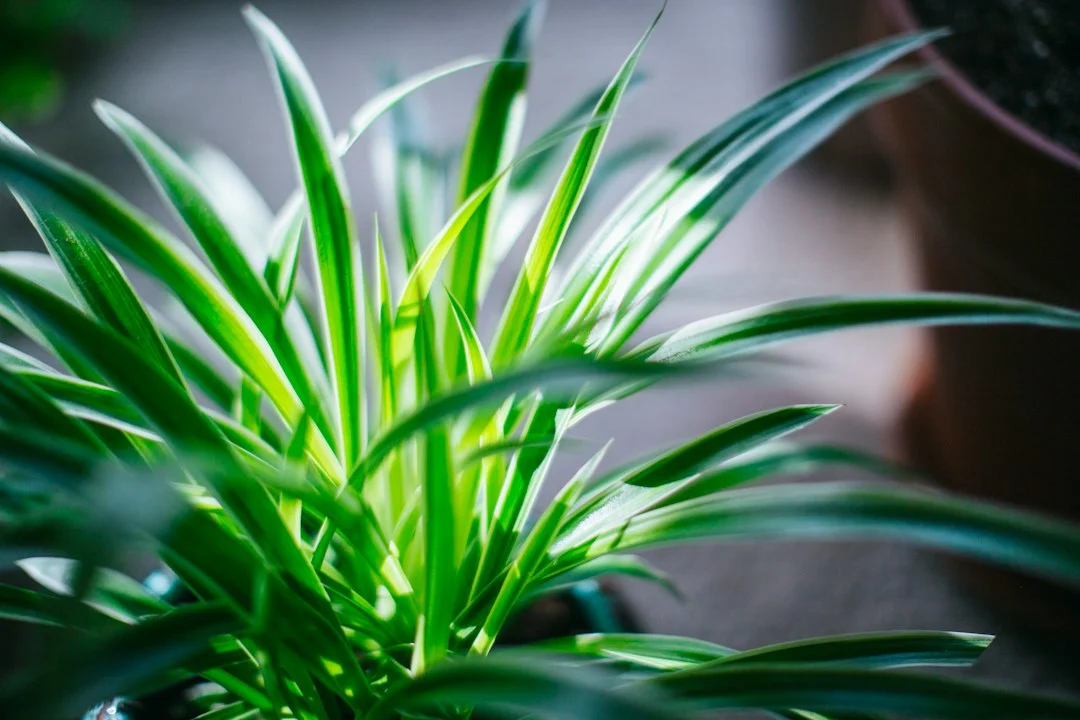
Research references: Iowa State University Extension and Outreach, University of Maryland Extension, and Clemson Cooperative Extension. Image credit: Suri Huang / Unsplash. The featured image shows a spider plant, a species that commonly develops tip burn, but it is illustrative rather than diagnostic.