Few things interrupt a quiet afternoon in the garden quite like a loud buzz right next to your ear. Knowing how a hornet differs from a wasp matters if you want to keep your backyard safe while still supporting a healthy local ecosystem. Hornets are technically a specific type of wasp, but they stand apart with their larger size, thicker build, and distinct nesting habits. At Solera Gardens, we believe understanding backyard ecology is part of what makes a successful gardener.
How Can You Tell the Difference Between a Hornet and a Wasp?
Telling a hornet apart from a wasp usually comes down to three things: body shape, coloring, and how they fly. Hornets technically belong to the wasp family, but a handful of traits set them apart clearly once you know what to look for.
Taxonomic Background and Species
Both insects share the same order, Hymenoptera, and the same family, Vespidae. Hornets, though, are far more limited in variety. There’s only one genus, Vespa, and North America has just one established species, the European hornet (Vespa crabro), which was introduced in the 1800s.
Common wasps, on the other hand, cover a much wider group. This includes paper wasps (Polistes spp.), yellowjackets (Vespula and Dolichovespula spp.), and various solitary species like mud daubers. It’s also worth noting that the large aerial nest builder commonly called the bald-faced hornet (Dolichovespula maculata) is actually a yellowjacket, not a true hornet, despite the name.
Body Shape and Size
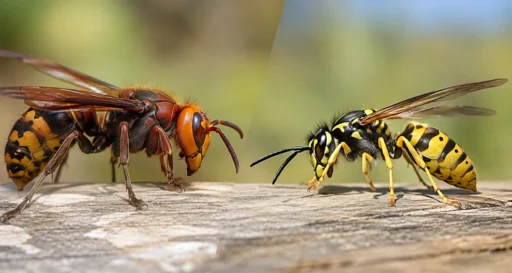
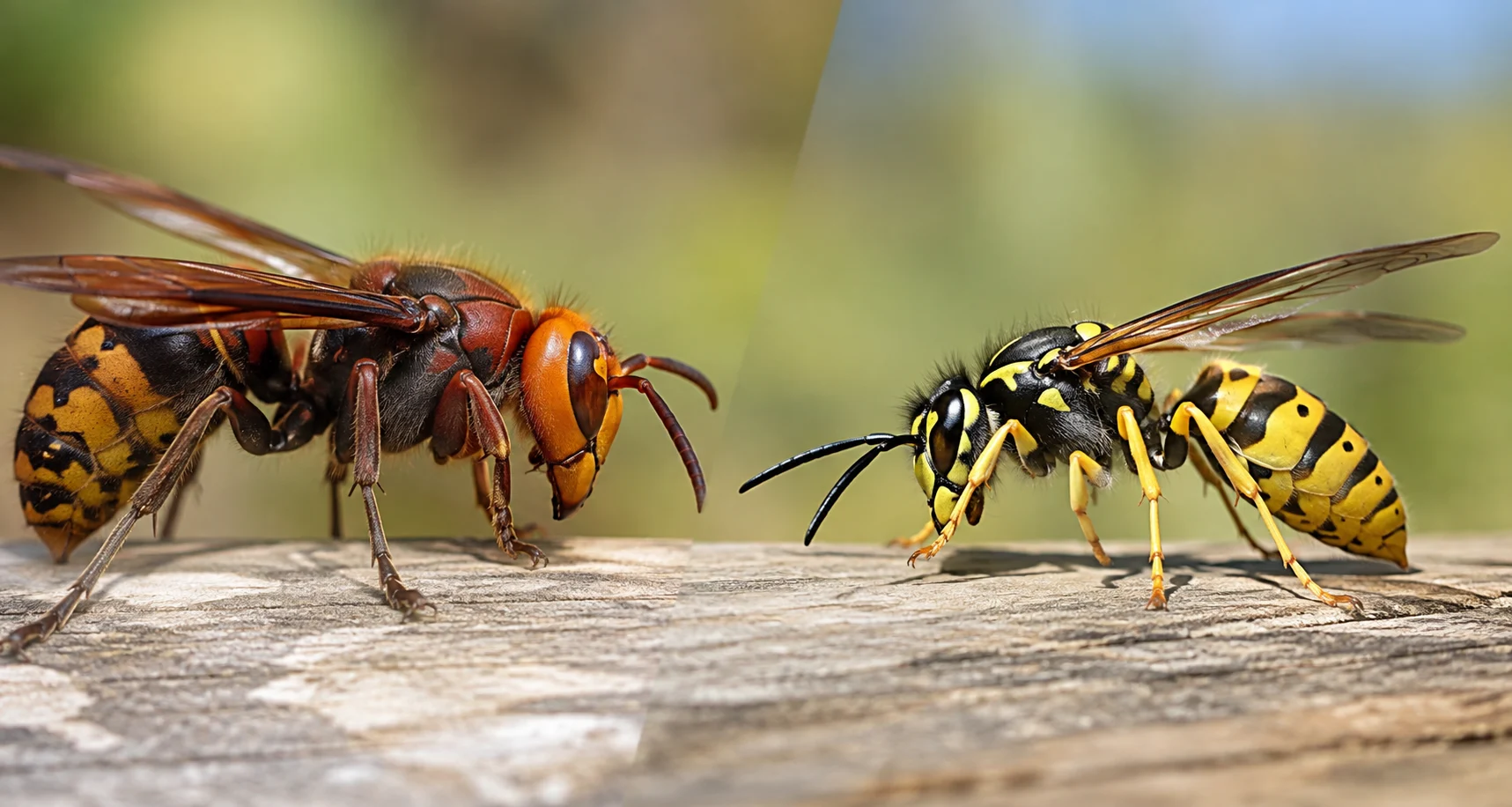
Size and shape offer the clearest visual cue. Wasps typically measure 0.5 to 1 inch long and have the classic narrow “waist,” known as the petiole, connecting the thorax and abdomen.
Hornets are the largest members of the group, usually 1 to 2 inches long, and lack that thin, constricted waist entirely. Their bodies are noticeably thicker and rounder from front to back, giving them a bulkier, more imposing presence in flight.
Coloration and Markings
Color patterns vary somewhat by region, but a few general trends hold up consistently. Most yellowjackets show crisp, bright yellow and black stripes on a smooth, shiny body with very little visible hair.
Hornets tend toward darker, softer coloring overall. The European hornet mixes reddish brown, brown, and dull yellow tones, while the bald-faced hornet has bold white markings against a black body.
Comparison of Key Characteristics
Here’s a quick reference to help you tell these insects apart during a walk through the garden.
| Feature | Hornets (e.g., European Hornet) | Common Wasps (e.g., Paper Wasps, Yellowjackets) |
| Scientific Genus | Vespa | Polistes, Vespula, Dolichovespula |
| Average Size | 1 to 2 inches (2.5 to 5 cm) | 0.5 to 1 inch (1.2 to 2.5 cm) |
| Waist Shape | Broad, thick, and rounded | Narrow, distinct “wasp waist” |
| Primary Colors | Reddish brown, dull yellow, black, and white | Bright yellow, shiny black, deep brown, or rust |
| Nesting Style | Large, fully enclosed grey paper spheres | Open paper combs or underground burrows |
| Defensive Radius | Large, highly protective near the nest | Moderate to high, depending on species |
| Active Hours | Day and night, drawn to outdoor lights | Strictly daytime |
Understanding Nest Construction: Hornet Nest vs. Wasp Nest
Nest style is another reliable way to identify what you’re dealing with, and it’s worth knowing before you trim back shrubs or clear out the garden shed.
Hornet Nest Structure
Hornet nests are fully enclosed and often shaped like large grey footballs or teardrops. The queen builds this papery structure by chewing weathered wood from fences, trees, or decking, then mixing it with her saliva to form a workable pulp.
By late summer, a nest can grow to the size of a basketball, with a single entrance hole at the bottom. Hornets typically build in high tree branches, hollow trunks, and occasionally under large roof eaves.
Wasp Nest Structure
Wasps build very differently depending on the species. Paper wasps create the classic open umbrella nest, a small structure with visible brood cells and no outer covering, usually hung from a single strong stalk under a porch ceiling, deck overhang, or window ledge.
Yellowjackets, by contrast, nest underground. They build a paper wrapped nest below the surface, often in an abandoned rodent burrow or beneath a rotting log. A small hole in the lawn, with wasps regularly emerging and disappearing, is usually the giveaway.
Solera Gardens Tip: Never cover an underground yellowjacket nest with soil or rocks. They’re persistent enough to dig a new exit, and the disturbance is likely to trigger an aggressive defensive response.
Are Hornets More Dangerous Than Wasps?
It’s a fair question for anyone sharing a yard with these insects, and the honest answer depends on how you define “dangerous.”
Venom Volume and Pain Levels
Because of their larger size, hornets have bigger venom glands and deliver more venom per sting. Hornet venom also carries a higher concentration of acetylcholine, which triggers pain receptors in mammalian skin more intensely, making a hornet sting notably more painful.
Neither hornets nor wasps have a barbed stinger like a honeybee, so both can sting multiple times without dying in the process.
Colony Defense and Aggression
Behaviorally, a typical yellowjacket tends to be far more short tempered than a hornet. Yellowjackets will swarm aggressively if you stumble onto a hidden underground nest or interrupt them while foraging for something sweet.
Hornets are generally calmer while out foraging, but they’re intensely territorial around the nest itself. Get within about 10 feet of an active hornet nest, and you can expect a fast, defensive response.
A Gardener’s Guide to Hornet and Wasp Identification
Some familiarity with identifying these insects goes a long way toward a smoother growing season. How they move through your garden beds is often a solid clue on its own.
Flight Characteristics
Flight style gives away quite a bit. Paper wasps drift along slowly, their long hind legs dangling visibly beneath them, giving off an almost awkward look as they move near a trellis or patio containers.
European hornets fly with much more power and speed. Their hind legs tuck in close to the body, and their buzz carries a deeper, lower tone. Standing near an evening flower bed, you’ll usually hear a hornet before you spot the smaller, higher pitched wasps and bees around it.
Foraging Preferences
Diet offers another useful clue. In spring and summer, both wasps and hornets hunt soft bodied insects to feed their larvae, so you’ll often see them working methodically through foliage.
Come late summer and fall, once the queen stops laying eggs, both groups shift toward sugar. Yellowjackets and paper wasps will swarm dropped apples, ripening berries, and even an open soda can. Hornets tend to go a different route, peeling bark from trees and shrubs like lilac or birch to feed on the sap underneath, a behavior known as girdling.
Why Wasps and Hornets Belong in a Healthy Garden Ecosystem
Encouraging stinging insects doesn’t come naturally to most people, but they’re genuinely valuable allies for organic gardeners and a solid part of any integrated pest management approach.
Natural Pest Control
Wasps and hornets sit near the top of the insect food chain, and they take out a huge number of garden pests every week. Leafhoppers, cabbage loopers, grasshoppers, tomato hornworms, and aphids are all regular targets. Letting them work your vegetable beds often means needing fewer organic sprays or synthetic pesticides overall.
Minor Pollination Partners
They don’t have the fuzzy bodies bees rely on for pollen transfer, but wasps and hornets still contribute to pollination. Moving from flower to flower for nectar, they pick up small amounts of pollen on their smooth legs and heads and deposit it as they go. Late season bloomers like goldenrod (Solidago spp.) and asters are particular favorites.
Common Mistakes Gardeners Make with Wasps and Hornets
A few practical, eco-friendly fixes for the most common missteps:
Mistake: Spraying every nest on sight. Solution: If a nest is tucked into an old oak tree or a quiet corner of the yard, leave it alone. It provides free pest control all summer, and the colony naturally dies off once cool fall weather arrives.
Mistake: Using broad-spectrum chemical sprays. Solution: These sprays kill more than just the target pest, taking out honeybees, ladybugs, and monarch butterflies along with them. Where possible, use manual trapping and only remove what’s genuinely necessary, calling a pest control service for anything more serious.
Mistake: Leaving fallen fruit on the ground. Solution: Clean up dropped apples, pears, and peaches promptly. Rotting fruit is an open invitation for wasps looking for an easy sugar source late in the season.
Solera Gardens Tip: Keep pest wasps and hornets away from your outdoor seating area by planting strong-smelling herbs nearby, like spearmint, peppermint, and eucalyptus.
Frequently Asked Questions
Do hornets die in the winter?
Most of the colony doesn’t survive late fall. Only newly mated queens make it through, hibernating in hollow logs, under loose bark, or occasionally in a warm attic, ready to start a brand new nest the following spring. Old nests are never reused.
What should I do if a hornet gets in my house?
Avoid swatting at it, since many hornets will sting defensively if provoked. Instead, open a window or door, turn off indoor lights, and switch on an outdoor light if it’s dark. Hornets are drawn to light and will usually find their way out on their own within minutes.
Are paper wasps beneficial to a vegetable garden?
Yes, paper wasps are excellent garden allies. They spend much of their time hunting caterpillars, armyworms, and beetle larvae that would otherwise damage vegetable crops.
How can I keep wasps away from my patio without chemicals?
Hang a fake paper nest near your seating area. Many wasp species are territorial and avoid nesting within about 20 feet of what looks like an existing nest.
Do wasps and hornets sleep?
Not in the way mammals do, but they have clear rest periods. Most common wasps go still at night inside their nest. European hornets are an exception and stay active after dark, hunting moths and other nocturnal insects.
Why do wasps get so aggressive in September and October?
As colonies decline in the fall, larvae stop producing the sugary secretion that once fed the worker wasps. Left without that food source, workers become bolder and more aggressive while searching for sugar elsewhere.
Are there solitary wasps that don’t build nests?
Yes, several beneficial garden wasps live entirely solitary lives. The cicada killer and the thread-waisted mud dauber are two examples, and neither builds a shared colony or nest, which makes them notably calm and unlikely to sting unless directly handled.
Conclusion
Knowing the real differences between a hornet and a wasp is genuinely useful for any gardener. Both can deliver a painful sting and deserve a healthy amount of respect, but both also play a meaningful role in natural pest control and light pollination. Learning to recognize their body shapes, behavior, and nesting habits makes it much easier to share the same space without conflict. With a bit of knowledge, a chemical-free garden that works with nature instead of against it is well within reach.
For pests associated with damp storage areas, see our guide to silverfish and moisture control.
If you find ant trails as well, use our household ant identification guide to investigate the source.