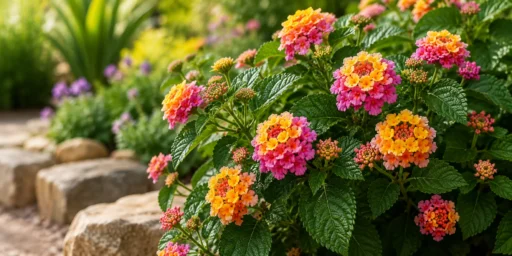
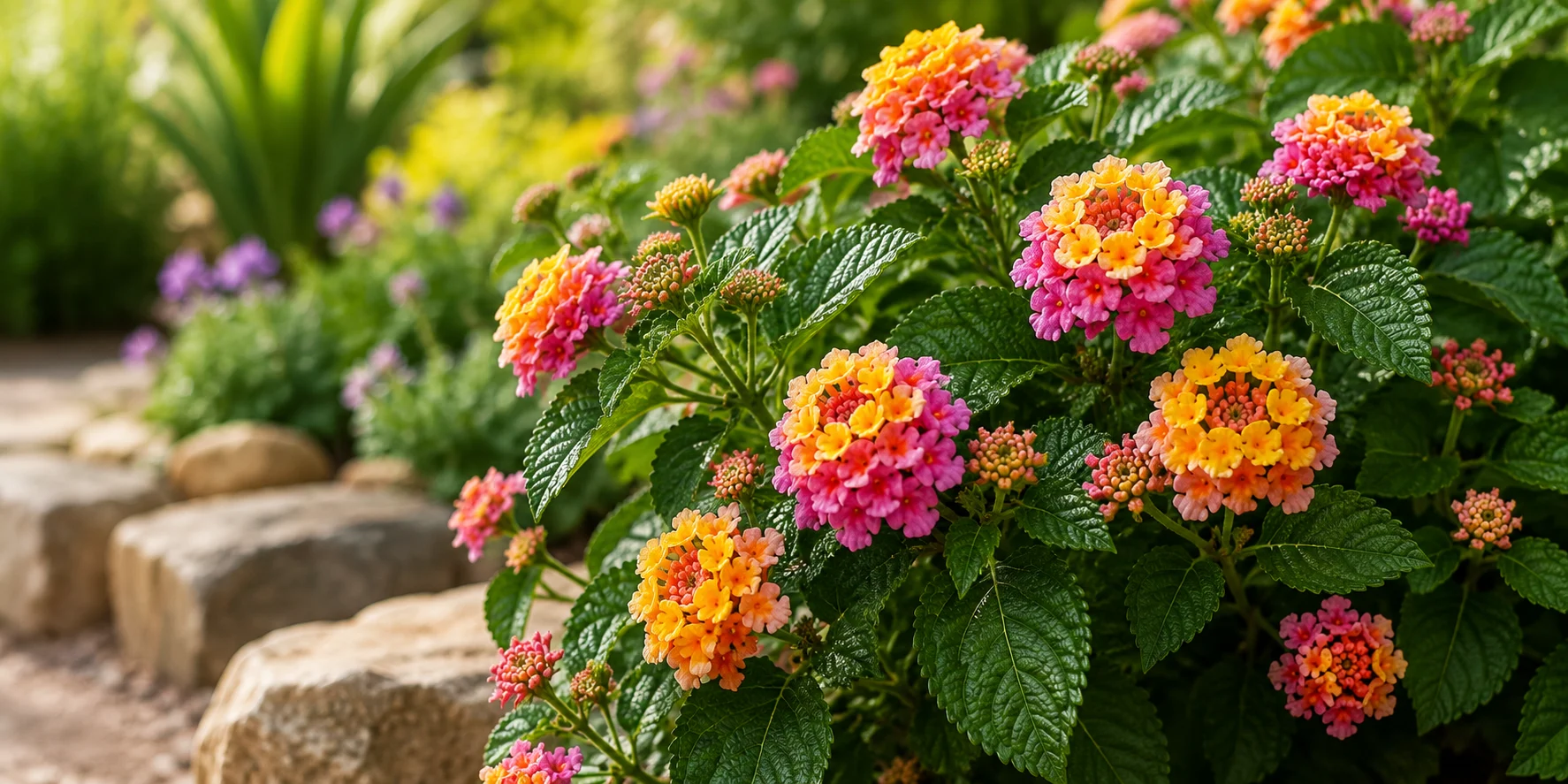
If you want an enduring and lively plant that will scoff at the summer heat, then finding out how to grow and care for Lantana will definitely prove to be a perfect answer for you. The lantanas are sun-loving plants, and they prefer to grow in slightly acidic soil and don’t need much water after they are mature. Lantana planting tips are really easy to understand because the only thing required is that they should be planted in the late spring season, watered once a week and cut down to one-third in early spring. Therefore, once this is done, you will get loads of colors in your garden in summer.
Belonging to the genus of Verbenaceae or verbena family, lantanas are widely known for their abundant blooming in the hot months of summer. With rough-textured, strongly scented leaves and clusters of small trumpet shaped flowers in various colors that change their shades as they age, they are greatly appreciated by gardeners for their usefulness in border making, container planting, suitable for containers and elevated planting displays due to their ability to attract butterflies and hummingbirds. Now let’s talk about how you can easily grow this plant in your garden.
How Do You Care for a Lantana Plant?
Taking care of this plant turns out to be relatively easy owing to its high tolerance of neglect, droughts, and poor soil nutrition. In order to maintain your arrangement, give it a place that gets no less than six to eight hours of full sun daily. Let the soil become very dry before watering again, since overmoistening of the root area kills the plant the fastest.
Speaking of planning your garden, especially one that is supposed to withstand drought and high temperatures, our specialists of Solera Gardens advise combining plants with similar watering needs. Such planting makes maintenance easy and prevents any plant from overwatering. It is especially important for landscaping with young and sensitive plants.
Overwatering may lead to a reduced number of flowers on the plant and cause leggy growth. The lack of flowers always means that the plant gets either too much water or too many nutrients. Starving of nutrients and drying of the soil is a good solution to start flowering once again.
Step-by-Step: How to Grow and Care for Lantana
Learning how to grow and care for Lantana requires understanding its native tropical origins, where it enjoys hot, sunny days and sandy, open ground. Setting up the right growing environment from day one prevents transplant shock and ensures rapid establishment.
Selecting the Right Location
It would be better to choose a location where the plant would have enough light throughout the whole day. If for any reason your shrub will be planted in a semi-shade location, then this will mean that neither flowers nor small branches will appear. It is better to choose the location where the plant will have the proper ventilation of its foliage.
Soil Preparation and Planting
Although these plants are very resistant and unpretentious, they will still do great in the light, sandy or gravel soils with a little bit of acidic to neutral pH. If you will be planting in clay soil, then you need to add some organic compost or rough grit to improve the structure. The size of the planting pit should be twice bigger than the root ball, planting it at the same level as the soil.
Watering and Nutrients
Water your new planting frequently to stimulate root system growth in the soil. Once the plant is established, water it once a week, letting the top two inches of soil dry up. You should not use heavy fertilizers because excess nitrogen will cause the appearance of green leaves instead of blossoming.
Understanding Lantana Botany and Varieties
Before choosing the type of plant that is to be analyzed, it becomes important to have knowledge regarding the biology of the plant. There are more than one hundred types of the plants belonging to the same genus; however, the most commonly used species in the garden is the Lantana camara, also called the common lantana.
It is very important to know the difference between the flowering perennial and the annual lantana in order to set reasonable expectations from your garden. The perennial lantana will act as a perennial shrub in USDA hardiness zones 9 to 11 because the plant will live for many years in such conditions and will develop woody stems and strong roots. However, when planted in zones north of zone 9, it will act as an annual.
Both have the ability to be planted in the garden, and their use will depend on what the gardener intends to do with the plant in the landscape. For instance, the climbing type would be suitable for containers, raised planting areas, or ground cover applications. However, the vertical type would suitably be used as a colorful background hedge plant.
Designing Your Garden with Lantana
These vibrant flowers have immense importance in the world of landscaping due to their ability to bloom for a long period of time as well as their toughness. These flowers are perfect to be planted in extremely hot pavement, sunny slopes, and poolsides, where no other sensitive flowers can grow. Their capacity to thrive in salt conditions makes them prevalent in beach gardens.
For the creation of an attractive garden bed which is both resilient and fragrant, one may incorporate lantana together with drought-resistant cooking herbs. The book titled How to Grow and Care for Rosemary? will offer you an attractive evergreen shrub with the same light and water requirements as the flower. The delicate foliage of the plant will provide an attractive contrast to the broad and thick foliage of the flowering shrub.
Combining the trailing plants on the walkway works wonderfully with nocturnal climbers. Creating a vertical trellis using How to Grow and Care For Moonflower? will help you create a place where colorful flowers during the day will turn into large white flowers at night. This planting technique will guarantee that you have a garden that is beautiful and aromatic around the clock.
Quick Reference Guide for Lantana Care
The table below summarizes the key cultural conditions required to maintain a healthy and vibrant plant.
| Care Factor | Optimal Requirement | Key Tips for Success |
| Light Exposure | Full Sun (6 to 8+ hours daily) | Maximum sun exposure ensures continuous blooming. |
| Soil Type | Sandy, loamy, exceptionally well-draining | Avoid heavy clay; amend with compost or sand. |
| Soil pH | Slightly Acidic to Neutral (6.0 to 7.0) | High pH can occasionally cause yellowing foliage. |
| Watering | Deep, infrequent watering | Water once a week once established; do not overwater. |
| Hardiness | USDA Zones 9 to 11 (Perennial) | Treat as an annual in zones 8 and colder. |
| Fertility | Low to moderate | Avoid high-nitrogen fertilizers to prevent bloom loss. |
Pruning and Maintenance for Vigorous Blooms
While these plants are naturally low-maintenance, a small amount of regular pruning will keep them looking tidy and full of blossoms. Unpruned plants can occasionally become woody, sparse, and overgrown, especially in warm climates where they grow year-round.
Pruning Perennial Varieties
In case the plants grow in perennial fashion, perform a severe prune in early spring while new green shoots have not emerged yet. Cut off the woody stems to one-third or one-half their length in order to stimulate healthy growth. This routine pruning allows keeping the inner part of the shrub filled with leaves and makes the shrub dense and compact in its shape.
Mid-Season Deadheading
Most modern hybrids are usually sterile and seedless. Thus, deadheading is unnecessary for such flowering plants as they continue blooming all the time. Traditional varieties bear berries which turn into metallic blue-black fruit when mature. The removal of spent blooms makes the plant spend less energy on ripening of fruit and more on developing new buds.
Shaping and Pinching
In order to make your plant look more bushy, pinch off about one or two inches of the tops of the trailing or container plants during summertime, thereby stimulating branching of the lateral buds. If the plant becomes too big for the place of its growth, you can cut back the entire outer canopy lightly.
Troubleshooting Common Lantana Issues
Although the above-mentioned plants are extremely resilient and hardy, there may be cases when these plants will struggle without proper care. Early recognition of signs of distress in these plants will allow you to deal with the problem immediately and prevent damage to your plants.
Dealing with Powdery Mildew
Fungus infection manifests itself as white, dust-like substance on the leaves of the plants. This disease is common if the plants are grown in shade. High humidity, overhead watering, and overcrowding of the plant increase the possibility of fungus growth since air does not circulate around the plant. The treatment includes the pruning of affected branches, changing watering techniques to keep leaves dry and exposure of the plant to the sun.
Managing Pests
Even though it is tough on touch and the unpleasant odor of the plant drives the deer and rabbits away, problems with pests, such as lace bugs, white flies, or spider mites can happen. In case when there are yellow spots and sticky stuff on the leaves of the plant, pests appear, and it needs to be washed with the help of water or insecticidal soap.
Preventing Root Rot
If leaves are yellow and fall down and the soil is wet, it means that the problem is with the roots of the plant. In simple terms, root rot is the disease when the roots of the plant rot because of too much moisture. It is necessary not to water such plants.
Frequently Asked Questions
Does lantana come back every year?
The ability of this perennial plant to appear every year is solely determined by your area’s winter climate. If you have areas in USDA zone 9 to 11, then this is an ever-present perennial plant which always appears every year. However, in regions with severe winters, frost in the winter period will kill the plant, thus making it an annual crop.
Is lantana toxic to dogs and cats?
This is due to the fact that all the parts of this plant are extremely poisonous to animals as well as human beings due to the presence of triterpene acid in it. It is also important to know that the young berries of this plant are very dangerous when eaten, especially when they are green in color, while the rough leaves which resemble sandpaper are prone to irritating the skin.
How much sun does lantana need?
The plant needs at least six to eight hours of sunlight daily, and The plant requires at least six to eight hours of direct sunlight daily. Insufficient sunlight can reduce flowering and increase the likelihood of fungal issues such as powdery mildew.
Does lantana need to be deadheaded?
However, while most of the newly created sterile hybrids do not need deadheading, the procedure is very important for the common types of hydrangeas. Deadheading will help the plant not to produce any black fruits and use the energy to form new flowers.
How do you overwinter lantana?
To ensure that the potted plants can survive through the winter season in an environment that has very low temperatures, it is important to first bring the plant indoors before the frost starts in fall. This should be done by placing the plant in an environment that is cool and dark, hence keeping the plant away from the sun rays. The plant should be watered once per month.
Conclusion
Learning how to grow and care for these brightly colored and drought-resistant plants is quite easy and will help in achieving an amazing summer garden look. Having learned How to Grow and Care for Lantana? one is able to make use of their garden areas that are too hot and dry and transform them into flourishing gardens for attracting pollinators. All it takes is plenty of sun, well-draining soil, and infrequent watering.
Plan access and planting space with our beginner garden planning guide.