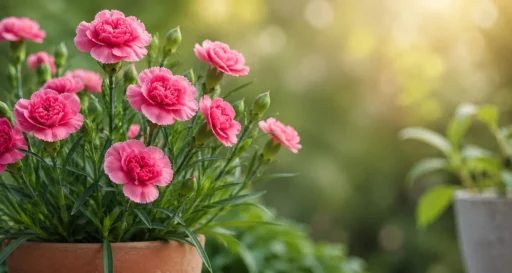
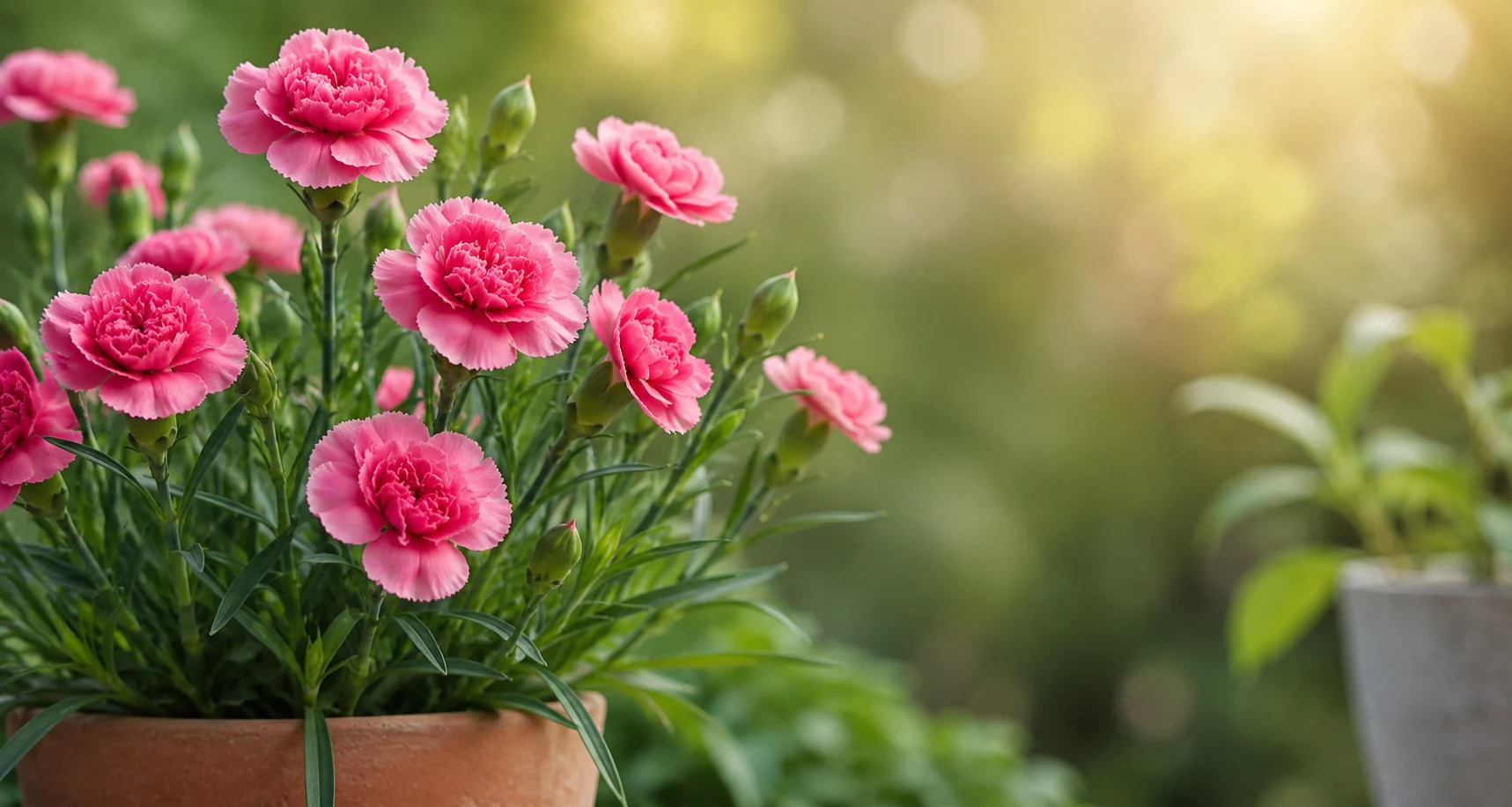
Carnations (Dianthus caryophyllus) grow best with strong light, free-draining soil, and good air movement around their foliage. Their ruffled flowers and clove-like fragrance make them useful in borders, containers, and cutting gardens, but success depends on keeping the crown from sitting in wet soil. This guide covers planting, watering, pruning, winter care, common problems, and practical ways to limit deer damage.
Whether you’re growing elegant, long-stemmed carnations for dramatic bouquets or lining a pathway with charming dwarf varieties, this guide walks through everything from planting to protecting your blooms.
How Do You Grow and Care for Carnations in Your Garden?
Carnations originated in the sun-drenched hillsides of the Mediterranean, and they’ve adapted well to harsh, dry conditions. The key to growing them successfully at home is recreating that habitat as closely as possible: free-draining soil and as much sunlight as you can offer. Avoid heavy clay soil and low spots where water tends to collect, since sitting in wet soil for extended periods is one of the surest ways to kill a carnation.
Carnations generally prefer soil near neutral, but do not add agricultural lime simply because a plant looks weak. Poor drainage, crown rot, crowding, and insufficient light can produce similar symptoms. Test the soil first and follow the laboratory’s amendment recommendation; unnecessary lime can push the pH too high.
Plant Overview and Botanical Profile
Before getting into day-to-day care, it helps to know a bit about what a carnation actually is. Carnations belong to the species Dianthus caryophyllus in the Caryophyllaceae family, making them close relatives of pinks and sweet William.
- Botanical Name: Dianthus caryophyllus
- Common Names: Carnation, clove pink, divine flower
- Plant Type: Herbaceous perennial, often grown as an annual or biennial in colder regions
- Mature Size: 12 to 36 inches tall, 12 to 18 inches wide, depending on variety
- Sun Exposure: Full sun, at least 6 hours of direct sunlight daily
- Soil Type: Loamy, sandy, and exceptionally well-draining
- Soil pH: Neutral to slightly alkaline (6.7 to 7.8)
- Bloom Time: Late spring through summer, extending into fall with regular deadheading
- Flower Colors: Red, pink, white, yellow, purple, orange, green, and striking bicolors
- USDA Hardiness Zones: 5 to 9, with some cold-hardy cultivars surviving down to zone 3
- Toxicity: Toxic to dogs and cats, containing triterpenoid saponins that cause mild gastrointestinal upset
Pet Safety Warning
Carnations look lovely in the garden or in a vase, but they contain triterpenoid saponins that can cause problems if a pet decides to sample them. Watch for vomiting, diarrhea, or mild skin irritation around the mouth if your dog or cat has been chewing on the plant. If pets are a concern, keeping carnations in containers rather than open garden beds is a simple workaround.
Master Carnation Care: Light, Soil, and Climate Requirements
Getting carnation care right means recreating their native habitat closely enough to avoid common issues like floppy stems and root rot.
Sunlight and Air Circulation
Sunlight fuels both blooming and stem strength in carnations, so aim for around 6 hours of direct light daily. Plants grown in partial shade tend to develop weak, floppy stems and produce fewer, smaller flowers.
Good airflow matters just as much as sunlight. Carnations are naturally bushy, and their leaves can trap moisture that becomes a breeding ground for fungal issues. Space plants generously so a breeze can dry the foliage after rain or morning dew.
Soil Preferences and the Importance of pH
Carnations do best in light, fertile soil, ideally sandy or loamy. Heavy clay soil is more of a challenge and usually needs amending before carnations will thrive in it, since clay retains water long enough to starve roots of oxygen and encourage rot.
Carnations are also particular about soil pH, doing best in a range of 6.7 to 7.8. If a soil test shows a pH below 6.5, working dolomite or agricultural limestone about six inches into the soil before planting can correct this.
Solera Gardens Tip: Skip the guesswork on soil pH. An inexpensive test kit from your local nursery will tell you exactly how much lime to add. Lime doesn’t just raise pH, it also supplies calcium, which helps build stronger flower stems.
How to Plant and Propagate Carnations
Whether you’re working with a garden bed or containers, getting the planting stage right, whether from seed, starts, or cuttings, sets the foundation for a strong season.
Starting from Seed
Growing carnations from seed is inexpensive and rewarding, but it does require patience. A standard florist-style carnation can take up to 140 days from seed to first bloom.
- Timing: Start seeds indoors 6 to 8 weeks before your last expected spring frost.
- Sowing: Sprinkle seeds over a tray of light, moist seed-starting mix, covering them lightly with about 1/8 inch of mix.
- Germination: Keep a plastic dome over the tray to retain moisture, with soil temperatures around 65 to 70°F. Most seeds germinate within 10 to 14 days.
- Growing on: Once seedlings emerge, remove the plastic cover and move the tray to a bright, south-facing windowsill or under a grow light. Keeping the space cool, around 60°F, helps prevent leggy growth.
Propagating from Stem Cuttings
If a friend or neighbor has a particularly strong, attractive carnation you’d like to clone, stem cuttings are a reliable method.
- Selection: In midsummer, choose a healthy, non-flowering shoot 4 to 6 inches long.
- Preparation: Cut just below a node using sterilized pruning shears, and remove leaves from the lower half of the cutting.
- Rooting: Dip the cut end in organic rooting hormone powder, then plant it in a well-watered mix of equal parts perlite and peat moss.
- Care: Cover the container with a plastic bag to hold in moisture, and place it somewhere bright but out of direct sun. After three to four weeks, a gentle tug that meets resistance means roots have formed and the cutting is ready for its own pot or garden spot.
Step-by-Step Instructions: How to Grow Carnations in Garden Beds
Once the risk of late spring frost has passed, your young plants are ready for the garden. Here’s how to plant them.
- Prepare the bed: Loosen the soil to a depth of 8 to 10 inches, and mix in a 2 inch layer of well-rotted compost for better drainage and nutrition.
- Adjust pH if needed: Work in dolomite lime if your soil test shows acidic conditions.
- Dig the hole: Make it twice the width of the root ball but the same depth.
- Position the plant: Remove the carnation from its pot and set it in the hole so the crown, where the stems meet the roots, sits slightly above the surrounding soil level. Planting too deep is a common cause of crown rot.
- Backfill and firm: Fill the hole with soil, pressing gently as you go to eliminate air pockets.
- Water in: Water thoroughly at the base to settle the soil around the roots. Space plants 12 to 18 inches apart to ensure good airflow as they mature.
Watering and Fertilizer Guide
Once established, carnations are fairly easy to maintain, though watering and feeding needs shift somewhat through the growing season.
Watering Guide: Finding the Right Balance
Keep the leaves dry and the roots moderately moist. Overwatering is a far bigger threat to carnations than underwatering.
- Establishment phase: For the first few weeks after transplanting, water lightly a few times a week, keeping the soil damp but never soggy while new roots settle in.
- Mature phase: Once established, water whenever the top two inches of soil feel dry, which might mean once a week in cooler weather or two to three times a week during hot, dry summers.
- Watering method: Water at the base of the plant using a drip line, soaker hose, or a watering can with a narrow spout. Overhead watering wets the foliage and encourages leaf rust, powdery mildew, and other fungal issues.
Fertilizer Guide: Feeding for Strong Stems and Abundant Blooms
A common mistake among newer gardeners is overfertilizing carnations, particularly with high-nitrogen blends. While nitrogen supports healthy green foliage, too much of it weakens stems and reduces flowering.
Instead, apply a balanced, organic slow-release fertilizer, something like a 5-10-5 formula, as growth resumes in early spring. Once flower buds appear later in spring, switch to a liquid, potassium-rich organic fertilizer every 4 to 6 weeks. Potassium helps build the stem strength needed to support heavy, double-petaled blooms.
The Art of Pinching, Pruning, and Support
Getting the long, straight, sturdy stems seen in professional flower displays takes a bit of extra know-how that most general gardening guides skip over.
The Essential Pinching Technique
Pinching is what turns a single, sparse stem into a full, healthy, bushy plant.
| Plant Development Node | Physical Action to Take | Hormonal and Growth Outcome |
| Nodes 1 through 4 | Leave completely untouched | Establishes a strong, woody base |
| Node 5 (5th leaf pair) | Pinch or snip the stem cleanly just above this leaf pair | Breaks apical dominance, redirecting energy to lateral buds |
| Node 6 and above | Discard the removed growth tip | Encourages 8 to 10 vigorous side shoots |
About three to four weeks after transplanting, once the stem has developed 5 to 6 pairs of leaves, pinch off the growing tip just above the 5th leaf pair using your thumb and forefinger. It’s a simple step, but it redirects the plant’s energy toward producing far more flowers over the season.
Standard vs. Spray Pruning Styles
Depending on your goals, two different pruning approaches can dramatically change how your carnations look.
| Pruning Style | Target Bloom Aesthetic | Bud Removal Technique | Best Use Case |
| Standard Style | One large, show-stopping flower per stem | Pinch off all secondary side buds as they appear, keeping only the central crown bud | Formal floral design, competition arrangements, long-stemmed vase displays |
| Spray Style | A full, branched cluster of smaller flowers | Pinch out the main central bud as soon as it forms to encourage lateral buds | Informal garden borders, cottage-style plantings, mixed bouquets |
Supporting Floppy Stems
Regardless of pinching height, taller carnation varieties often develop flower heads too heavy for their stems to support, especially after rain or in windy conditions.
- The grid trellis method: Many professional growers string a layer of grid netting about 12 inches above the ground over the planting bed. Plants grow up through the netting, which keeps even heavy stems upright without needing to tie each one individually.
- The bamboo grid method: A simple, rustic version works well for home gardens. Place four sturdy bamboo poles around a cluster of carnations and weave garden twine between them to create a support grid the plants can lean against.
Common Pests, Diseases, and Troubleshooting
No garden plant is entirely trouble-free, but catching problems early can save a struggling carnation.
Pest Control
- Spider mites: These thrive in hot, dry conditions and feed on leaf sap, leaving foliage looking dusty, speckled, and yellowed. A strong blast of water from the hose usually knocks them off. If that’s not enough, an organic soap-based insecticide applied in the cooler evening hours works well as a follow-up.
- Thrips: Tiny, slender insects that hide inside flower buds, feeding from within and causing distorted shapes and browned petal edges. Yellow sticky traps near affected plants help catch them, and neem oil offers an effective organic treatment.
- Slugs and snails: Young carnation plants are a favorite target. Shallow saucers of beer placed near seedlings lure slugs in, where they drown, or you can simply handpick them during the evening hours when they’re most active.
Disease Prevention
- Carnation rust: Small, rust-orange pustules appear on the underside of leaves, usually caused by poor airflow and consistently wet foliage. Remove and destroy any affected leaves, and never compost them, since the fungal spores can survive the composting process.
- Root rot: Yellowing, wilting leaves paired with a soft, mushy stem base are classic signs of root rot from overly wet soil. Unfortunately, there’s no reliable way to save a plant once root rot sets in, so it’s best to remove the plant and replace the surrounding soil before replanting.
Seasonal Care Advice and Overwintering
Consistent care through the year helps carnations return in full form each spring.
Spring: Apply a fresh top dressing of composted manure or organic plant food. If your soil leans acidic, work in a bit of dolomite lime around the base, and gently pull back any heavy mulch so the crown can start warming up.
Summer: Deadhead regularly, snipping spent flowers just below the first side leaf joint. This prevents seed production and keeps the plant sending out new buds all summer.
Autumn: As the last blooms fade, cut the plant back by about half. This reduces wind damage risk over winter and keeps growth from becoming unruly. Spread about 2 inches of fresh straw mulch around the base, keeping it away from the crown, to prevent trapped moisture through winter.
Winter: In especially cold regions (USDA zone 5 and colder), freeze-thaw cycles can heave carnation roots partly out of the soil. If this happens, gently press the plant back into place and add a bit more straw mulch over the exposed roots.
Selecting the Best Carnation Varieties
Your specific goals, along with your available space and climate, will shape which variety makes the most sense.
We selected the following varieties for their strong track record with disease resistance, prolific flowering, sturdy stems, and in several cases, an especially intoxicating fragrance.
Best for Beginners: Dianthus ‘Dino’ Series These dwarf varieties are notably tough, forgiving of imperfect watering, and look great without much staking or pinching required.
Fragrant cut flowers: Dianthus caryophyllus ‘Chabaud Giant Mix’ is commonly grown for its scented flowers and range of colors. Pollinator value varies among cultivars, particularly when blooms are densely doubled, so include several flower shapes and species if supporting insects is a main goal.
Best for Containers: Dianthus ‘Oscar’ Staying compact at just 8 to 10 inches tall, this variety produces a steady stream of intensely fragrant flowers without flopping over the edge of a pot.
Best for Cut Flowers: Dianthus caryophyllus ‘Grenadin’ With long, straight 24 inch stems and strongly fragrant blooms, this variety is a benchmark for home cutting gardens. Properly conditioned, the flowers hold up beautifully in a vase for up to two weeks.
Frequently Asked Questions
Do carnations come back every year?
Yes, perennial varieties return annually when grown in USDA zones 5 through 9 with well-drained soil. In colder climates, they’re often grown as annuals or require heavy winter mulching to survive freezing temperatures.
How much sun do carnations need?
At least six hours of direct sunlight daily to produce strong, upright stems and abundant blooms. Partial shade leads to floppy, leggy growth and far fewer flowers.
Why are my carnation leaves turning yellow?
Yellow leaves can result from saturated soil, crown or root disease, nutrient problems, natural aging, or other stress. Check soil moisture and drainage first, then inspect the crown and roots for soft or discolored tissue. Remove badly affected plants if rot is established; Rutgers Cooperative Extension advises keeping mulch away from the crown to help prevent carnation crown rot.
Do deer eat carnations?
Deer may eat carnations, although Dianthus is often treated as a lower-preference plant. Resistance is never guaranteed: browsing changes with deer pressure, season, available food, and the individual plant. Penn State Extension includes dianthus in deer-resistant plantings but also advises gardeners to rate plants by local experience.
If deer regularly visit your yard, protect young carnations with fencing or temporary netting while they establish. Repellents may reduce browsing when used according to the label, but they need reapplication and work best before feeding becomes a habit. Look for clipped stems or torn foliage rather than assuming every missing flower was caused by deer; rabbits, slugs, and cutting insects can cause different patterns of damage. See Penn State Extension’s deer-resistance guidance for the limits of plant ratings.
Can you grow carnations indoors?
Yes, compact or dwarf varieties do well indoors in a south-facing window with at least six hours of direct light. If natural light is limited, a full-spectrum LED grow light helps prevent leggy growth.
How do you dry carnation flowers?
Harvest fully open blooms, gather the stems together with a rubber band, and hang them upside down in a warm, dark, well-ventilated room for two to three weeks. Hanging them upside down keeps the stems straight as they dry.
Are carnations toxic to pets?
Yes, carnations are toxic to both dogs and cats due to triterpenoid saponins. Ingestion can cause mild vomiting, diarrhea, and drooling, and contact with the plant’s sap may cause mild skin irritation.
Conclusion
For healthy carnations, prioritize drainage and airflow, keep mulch away from the crown, and water according to soil conditions rather than a fixed calendar. Pinch young plants when appropriate for the cultivar, remove faded flowers to keep the planting tidy, and investigate yellowing or collapse before adding fertilizer. Where deer pressure is high, protect new plants instead of relying on a “deer-resistant” label alone. For a mixed flower bed, compare their form and flowering season with our guides to garden roses and poppy varieties.