
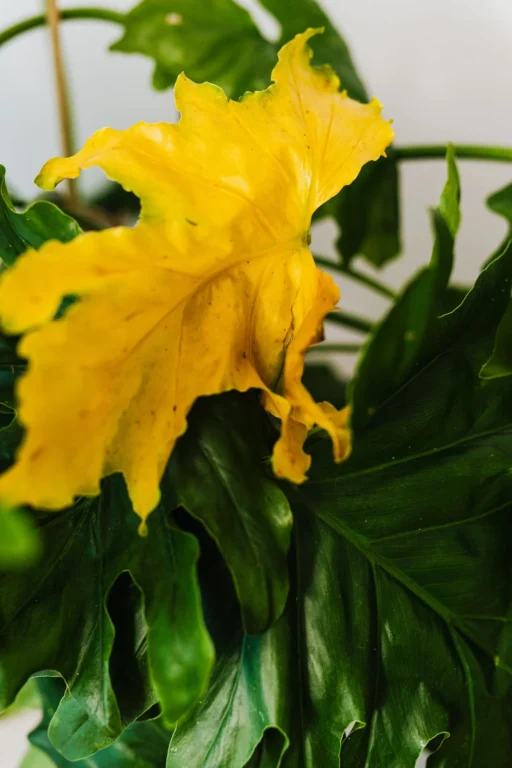
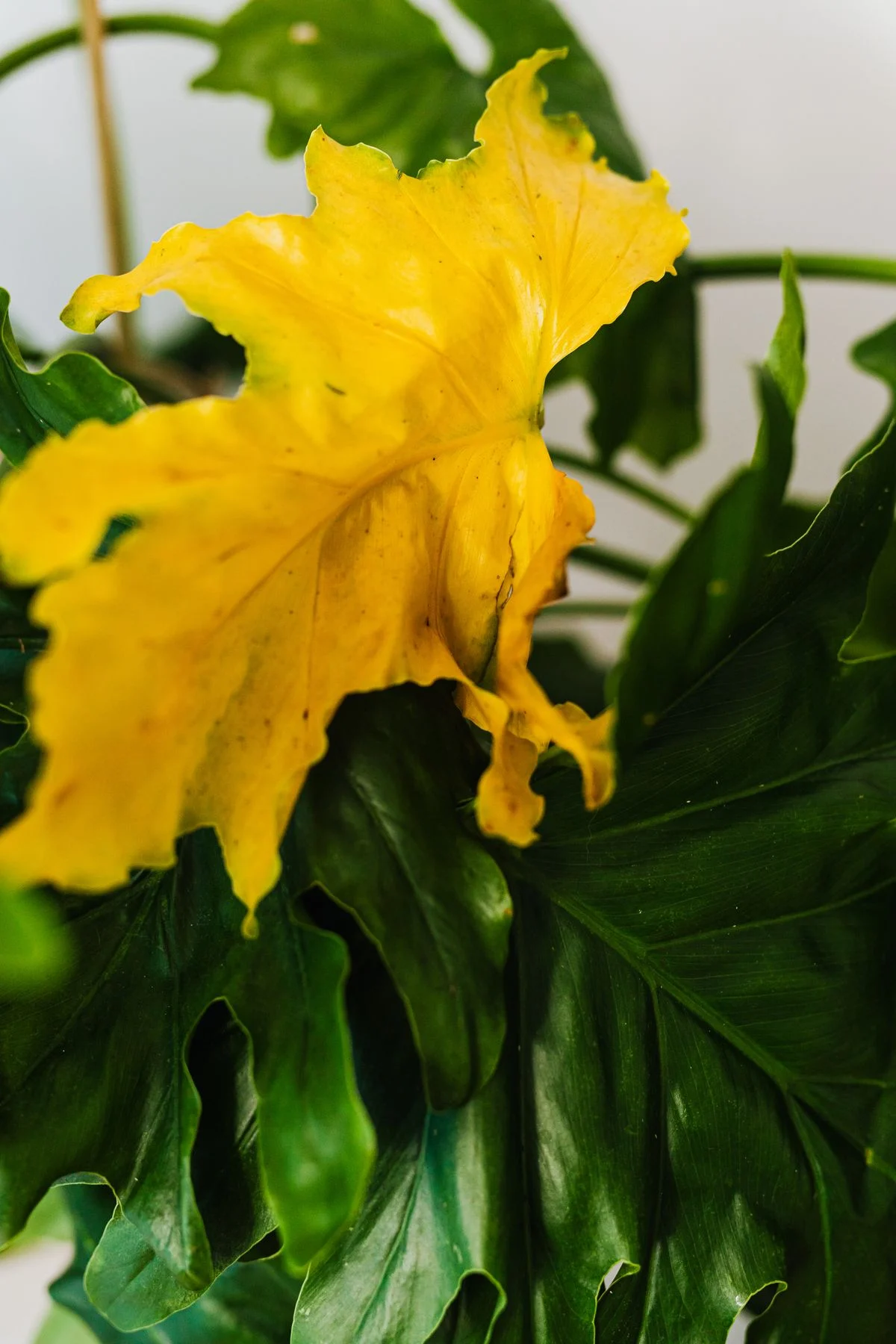
A yellow leaf is a symptom, not a diagnosis. Before watering, fertilizing, or repotting, look at which leaves are yellow, how quickly the change happened, and what the potting mix feels like. One aging lower leaf may be normal. Several yellow leaves, soft stems, pests, or a constantly wet root ball call for a closer look.
The most useful approach is to diagnose the pattern first, correct the most likely cause, and then watch the plant’s new growth. Changing three things at once can stress the plant and makes it impossible to learn what helped.
Start with a 10-minute plant check
Move the plant somewhere bright enough to see the leaves clearly, but do not leave a shade plant in harsh direct sun. Then work through this order:
- Find the pattern. Is one oldest leaf yellow, or are leaves changing throughout the plant? Is the color even, between the veins, spotted, or paired with brown edges?
- Feel below the surface. Check the potting mix at more than one point. A dry top can hide damp soil lower in the pot.
- Inspect the container. Confirm that it has a drainage hole and is not standing in water inside a saucer or decorative cachepot.
- Look for pests. Check leaf undersides, new growth, stems, and the places where leaves join stems.
- Review recent changes. Note moves, repotting, cold drafts, heat vents, fertilizer, missed waterings, or a sudden change in daylight.
University of Maryland Extension lists watering problems, root damage, soluble-salt buildup, and several sap-feeding pests among common reasons indoor foliage becomes yellow or faded. Iowa State University Extension also stresses that yellowing and leaf drop are broad symptoms. The plant’s recent history often supplies the missing clue.
What the yellowing pattern can tell you
Patterns narrow the possibilities, but they do not prove a single cause. Use this table as a triage guide rather than a prescription.
| What you see | What to check next | What not to assume |
|---|---|---|
| One or two oldest lower leaves yellow slowly | Whether the rest of the plant is growing normally | That the plant needs fertilizer |
| Many leaves yellow while the mix stays wet | Drainage, watering frequency, root condition, and pot size | That more water will revive it |
| Yellowing with dry, limp leaves and a light pot | Whether the entire root ball actually absorbed water | That a quick splash reached all the roots |
| Pale growth after a move | Light level, cold exposure, and the timing of the change | That nutrients are the only explanation |
| Speckling, sticky residue, webbing, bumps, or cottony material | Leaf undersides and stems for pests | That yellow leaves are simply old |
| Yellow tissue between greener veins | Species needs, root health, fertilizer history, water quality, and pH | That one mineral supplement will solve every case |
Is one yellow lower leaf normal?
Often, yes. An established plant can shed an older leaf as it reallocates resources to new growth. This is more reassuring when the change is gradual, limited to the oldest leaves, and accompanied by firm stems and healthy new foliage.
It is less likely to be routine aging when yellowing moves rapidly upward, affects young leaves, follows a cold night, or appears with collapse, odor, spots, insects, or widespread leaf drop. Take a dated photo before making a change. A second photo a week later will show whether the problem is stable or progressing.
Check the soil before blaming overwatering or underwatering
Too much and too little water can both leave foliage yellow and limp. That is why the calendar is not enough. Push a finger or wooden skewer into the mix, lift the pot to judge its weight, and check the drainage tray. Learn what a freshly watered pot feels like compared with one approaching its normal watering point.
If the root ball is dry
Water slowly until the root ball is evenly moist and excess drains out. If water races down the sides while the center stays dry, the mix may have pulled away from the container or become difficult to rewet. Apply water in stages, allowing each pass to soak in, then empty the saucer.
Iowa State University Extension notes that a quick watering may moisten only part of a dry root ball. A severely root-bound plant can also dry unusually fast. If this repeats, examine whether the plant needs a more thorough watering method or a modestly larger pot. Our guide to repotting houseplants explains when moving up a pot size is warranted.
If the root ball stays wet
Stop adding water merely because leaves look tired. Empty any standing water, make sure the drainage hole is open, and let the mix approach the moisture level suitable for that species. A container that is far larger than the root system can hold wet soil for too long. Dense, collapsed potting mix can do the same.
Do not automatically unpot a plant after one yellow leaf. Consider a root inspection when yellowing is widespread and the soil remains wet, the base is soft, growth is collapsing, or there is a sour smell. Healthy roots are generally firm. Decaying roots are often soft or sloughing, although natural root color varies by species. Trim clearly dead tissue with clean tools and repot only when the evidence supports it.
Small flies around persistently moist soil may be fungus gnats. They are also a useful warning that the surface is staying damp. Follow a combined moisture and larval-control plan rather than relying on traps alone; see our guide to fungus gnats in houseplants.
Review the plant’s light and location
Ask what changed two to four weeks before the yellowing appeared. A plant may receive much less usable light after being moved farther from a window, when trees leaf out, or as seasonal daylight changes. Low light also slows water use, so a watering rhythm that worked in summer can leave the pot wet in winter.
Too much direct sun can bleach exposed areas or produce pale patches that later turn brown. A sudden move into stronger light is more suspicious than a plant that has been acclimated gradually. Compare the damaged side with the side facing away from the window.
Check for cold glass, exterior-door drafts, and heating or air-conditioning vents. Iowa State University Extension identifies temperature fluctuations and abrupt light changes as common triggers for leaf yellowing and drop. If you are unsure what your space provides, use our indoor plant light guide to evaluate the location before relocating the plant.
Inspect carefully for pests
Pest damage is easy to miss when you look only at the top of a leaf. Use a flashlight and inspect the undersides, tender tips, and stem joints. Look for fine webbing or stippling from mites, cottony clusters from mealybugs, immobile shell-like scale, clusters of aphids, or whiteflies that rise when the foliage is disturbed.
If you find a suspect pest, separate the plant from nearby plants and identify it before treating. Wipe or rinse the foliage when appropriate for the species, and use only a pesticide labeled for that pest and indoor plant use. Repeat inspections matter because one treatment may not reach every life stage. Avoid spraying a stressed plant with an untested homemade mixture.
Do not fertilize from leaf color alone
Yellowing can occur with nutrient problems, but the same appearance can result from damaged roots that cannot take up nutrients. Adding fertilizer to saturated or unhealthy soil can increase salt stress without addressing the cause. University of Maryland Extension includes excessive soluble salts among the problems that can scorch or discolor houseplant leaves.
Review the label, the last feeding date, and whether the plant is actively growing. Check whether fertilizer residue has formed a pale crust on the soil or pot. If nutrient deficiency remains plausible after watering, roots, pests, and light are evaluated, seek species-specific guidance. Do not add Epsom salt, iron, or another single nutrient solely because an online photo resembles your leaf.
A practical recovery plan
- Correct the clearest problem. Examples include draining a cachepot, improving light, or treating a confirmed pest.
- Keep other care steady. Avoid simultaneous repotting, fertilizing, pruning, and relocation unless the plant faces an urgent threat such as active rot.
- Mark the starting point. Photograph the plant and note soil moisture, room location, and affected leaves.
- Watch new growth. Existing yellow tissue may not become fully green again. A better test is whether yellowing slows and new leaves emerge normally.
- Escalate when decline is fast. Soft stems, spreading black tissue, a foul root zone, or rapid collapse requires prompt action and possibly help from a local Extension office or experienced plant professional.
You can remove a fully yellow leaf with clean scissors if it releases easily or detracts from the plant. Leaving it briefly is usually not the central issue. If the leaf has suspicious spots or confirmed pests, bag it and clean the tool before using it elsewhere.
Common mistakes that prolong yellowing
- Watering on a fixed weekday. Plant water use changes with light, temperature, root size, and season.
- Moving straight to a huge pot. Extra soil can remain wet long after a small root system has used the available oxygen and water.
- Fertilizing a stressed plant. Food is not a substitute for healthy roots, suitable moisture, and adequate light.
- Diagnosing from one photo. The underside of the leaf, the pot, and the recent care timeline are often more informative than color alone.
- Expecting damaged leaves to look perfect again. Judge the response by stability and new growth.
Frequently asked questions
Should I water a houseplant as soon as a leaf turns yellow?
No. Check the root ball first. Water if it is dry to the appropriate level for that species; wait and correct drainage if it is still wet.
Can a yellow houseplant leaf turn green again?
Partly yellow tissue sometimes improves when the cause is corrected early, but a fully yellow leaf often does not return to its former color. Focus on stopping the spread and supporting healthy new foliage.
Does yellowing mean the plant needs a bigger pot?
Not by itself. Repot when roots are densely circling, the root ball dries abnormally fast, or the mix has broken down, not merely because one leaf changed color.
Will misting fix yellow leaves?
Misting does not correct saturated roots, a dry root ball, inadequate light, pests, or nutrient uptake problems. Diagnose the underlying condition instead.
How long should recovery take?
That depends on the cause and species. Water balance can stabilize quickly, while root recovery and new growth take longer. Look for a slowing of new yellow leaves rather than an instant cosmetic reversal.
Research references: University of Maryland Extension, Iowa State University Extension and Outreach, and University of Florida IFAS Extension. Image credit: Kaboompics.com / Pexels. The featured image illustrates leaf yellowing and is not a diagnosis of a specific plant problem.