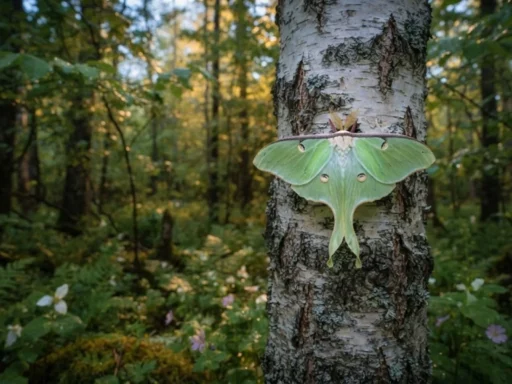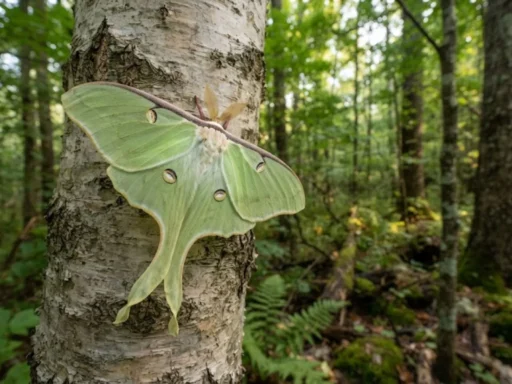

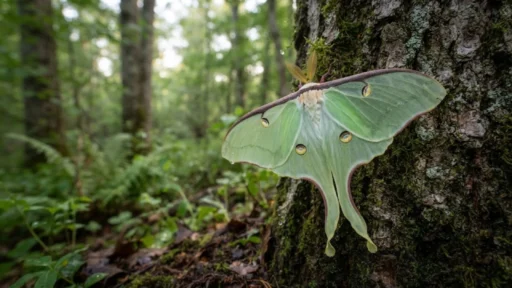
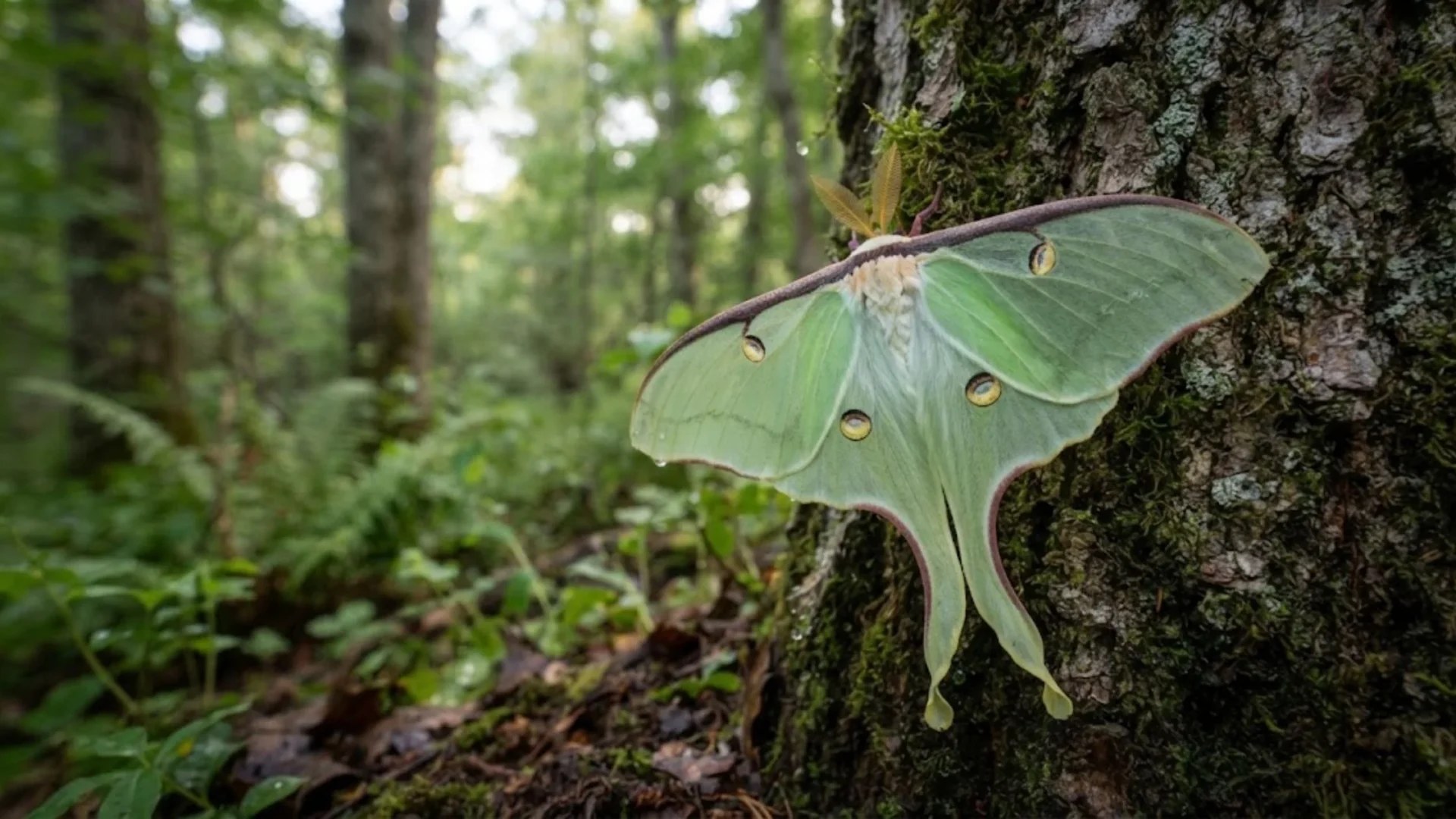
An adult Luna moth lives for only about one week, usually 7 to 10 days, after it comes out of its cocoon. That short adult life is the final step of a much longer life. Counting from egg to adult, a summer generation takes roughly 6 to 10 weeks. A Luna moth that spends the winter in its cocoon can live for most of a year. Here at Solera Garden, we’ll walk you through how long each stage lasts, why the adult stage is so short, and what in your yard helps Luna moths survive.
The Short Answer: Luna Moth Lifespan at a Glance
When people ask about Luna moth lifespan, they usually mean the green, long-tailed adult they found on a porch or tree trunk. That adult has days left, not months.
| Life stage | Typical length | What’s happening |
|---|---|---|
| Egg | About 1 week | Laid on host-tree leaves |
| Caterpillar | About 3–7 weeks | Eats constantly and stores energy |
| Cocoon (summer) | About 2–3 weeks | Changes into an adult |
| Cocoon (overwintering) | Up to about 9 months | Dormant in leaf litter until spring |
| Adult | About 7–10 days | Mates and lays eggs. Never eats |
Total for a summer generation: about 6–10 weeks. Total for an overwintering generation: roughly 10–11 months, mostly spent dormant as a pupa.
For more detail on each stage, see our full guide to the Luna moth life cycle from egg to adult.
Why Adult Luna Moth Life Lasts Only About a Week
Adults have no working mouth
An adult Luna moth has vestigial mouthparts, meaning they no longer work. It cannot drink nectar or water, so it never eats once it leaves the cocoon. Everything it does as an adult runs on fat and protein it stored as a caterpillar.
That is why the caterpillar stage matters so much for adult survival. A well-fed caterpillar produces an adult with enough reserves to find a mate and lay eggs. If you want to know what fills those reserves, read what Luna moth caterpillars eat before they become adults.
The adult has one job: reproduce
The adult stage exists for breeding, not growing. A typical week looks like this:
- Emergence: The moth comes out of the cocoon, usually in the morning, and spends a couple of hours pumping fluid into its wings so they can harden.
- Calling and mating: Females release pheromones at night. Males use their large, feathery antennae to find them. Mating usually begins after midnight and can last for hours.
- Egg-laying: Starting the next evening, the female lays eggs in small groups on host-tree leaves over several nights.
- Decline: With no way to refuel, the moth runs out of stored energy. Females usually die within a few days of finishing egg-laying.
Males often emerge a few days before females, so they may use up part of their short lives waiting.
A worn moth is near the end
You can often tell an older adult by its appearance. Faded color, frayed wing edges, and broken or missing tails suggest the moth has been flying for days. Our guide on how to identify a Luna moth explains how color also shifts between spring and summer broods, so a pale moth isn’t always an old one.
Total Luna Moth Lifespan: Summer vs. Overwintering Generations
The full lifespan depends on when the egg is laid and where you live.
- Summer generation: Egg, caterpillar, and cocoon move quickly in warm weather. The whole cycle takes about 6–10 weeks, and the adult lives about one more week.
- Overwintering generation: Caterpillars that finish feeding in late summer or fall spin cocoons that go into diapause, a hormone-controlled dormancy triggered by shorter days. The cocoon falls with the leaves and stays in the leaf litter until spring. This is the longest-lived Luna moth, though almost all of that time is spent dormant.
How many generations you’ll see
Where you live sets how many broods appear each year:
- Canada and the northern U.S.: one brood, with adults flying roughly May to July.
- Ohio Valley and Mid-Atlantic: usually two broods.
- Deep South: up to three broods, from about March to September.
So if you live in the South, a Luna moth you see in July is probably a fast summer-generation adult. One you see in April probably spent the winter as a pupa under the leaves.
What Threatens Luna Moth Survival at Each Stage
Most Luna moths never reach adulthood. Survival depends on getting past different threats at each stage.
| Stage | Main threats |
|---|---|
| Eggs and caterpillars | Parasitic wasps and flies, predatory insects, birds |
| Cocoons | Ground predators, rodents, and removal of leaf litter |
| Adults | Bats, owls, hornets, artificial lights, vehicles |
A few points are worth knowing:
- Bats are a major nighttime predator. Research suggests the long, twisting hindwing tails help confuse a bat’s echolocation and draw attacks toward the tail instead of the body. That’s why you may find a healthy adult with a tail missing.
- Outdoor lights waste a moth’s limited time. A Luna moth circling a porch light all night uses energy it can’t replace, and it’s easy prey there. Lights may also interfere with mating.
- Fall cleanup can remove a whole generation. Overwintering cocoons look like dead leaves. Bagging, shredding, or burning leaf litter destroys them along with the leaves.
Luna moths are not considered endangered, but some areas report fewer sightings. Habitat loss, light pollution, and pesticide use are the most likely causes.
How You Can Help Luna Moths Survive in Your Yard
You can’t make an adult live longer than its stored energy allows. You can raise the chances that eggs, caterpillars, and cocoons make it to that final week.
- Keep host trees. Birch, sweetgum, hickory, walnut, persimmon, and sumac feed the caterpillars that become well-supplied adults. Our guide to attracting Luna moths to your yard covers the best host trees by region.
- Leave some leaves. Keep a layer of leaf litter under host trees through winter. Our fall garden cleanup for pollinators guide shows what to leave in place and what you can safely clear.
- Dim or redirect outdoor lights. Turn off porch lights you don’t need, use motion sensors, or pick warm-toned bulbs that attract fewer insects.
- Skip broad-spectrum insecticides on and around host trees, especially while caterpillars are feeding.
- Don’t feed an adult. It can’t eat, so sugar water or fruit won’t help. If you find one resting, leave it alone. If it’s somewhere unsafe, gently move it to a sheltered branch or tree trunk nearby.
Conclusion
An adult Luna moth lives about a week because it has no working mouth and must reproduce on energy it stored as a caterpillar. The whole Luna moth lifespan runs from about 6–10 weeks in summer to nearly a year for moths that overwinter as cocoons. Your best next step is to protect the stages that come before that final week: keep host trees, leave some fall leaves under them, and turn off outdoor lights you don’t need.
Frequently Asked Questions
Can you keep a Luna moth alive longer by feeding it?
No. Adult Luna moths can’t eat or drink, so no food will extend their life.
Do male or female Luna moths live longer?
Both live roughly a week as adults. Males often emerge a few days earlier, and females usually die shortly after they finish laying eggs.
Is it rare to see a Luna moth?
They’re fairly common across eastern North America but seldom seen. Adults fly only at night and live for just a few days.