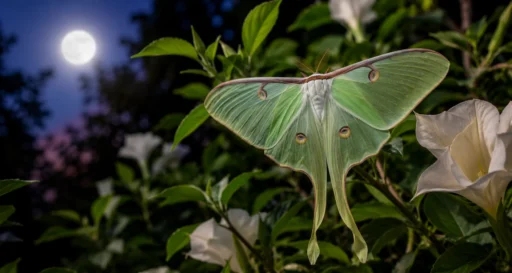
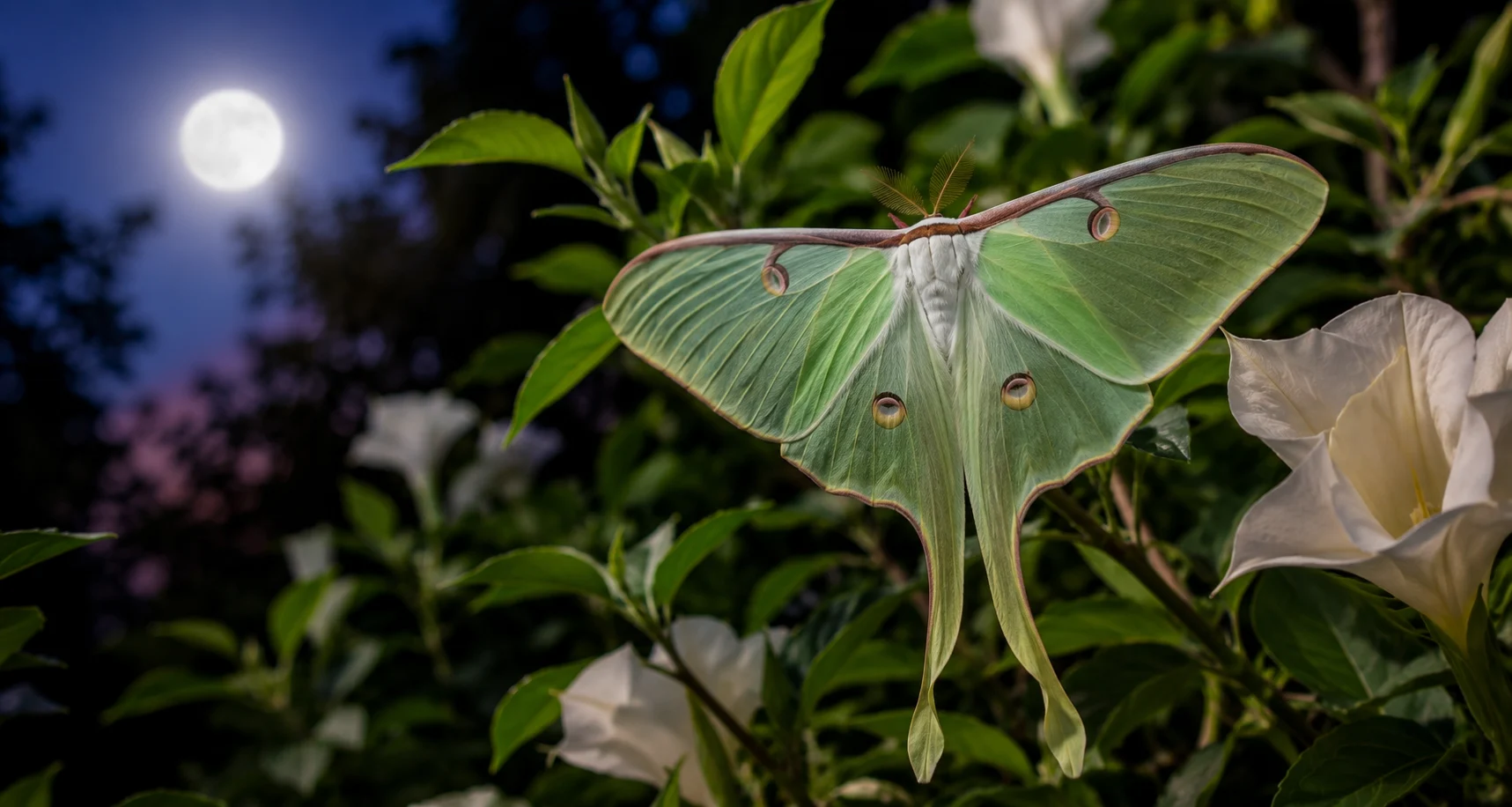
To attract luna moths (Actias luna), focus on the trees their caterpillars can eat rather than nectar flowers. Adult luna moths do not feed. Females visit suitable host trees to lay eggs, so the most useful yard changes are planting locally appropriate host species, reducing unnecessary outdoor lighting, avoiding broad-spectrum insecticides, and leaving some sheltered leaf litter where cocoons can remain undisturbed.
How Do You Attract Luna Moths?
Attracting luna moths starts with understanding their brief, unusual life cycle. Adult luna moths have no mouthparts and don’t eat at all, which means sweet flowers and hummingbird feeders won’t draw them in no matter how fragrant. Instead, the way to invite them into your yard is by growing the native host trees females look for when laying eggs, and making a few changes to create a moth-friendly nighttime environment. Dim outdoor lighting, avoid chemical pesticides, and let fallen leaves stay where they land.
A luna moth may still pass through a yard without breeding there, and no planting can guarantee a visit. The goal is to make the landscape usable through more than one stage of its life cycle. Keep existing healthy native trees when possible, add host plants that suit your region and available space, and avoid disturbing any cocoons you find in fallen leaves.
A Quick Luna Moth Yard Checklist
- Confirm that luna moths occur in your part of North America.
- Choose one or more host trees native to your region.
- Match each tree’s mature size, soil, moisture, and light needs to the planting site.
- Turn off decorative outdoor lights when they are not needed, especially during moth season.
- Avoid routine broad-spectrum pesticide applications.
- Keep a quiet patch of leaf litter beneath suitable trees.
- Photograph moths and caterpillars without handling or relocating them.
The Biological Secret: Why Nectar Plants Do Not Work
One of the most common mistakes well-meaning gardeners make is planting night-blooming jasmine, evening primrose, or moonflowers specifically to attract luna moths. These fragrant blooms do plenty for other nocturnal pollinators, but they do nothing at all for an adult luna moth.
As a member of the giant silk moth family (Saturniidae), the luna moth emerges from its cocoon with no mouth, no proboscis, and no digestive system. It survives entirely on fat reserves built up during its caterpillar stage, living just 7 to 10 days as an adult to mate and lay eggs. The only real way to draw one to your garden is to plant the exact trees its hungry caterpillars depend on.
Essential Trees for a Luna Moth Host Plant Garden
Building a luna moth habitat starts with native deciduous trees. Host use varies across the moth’s range, so choose species documented in your region rather than planting every tree on a national list. Walnut, sweetgum, hickory, persimmon, sumac, and birch are among the hosts reported by the University of Georgia Extension. A local native-plant society or Cooperative Extension office can help narrow that list to trees suited to your county and soil.
Here are the most effective host trees for building a strong luna moth habitat.
White Birch (Betula papyrifera)
- USDA Hardiness Zones: 2 to 7
- Mature Height: 50 to 70 feet
- Spread: 25 to 35 feet
- Growing Requirements: Full sun to partial shade; moist, acidic, well-draining sandy or loamy soil
- Why It Works: A favorite host tree for northern luna moth populations, with the added bonus of striking, papery white winter bark.
American Sweetgum (Liquidambar styraciflua)
- USDA Hardiness Zones: 5 to 9
- Mature Height: 60 to 80 feet
- Spread: 40 to 60 feet
- Growing Requirements: Full sun; moist, deep, acidic soil; highly adaptable to wet clay
- Why It Works: One of the most reliable trees for attracting luna moths in the mid-Atlantic and southern regions. Its star-shaped leaves put on a vivid red, purple, and orange display each autumn, though the spiky seed pods take some getting used to.
Shagbark Hickory (Carya ovata)
- USDA Hardiness Zones: 4 to 8
- Mature Height: 60 to 80 feet
- Spread: 30 to 50 feet
- Growing Requirements: Full sun to partial shade; rich, moist, organic soil
- Why It Works: Luna moth caterpillars thrive on hickory leaves, and the shaggy, peeling bark of mature trees offers shelter for many other beneficial insects and small songbirds.
Common Persimmon (Diospyros virginiana)
- USDA Hardiness Zones: 4 to 9
- Mature Height: 35 to 60 feet
- Spread: 20 to 35 feet
- Growing Requirements: Full sun to partial shade; highly adaptable to sandy, dry, or rocky soil
- Why It Works: A great all-around choice, feeding luna moth caterpillars while also producing sweet orange fruit later in the year for both people and wildlife.
Solera Gardens Tip: If space is tight, consider staghorn sumac (Rhus typhina, zones 3 to 8). This smaller tree, typically 15 to 30 feet tall, tolerates less-than-ideal conditions well and makes a great luna moth host even in a suburban yard.
Host Tree Selection and Comparison
The right host tree depends on your yard size, climate, and soil. Here’s a quick comparison to help narrow things down.
| Host Tree Common Name | Botanical Name | Growth Rate | Soil Preference | Best Regional Fit |
| White Birch | Betula papyrifera | Medium to fast | Moist, acidic, sandy | Northern US and Canada |
| American Sweetgum | Liquidambar styraciflua | Fast | Moist, heavy clay or loam | South, mid-Atlantic, Midwest |
| Shagbark Hickory | Carya ovata | Slow | Rich, deep, well-draining | Eastern and midwestern US |
| Common Persimmon | Diospyros virginiana | Slow to medium | Well-draining, adaptable | Southern and central US |
| Staghorn Sumac | Rhus typhina | Fast | Dry, rocky, poor soils | Eastern North America |
Creating a Safe Luna Moth Habitat and Garden Setup
Planting the right host trees is just the first step. You’ll also need to create a safe physical environment where moths can breed and pupate undisturbed.
Some gardeners spend their time researching colorful border plants for visual impact, but shifting the focus toward trees rather than bright, showy flower beds does far more to create a genuinely inviting space for giant silk moths.
Eliminate Nighttime Light Pollution
Artificial light is one of the most harmful things you can introduce for luna moths. Standard bright floodlights and garden lighting interfere directly with their mating behavior. Shortly after midnight, a female releases pheromones that guide males to her, but brightly lit homes can disorient the males and throw off that process entirely. Switching security and exterior lights to a warmer-colored bulb, like an amber LED, or putting outdoor lighting on a motion sensor instead of leaving it on constantly, makes a real difference.
Avoid Pesticides and Insecticides
Since luna moths belong to the same insect order as butterflies (Lepidoptera), they’re highly vulnerable to chemical sprays. Avoid systemic insecticides on your property, and keep in mind that mosquito spraying often drifts onto nearby host trees, killing newly hatched caterpillars in the process. Organic pest control methods, paired with letting your garden’s natural balance sort itself out, work far better here.
Preserve Leaf Litter and Debris
Once a luna moth caterpillar matures, it moves down to the ground or onto a lower leaf, where it spins a thin silk cocoon and wraps itself in a folded, fallen leaf. From the ground, this cocoon can look just like any other dead leaf, which is exactly the problem. Raking, bagging, or shredding fallen leaves in luna moth habitat often removes these dormant cocoons without anyone realizing it. Leaving a small, undisturbed corner of your yard untouched through winter, until spring arrives, goes a long way toward protecting them.
Common Gardening Mistakes That Repel Luna Moths
Even experienced gardeners sometimes unintentionally make their yard inhospitable to luna moths. Knowing what to avoid matters just as much as knowing what to plant.
- Using bug zappers. These devices do little to control mosquitoes and instead kill harmless nighttime pollinators like luna moths. Removing them from the patio is an easy fix.
- Cleaning up too early in spring. Many gardeners tidy their beds on the first warm day in March, but disturbing leaf mulch this early can crush overwintering pupae before they’ve had a chance to emerge in late spring. Wait until temperatures have stayed above 50°F for several consecutive days before disturbing leaf litter.
- Over-pruning host trees. Avoid heavy pruning of sweetgum, birch, or hickory trees in late spring and summer, since you risk removing branches carrying eggs or feeding caterpillars.
Solera Gardens Tip: When leaf cleanup is unavoidable, rake leaves into garden beds rather than bagging or shredding them. This protects any hidden cocoons while also providing natural winter insulation for your perennials.
How to Safely and Ethically View Luna Moths
Spotting a luna moth during the day is rare, since they’re strictly nocturnal. Fortunately, there are a few gentle, non-invasive ways to observe them.
The White Sheet and Blacklight Method
On a warm summer night, hang a plain white bedsheet on a clothesline or deck railing and aim a portable blacklight or UV light directly at it. Moths will be drawn to the light and land on the sheet, giving you a close-up look at their delicate wings and feathery antennae.
Gentle Daytime Searching
In late spring and early summer, check the trunks of your host trees for recently emerged adults resting quietly until dusk. Keep a respectful distance and avoid touching their wings, since the fragile scales covering them are easily damaged.
Frequently Asked Questions
What time of night are luna moths most active?
Luna moths are most active well after dark, typically flying and mating between midnight and 2 a.m. They spend daylight hours resting, though they still face predation risk from bats even at night.
Do luna moths bite or sting?
No. Luna moths have no mouths or stingers, making them completely harmless to people, pets, and gardens.
Do luna moth caterpillars damage host trees?
Despite their large size and hearty appetite, luna moth caterpillars cause very little lasting damage to their host trees. They tend to feed alone rather than in large groups, so the level of defoliation rarely affects a well-established tree.
How long does a luna moth live?
Adult luna moths live only about 7 to 10 days. The full life cycle from egg to adult typically spans 40 to 50 days, most of which is spent in the caterpillar and pupal stages.
Why are luna moths green?
Their vivid lime-green coloring provides excellent camouflage. Resting beneath deciduous leaves during the day, they blend in almost seamlessly with the surrounding foliage.
How can I tell the difference between a male and female luna moth?
Antennae are the easiest way to tell. Males have noticeably broader, more feathery antennae, which help them detect a female’s pheromones from a distance.
Where do luna moths go in the winter?
Luna moths spend winter in their pupal stage, tucked into silken cocoons hidden among leaf litter, logs, and rocks. They stay camouflaged among the fallen leaves until warmer late-spring weather signals it’s time to emerge.
Conclusion
A luna-moth-friendly yard combines regionally appropriate host trees with fewer nighttime disturbances. Begin with plants suited to your site, reduce unnecessary lighting, avoid routine broad-spectrum pesticide use, and leave a sheltered patch of leaf litter through winter. If you are planning the surrounding planting, our beginner garden layout guide can help you place trees without shading smaller beds, while the mulching guide explains where organic ground cover helps and where it can create problems.