There is a myth that runs through every gardening conversation. The idea that some people are born with a natural instinct for keeping plants alive and everyone else is just killing time between failures. If you have ever felt like plants die around you, this idea probably feels personal.
It is not true. There is no green thumb gene. What experienced gardeners have is a small set of practical habits they follow consistently. Sunlight, decent soil, correct watering, appropriate plant choices. That is the entire framework. This guide teaches it in order, without the jargon.
Gardening for beginners in 8 steps: (1) Decide what you want to grow. (2) Find a location with 6 or more hours of direct sun. (3) Choose raised bed, containers, or in-ground setup. (4) Test and amend your soil. (5) Pick beginner-friendly plants for your zone. (6) Know your last frost date. (7) Water at soil level and use the two-inch moisture test. (8) Mulch around plants to retain water and suppress weeds.
Before You Buy Anything, Answer This One Question
What do you actually want from this garden?
It sounds obvious. Someone who wants fresh herbs on the kitchen counter daily will have a different setup than a person who wants to harvest enough tomatoes to last him/her all winter, or a person who simply wants flowers to cut for the house. Trying to do all three in year one is how beginner gardens fall apart by August.
Pick one focus. Vegetables, herbs, or flowers. Start there. You can expand next season once you understand how your specific space, soil, and climate actually behave.
Is Gardening Actually Hard for Beginners?
No. But it does require learning a small number of things in the right order. Almost every first-year garden failure is a planning problem, not a skill problem. Wrong location. Poor soil. Plants chosen for looks rather than conditions. These are all fixable before you put a single thing in the ground.
A small raised bed takes about 15 to 20 minutes of attention on a typical day. Watering, a quick look for problems, occasional weeding. It grows into more time only if you want it to. The people who describe gardening as overwhelming are almost always managing more space or more variety than they should be in year one.
Real perspective: “I killed every houseplant I ever owned and was convinced I had a black thumb. Built one raised bed, used decent soil, grew six things. Everything grew. The problem was never me. It was the soil and the location I had been using.”
Sun, Water, and Soil: The Three Things That Decide Everything
There are an infinite number of ways to overthink gardening. Companion planting charts, lunar planting calendars, 14-step soil amendment protocols. None of it matters until you have the three fundamentals right.
Sun: The majority of vegetables require 6 to 8 hours of direct sunlight every day. Leafy greens manage on 4 to 5 hours. Fruiting vegetables such as tomatoes, peppers, and cucumbers demand full sun, and will not yield in any but full sun. Don’t select a spot for the garden until after spending one day observing the light that actually falls there. Please check at 9 a.m., 12 noon, and 3 pm.
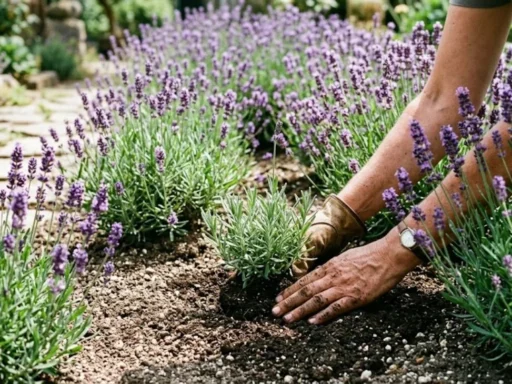
Soil: most vegetables grow best in soil with a pH of 6.0 to 7.0. If the pH falls below or above this range, nutrients are no longer chemically available to the plants’ roots, even if you fertilize them. The best thing to do before planting is to mix 3-4 inches of good compost into the top 6-8 inches of soil. Compost simultaneously enhances the drainage, water-holding capacity, and nutrient availability.
Water: most vegetables require approximately 1″ of water weekly. Use the two-inch test to determine when to water: stick a finger two inches deep into the soil. If it’s dry there, then water is there. If it is still damp, then wait. Water at the soil line and not the foliage. Fungal disease is more likely to occur when leaves are wet overnight.
What Do You Actually Need to Start Gardening?
Tools you genuinely need
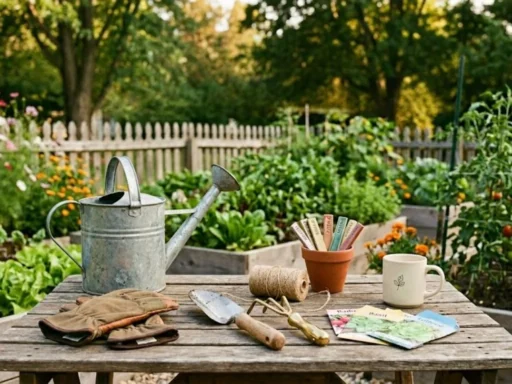
· Hand trowel for planting, around $12
· Garden fork or hoe for soil prep, around $25
· Hose with adjustable nozzle or a watering can
· Gloves, optional but useful after day one
What to buy before planting
- A raised bed or pot of soil (at least 5 gallons for tomatoes)
- Top-quality raised bed soil/potting mix, not just topsoil that compacts down in containers
- Use bagged compost or check for free compost services offered by your city from yard waste collection programs.
- Seed or seedlings from a local nursery/hardware store
This is the full first year’s list. Avoid using a rototiller, automated irrigation system, and the complete composting system. These are additional requirements for year 2 and above.
What Is the Best Garden Type for a Beginner?
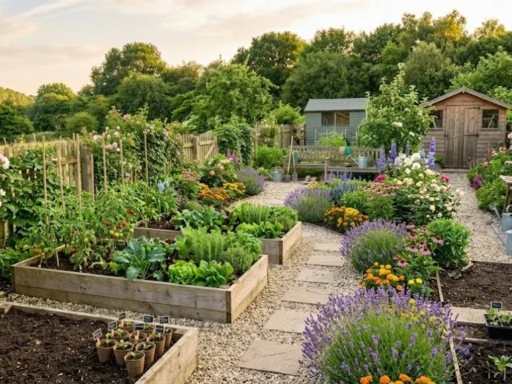
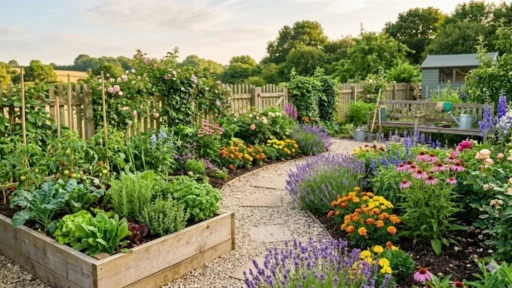
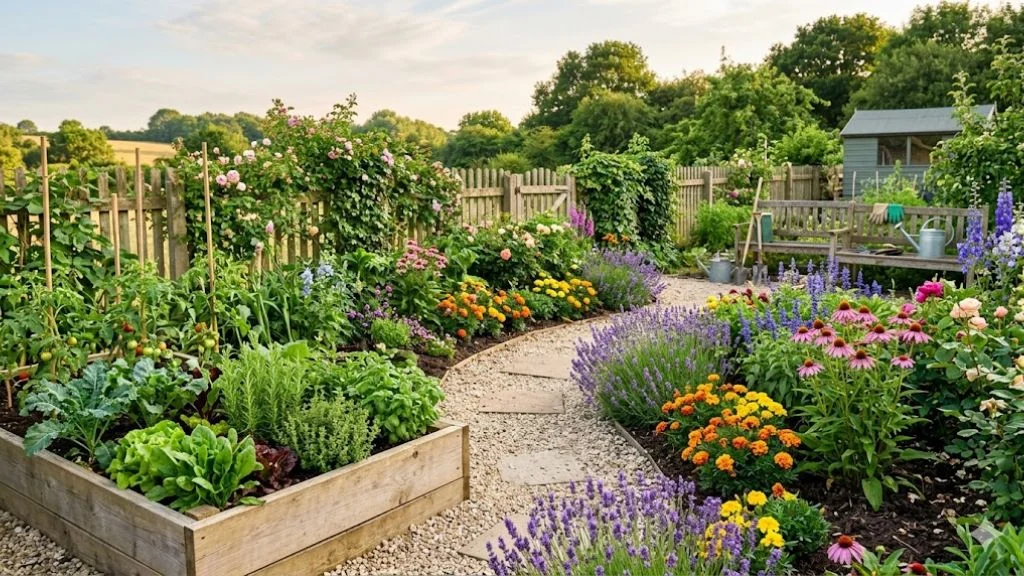
In almost all cases a single 4×8-foot raised bed in a location that receives 6 or more hours of sunlight will be the most reliable beginning bed setup. You have total control over the soil, the drainage is excellent, weeds are not a problem, and it’s not too big to keep up or risk burnout.
If you don’t have a yard, you can use three to four big pots on a sunny spot on your balcony or patio. Containers are great for growing herbs, leaf lettuce, cherry tomatoes, and peppers. The most important change is the increased watering frequency, as containers tend to dry out much quicker than ground beds.
Real Perspective: “Two years of trying to improve the clay soil with little success, two raised beds built, and more food grown in the first season than over the past two years. Started too late with the raised beds.”
The Plant Choices That Make or Break Year One
Beginner-friendly crops have a few characteristics: they are fast-growing and keep the attention, they are not picky about watering, and they yield enough for the pride. Below is a list of both cool and warm-season crops to allow for staggered plantings.
Cool-season crops: Plant 4 to 6 weeks before the last frost.
· Leaf lettuce. Ready in 30 days. Grows in partial shade. Remove outer leaves and it will continue to flower for weeks.
· Radishes. Harvest 21-25 days after planting. The most speedy beginner crop by a lot.
· Kale. Low maintenance, frost-tolerant, and productive for months. Light frost will enhance flavour.
· Peas. Climb “naturally” with very little assistance. Fresh from the garden, sweetest of all!
Warm-season crops, plant after last frost
· Cherry tomatoes. Sun Gold and Sweet 100 varieties make a ton of fruit and are more water-tolerant than the large heirlooms.
· Zucchini. One plant will produce more than most households can eat. Near impossible to kill once established.
· Bush beans. Self-supporting, ready for harvest in 50 to 60 days, and they even leave nitrogen in the soil.
· Basil. Fast, heat-loving, essential for a kitchen garden. Plant near tomatoes.
In the first year, purchase tomato and pepper plants from a nursery. They require being started inside 6 to 8 weeks before the last frost date, which can be a little more complicated for most beginners if they need to be started indoors.
The Habit That Separates Good Beginner Gardeners From Great Ones
Keep notes. Not elaborate records. Some notes following each planting day: what planted; where planted; when planted; weather conditions. At the end of the season, you have a document that explains what you did, and what worked for the conditions you experienced.
Even long-time gardeners who have been at it for decades continue to use garden journals. The ones who improve fastest are the ones who track what happened, not the ones who bought the most tools or memorized the most theory.
Real perspective: “My year two notes told me my lettuce bolted by mid-June every year. Year three I planted a second succession in early May to cover that gap. Small adjustment. Big difference.”
Frequently Asked Questions
How long before I see real results in a beginner garden?
The radishes are ready to harvest in 21 to 25 days. Leaf lettuce in ~30. Cherry tomatoes grow in 60-75 days after transplant. The first crops to plant are the ones that will get the quickest results in the first season: radishes and lettuce. Before most people have warm-season plants in the ground, you will be harvesting.
How much space do I actually need?
Not as much as you would expect. A 4′ x 4′ raised bed yields a significant amount of vegetables for 1-2 people. A 4 x 8 bed grows a small amount of salad greens, herbs, and seasonal vegetables during the entire growing season. Herbs, lettuce, and cherry tomatoes can be grown in four to six containers on a sunny balcony. A large yard is not a requirement.
Do I need to fertilize in year one?
If you started with compost-amended soil, you likely will not need to fertilize for the first 6 to 8 weeks. After that, a balanced organic fertilizer every 3 to 4 weeks supports most vegetables through the season. The clearest sign that fertilization is needed is pale yellowing leaves starting at the bottom of the plant.
Can I garden if my native soil is terrible?
Yes, and the answer is a raised bed. Heavy clay, rocky ground, compacted urban soil, or soil with contamination concerns are all reasons to build a raised bed and fill it with a quality topsoil and compost blend rather than working with what is already there. This bypasses the native soil problem entirely and gives you a clean start.
The Green Takeaway
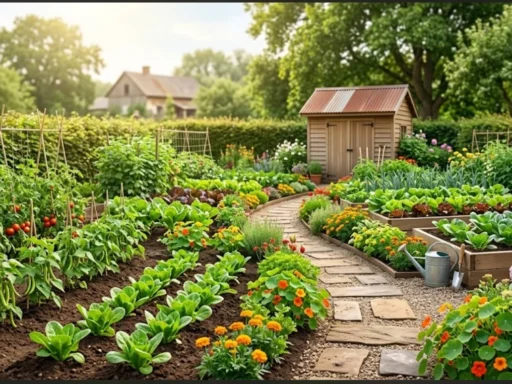
Gardening for beginners comes down to a short list: find the sun, fix the soil, know your frost dates, choose forgiving plants, water at the root level, and keep notes. That is the complete foundation. Everything else grows from it.
Start with one bed or a few containers. Grow five things. Pay attention for one full season. You will finish the year knowing your conditions, your challenges, and your wins in a way no guide can give you ahead of time.
Want more detail? Solera Gardens guide on how to start a garden from scratch covers raised bed construction, soil prep, and ground preparation step by step.
Plan access and planting space with our beginner garden planning guide.
For vegetable beds, our watering guide explains how to check moisture before adding more water.