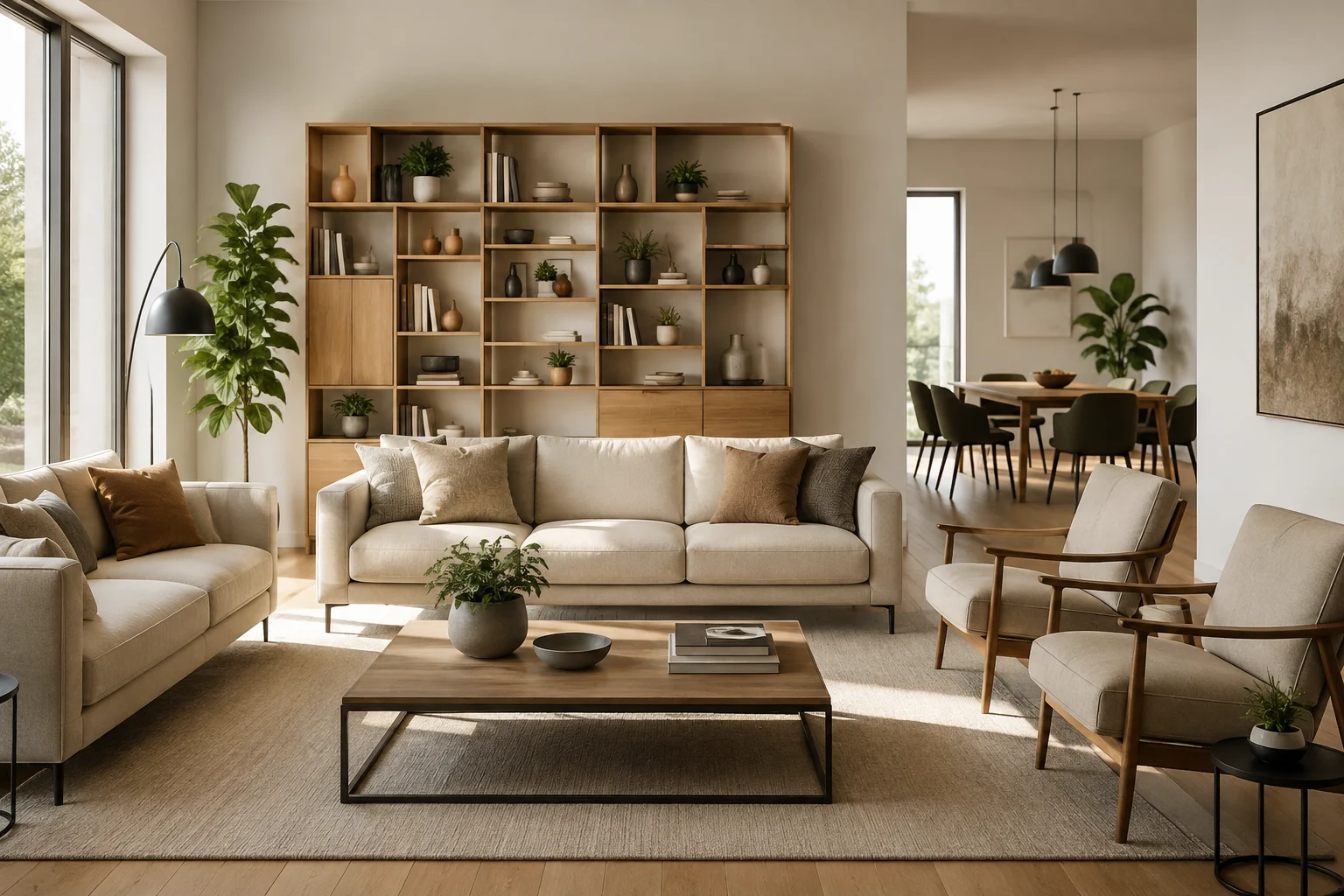
A furniture layout that actually works on a budget comes down to a few basics: keep traffic areas open, choose multi purpose pieces, and position furniture to take advantage of natural light instead of fighting it. If you enjoy plants, adding them to your layout is one of the cheapest ways to bring real life into a room. Whether you’re working with an open floor plan or a small studio, rearranging what you already own and adding a few plants can make a bigger difference than you’d expect. Solera Gardens believes good design and healthy plants should go hand in hand, no matter your budget.
How Do You Layout Furniture in a Functional Way?
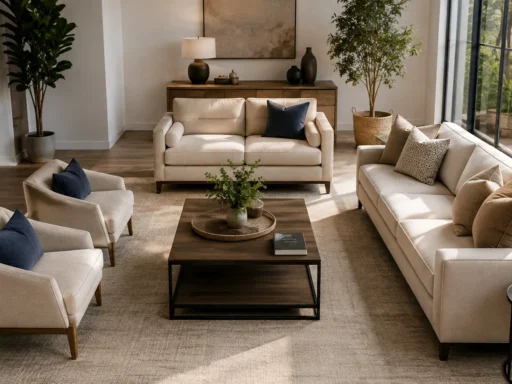
Getting a functional layout on a limited budget starts with paying attention to what your room already offers, especially windows and natural light. Before moving any heavy furniture, map out how people naturally move through the space and make sure that flow stays open. Identify the room’s main focal point, whether that’s a fireplace or a large window, and orient your biggest seating pieces toward it.
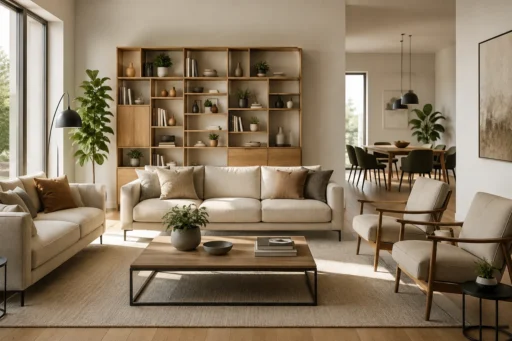
You don’t need expensive architectural partitions or built in cabinetry to make a room feel organized. An open backed bookshelf can divide a space just as effectively while still letting sunlight reach your plants, and it costs a fraction of a custom build out.
For a closer look at common layout errors and how to fix them, check out our guide on Indoor Furniture Layout Mistakes You’re Making (And How to Fix Them). Avoiding these pitfalls early makes it much easier to land on a balanced, functional room.
Establishing Light Zones and Traffic Flow
One of the most common design mistakes is ignoring the relationship between furniture placement and the natural microclimates in a room. Every window brings its own light conditions, and certain plants will only thrive near specific exposures.
Understanding Window Orientations
South facing windows get sunlight for most of the day. Use a console or side table here for sun loving plants like the ponytail palm (Beaucarnea recurvata, USDA zones 9 to 11) or the jade plant (Crassula ovata, USDA zones 11 to 12). Keep leather and fabric sofas back from this zone to avoid fading and heat buildup.
East facing windows offer soft, cool morning light. This is a great spot for a small reading corner, an armchair paired with a plant stand, and something like a Boston fern (Nephrolepis exaltata, USDA zones 9 to 11) or a prayer plant (Maranta leuconeura, USDA zones 11 to 12).
West facing windows bring in hot afternoon sun. A wooden writing desk surrounded by drought tolerant succulents or a snake plant (Dracaena trifasciata, USDA zones 10 to 12) works well here.
North facing windows stay cooler and dimmer throughout the day. Light colored furniture, like a cream sofa or a pale console table, helps bounce around what light is available. Pair this zone with shade tolerant plants like the cast iron plant (Aspidistra elatior).
Solera Gardens Tip: Keep plants that transpire heavily away from heating vents or air conditioner airflow. Sudden swings in humidity and temperature dry out leaf edges, cause flowers to drop, and make the space less comfortable for both plants and guests.
Designing with Living Greenery: Plants as Structural Dividers
If you’re on a tight budget, a trip to a local nursery can go a long way. Large foliage plants work as anchor points and space dividers in place of pricier screens, partial walls, or bulky cabinets.
Creating Zones with Vertical Plants
Open concept living rooms often blur the line between the seating area and a dining space or home office. A row of tall, upright plants solves this without any construction. The snake plant (Dracaena trifasciata), with its thick, sword shaped leaves, works especially well as a living screen.
For a more tropical feel, consider the majesty palm (Ravenea rivularis, USDA zones 10 to 11) or the fiddle leaf fig (Ficus lyrata, USDA zones 10 to 12). The fiddle leaf fig’s large leaves also help absorb some sound, which can make a noisy living room feel calmer near a work area.
| Plant Divider Option | Recommended Placement | Best Use | Design & Care Tip |
| Snake Plant Living Screen | 4 to 8 plants in a long rectangular planter, 36 to 72 inches (91 to 183 cm), with 30 to 36 inches (76 to 91 cm) of walkway clearance on each side | Separating living and dining areas or marking a home office boundary | Clean architectural look in minimal floor space. Thrives in low to bright indirect light with little watering |
| Majesty Palm Partition | One or two palms spaced 3 to 5 feet (0.9 to 1.5 m) apart in bright indirect light | Softly dividing large open concept spaces | Feathery fronds create a relaxed tropical feel without fully blocking light or views |
| Fiddle Leaf Fig Divider | At the edge of a seating area or workspace, 12 to 18 inches (30 to 45 cm) from walls and furniture | Defining boundaries with a strong focal point | Large glossy leaves soften hard lines and can help reduce echo in open rooms |
| Plant Spacing | Keep divider plants 24 to 36 inches (61 to 91 cm) apart | Prevents overcrowding while keeping the screen effective | Improves air circulation and light access for each plant |
| Best Room Size | 200 to 400 sq ft (19 to 37 m²) for open plan rooms | Separating living rooms, dining areas, and home offices without permanent walls | Taller plants work best where there’s enough floor space to define zones while keeping movement easy |
Balancing Scale and Proportion
Scale matters just as much on a tight budget as it does with a bigger one. A small succulent looks lost on a huge coffee table, and a large Swiss cheese plant (Monstera deliciosa, USDA zones 10 to 12) crammed next to a small chair in a corner can make the whole area feel cramped.
Functional Furniture Placement for Small Homes
Functional furniture in a small home is about making every inch count. When floor space is limited, vertical design and versatile pieces do most of the heavy lifting.
Utilizing Vertical Space
If you can’t expand your floor space, go up instead. Hanging planters, wall mounted planters, and ladder shelves let you display plants and décor without giving up any usable floor area. Golden pothos (Epipremnum aureum, USDA zones 10 to 12) and heartleaf philodendron (Philodendron hederaceum, USDA zones 10 to 12) both work well as trailing options here.
| Vertical Design Element | Recommended Placement | Best Plants | Purpose & Design Tip |
| Hanging Planters | Suspended from the ceiling or near windows, with at least 7 feet (2.1 m) of headroom and 12 to 18 inches (30 to 45 cm) between planters | Golden pothos, heartleaf philodendron, string of pearls | Draws the eye upward and frees up floor space with a cascading effect |
| Wall Mounted Shelves | Installed 5 to 7 feet (1.5 to 2.1 m) above the floor near bright indirect light | Pothos, spider plant, ferns, trailing hoyas | Turns bare wall space into a plant display while keeping the floor clear |
| Tall Ladder Shelving | Against a blank wall or beside a window, with 30 to 36 inches (76 to 91 cm) of walkway clearance | Upright plants on lower shelves, trailing plants up top | Maximizes vertical storage and display without expanding the room’s footprint |
| Light Requirements | Within 2 to 5 feet (60 to 150 cm) of windows with bright indirect light | Most trailing tropical houseplants | Keeps foliage healthy while avoiding scorch from direct afternoon sun |
| Best Room Size | Under 150 sq ft (14 m²), ideal for apartments and studios | — | Makes small spaces feel taller and more organized by using unused vertical surfaces |
Choosing Multi Functional Furniture
Look for affordable pieces that serve more than one purpose:
- Storage ottomans double as extra seating, a footrest, and hidden storage for blankets or gardening supplies.
- Nesting tables pack away when not needed, then expand to hold drinks and small planters when guests come over.
- Consoles with a lower shelf give you a usable top surface plus a spot for shade loving plants underneath.
Toxicity and Pet Safety Considerations
Small spaces put curious pets close to whatever you place at floor or table height, so it’s worth checking plant toxicity before finalizing your layout. Several common houseplants, including various philodendrons and the peace lily (Spathiphyllum), contain compounds that are dangerous to cats and dogs. If pets are part of your household, keep toxic plants up high or swap them for pet safe alternatives.
Comprehensive Plant and Furniture Integration Guide
Here’s a quick reference for pairing some of the most reliable indoor plants with an affordable furniture layout.
| Common Name | Botanical Name | Light Requirement | Design Function | Best For | Toxicity (Pets) |
| Snake Plant | Dracaena trifasciata | Low to bright, indirect | Vertical anchor; narrow room divider | Small spaces, beginners | Toxic |
| Fiddle Leaf Fig | Ficus lyrata | Bright, consistent indirect | Bold focal point; ceiling height accent | Large living rooms | Toxic |
| Spider Plant | Chlorophytum comosum | Medium, indirect | Cascading shelf accent; hanging display | Pet owners, bedrooms | Non toxic |
| Cast Iron Plant | Aspidistra elatior | Low, ambient | Softening dark corners; low level filler | Low maintenance zones | Non toxic |
| Monstera Deliciosa | Monstera deliciosa | Bright, indirect | Sculptural corner anchor | Tropical aesthetics | Toxic |
| Boston Fern | Nephrolepis exaltata | Medium, high humidity | Softening hard furniture edges | Bathrooms, pedestals | Non toxic |
Common Spatial and Horticultural Mistakes
Even experienced decorators and plant lovers run into the same handful of mistakes. Here’s what we see most often at Solera Gardens, along with how to fix each one.
1. Blocking natural light sources Placing tall furniture like high back sofas, bookcases, or wardrobes near a window is one of the most damaging layout choices you can make. It darkens the room and cuts off the light your plants need.
Solution: Choose light framed furniture near windows, or opt for low profile pieces like benches or daybeds instead.
2. Overcrowding the “green corner” Grouping every plant into one sunny corner might feel efficient, but it usually creates a cluttered look and restricts airflow, which raises the risk of pests.
Solution: Spread plants across different furniture levels, some on the floor, some on side tables, and a few trailing from wall shelves.
3. Neglecting drainage and furniture protection Setting a planter directly on a wooden dining table, credenza, or bare floor without any protection is a near guaranteed path to water damage.
Solution: Use a saucer or drip tray under every planter. For furniture you especially want to protect, use a cachepot with no drainage hole to contain the plastic nursery pot inside.
Seasonal Adjustments for Your Indoor Layout
The angle and intensity of light shifts with the seasons. A spot getting bright indirect light in summer might sit in full shadow come winter, so plan on adjusting your layout roughly twice a year to keep both the room and your plants happy.
Pay attention to how light falls as each season changes. You may need to move plant stands, side tables, or accent chairs closer to south and west facing windows in winter to make the most of the weaker light. When summer arrives, shift foliage plants away from windows that get intense afternoon heat.
Keep pathways clear throughout these seasonal changes. Rather than lining plant pots along the floor, a multi level plant stand near the window is a better option, especially in winter when floor space near the glass gets more valuable.
Frequently Asked Questions
How do I arrange furniture in a long, narrow living room?
Avoid lining every piece of furniture along one wall, since it creates a bowling alley effect. Instead, split the room into two functional zones, such as a living area and a study nook. A floating sofa placed perpendicular to the walls works well, with a large foliage plant like a split leaf philodendron anchoring the opposite corner.
What is the best way to divide an open concept room on a budget?
Shelving units and tall plants are the most affordable dividers available. An open shelving unit between the dining and living areas creates a clear distinction without blocking light. Potted palms or tall snake plants behind a sofa work just as well as a softer, greener barrier.
How do I know if my furniture layout is blocking too much light for my plants?
Watch how your plants grow, or use a low cost light meter or smartphone app to measure light levels directly. Plants that stretch and lean heavily toward the window, or that start losing their variegation, are a sign that nearby furniture is blocking too much light.
Can I place plants on wooden furniture without ruining it?
Yes, as long as you add a waterproof barrier between the pot and the surface, such as a plastic saucer, a glazed drip tray, or a plastic backed cork coaster. Never let water pool underneath a pot sitting on wood.
How do I choose the right size plant for a corner layout?
A good rule is to pick a plant that reaches about two thirds of your ceiling height. For an eight foot ceiling, a plant in the four to five foot range usually looks balanced. Just make sure the plant’s width doesn’t creep into the walking space.
What are some low cost ways to raise plants to different heights?
Everyday items work surprisingly well here, including wooden crates, upturned wicker baskets, old stools, or stacked books. Secondhand side tables, plant stands, or bar stools from a thrift store are also easy to paint and blend into your existing setup.
Is it safe to put houseplants in a dark entryway?
Yes, as long as you choose species built for low light, like the cast iron plant (Aspidistra elatior) or the ZZ plant (Zamioculcas zamiifolia, USDA zones 10 to 12). Rotate these plants to a brighter window for about a week each month to keep them healthy long term.
Conclusion
A cozy, functional interior doesn’t require an interior designer or a big budget. Pay attention to traffic flow, identify your light zones, and get a little creative with how you style what you already own. Living plants are one of the most affordable ways to define boundaries, soften hard edges, and bring energy into a room. Just remember to adjust for the seasons, protect your furniture from moisture, and choose plants that actually fit your space.
Before moving heavy pieces, work through our step-by-step furniture layout guide to plan the arrangement.