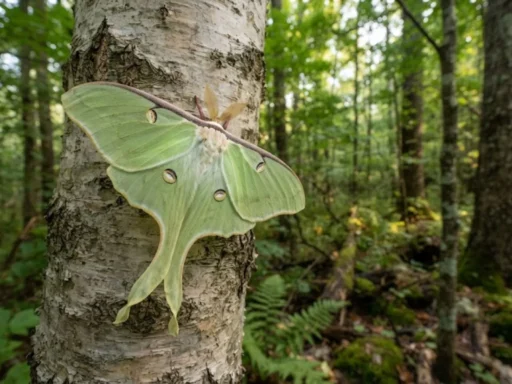

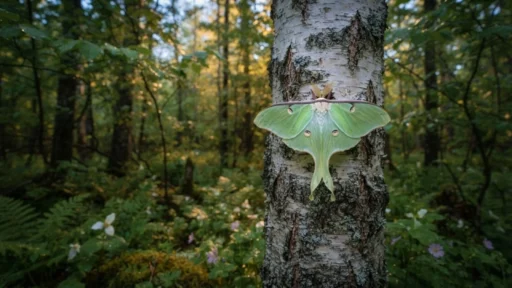
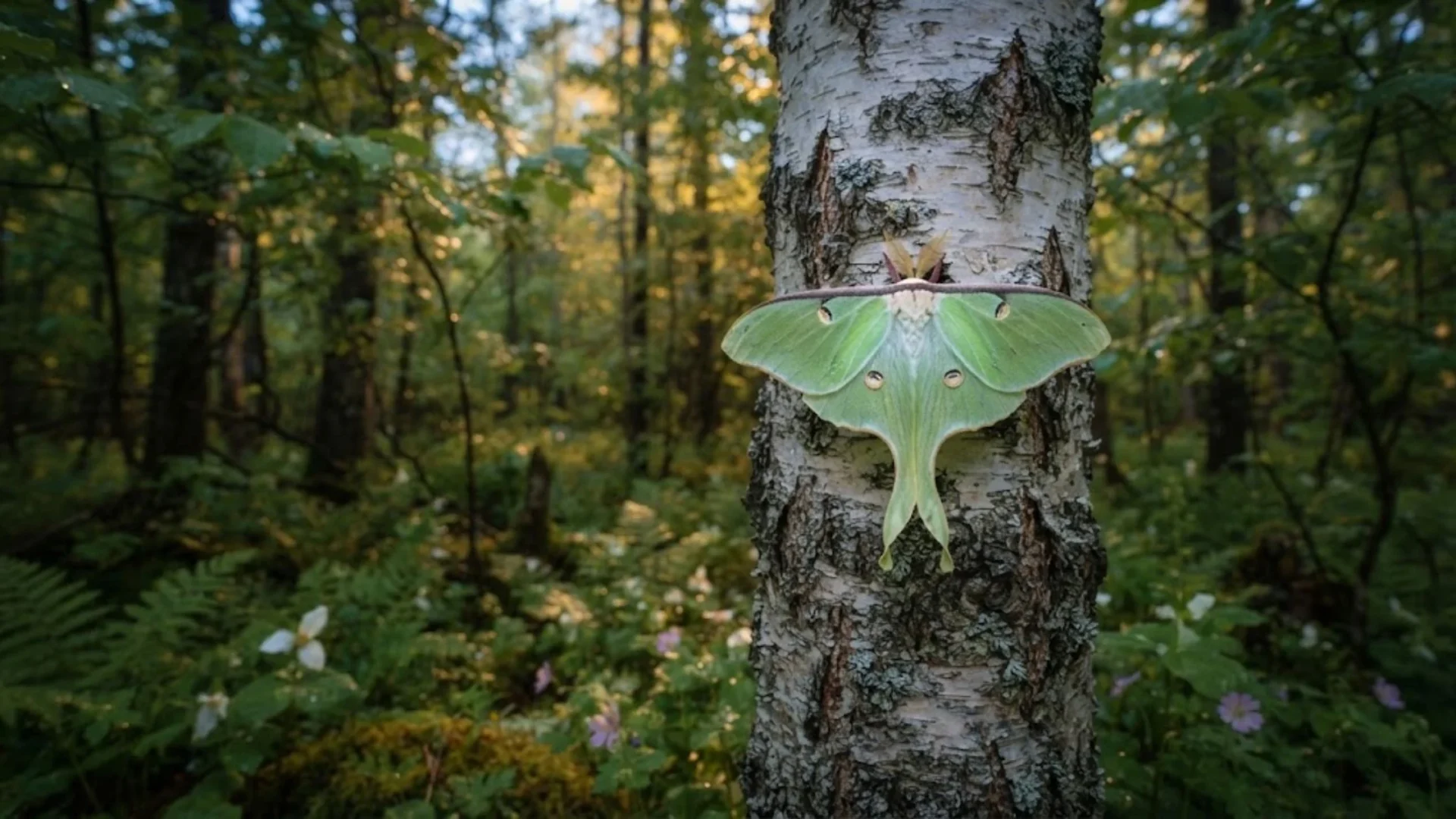
Luna Moths come out in late spring and summer, and they fly only at night. The exact months depend on where you live. In the far north there’s one short flight in late spring to early summer. Mid-latitude areas get a spring flight and a second one in mid to late summer. In the Deep South, adults can show up from March onward, and in Florida and Louisiana they can turn up in any month. At Solera Garden, we put this guide together to help you work out Luna Moth season where you live, the hours they’re most active, and how to improve your odds of seeing one.
The Quick Answer
- Time of year: From spring through late summer in most of their range. Southern populations can fly much longer.
- Time of day: Adults are nocturnal. They rest by day and fly after dark. Mating usually happens in the first couple of hours after midnight.
- How long each moth is around: About 7 to 10 days. Adults have no working mouthparts and live on energy stored when they were caterpillars.
- Why sightings feel rare: Each moth lives about a week, flies only at night, and spends the day hidden in foliage. Seeing one usually means being in the right place during a short window.
Luna Moth Season by Region
The biggest factor in Luna Moth season is how many generations (broods) your area can produce in one warm season. The more frost-free months you have, the more broods you get, and the longer adults are around.
| Region | Broods per year | When adults typically fly |
|---|---|---|
| Southern Canada, the Great Lakes, and the northern U.S. (around Michigan and north) | 1 (univoltine) | Late spring to early summer, roughly late May through June or early July |
| Mid-latitudes (Ohio Valley, Mid-Atlantic and similar) | 2 (bivoltine) | A spring flight, then a second flight in mid to late summer |
| Southern U.S. | 3 (trivoltine) | Starting as early as March, with overlapping broods into late summer |
| Florida and Louisiana | Multiple, overlapping | Adults can be found in any month |
These dates are guides, not fixed rules. A warm spring can bring the first moths out early, and a cool one can push them back. For the most accurate local picture, look at recent sightings for your county on community records such as iNaturalist or Butterflies and Moths of North America.
Why Luna Moth Activity Shifts With the Seasons
Luna Moth timing comes down to one decision each caterpillar makes before it pupates: emerge this summer, or wait until next spring.
- Long days mean “keep going.” Caterpillars that grow up under long summer days usually form pupae that develop right away. The adults emerge a few weeks later and start a new brood.
- Short days mean “wait.” Caterpillars that grow up as days get shorter form pupae that go into diapause, a hormone-controlled dormancy. These cocoons spend the winter in fallen leaves.
- Spring warmth ends the wait. Overwintered pupae finish developing in spring and produce the year’s first adults.
This is why the spring flight in any region is the most predictable. Every overwintered cocoon is responding to the same seasonal cues. Summer broods are more spread out and can overlap, especially in the South.
If you want to follow the whole cycle from egg to adult, our guide to the Luna Moth life cycle breaks down each stage and how long it lasts.
What Time of Night Are Luna Moths Active?
Luna Moth activity follows a fairly regular daily pattern:
- Morning: New adults usually emerge from their cocoons in the morning. They climb up and hang still while their wings expand and harden, which takes a couple of hours before they can fly.
- Daytime: Adults rest motionless on bark, leaves or walls. Their green wings blend in well with foliage.
- After dark: Flight begins at night. Females release a pheromone, and males use their large, feathery antennae to follow the scent, sometimes from far away.
- After midnight: Mating usually happens in the first couple of hours after midnight. If you’re actively watching, roughly midnight to 2 a.m. is the busiest stretch.
- The following evenings: Females usually start laying eggs the evening after mating and continue over several nights, placing them on the leaves of host trees.
The night after a moth emerges is the most important one of its short life. That’s why the lights in your yard matter so much, as the section below explains.
How Long a Luna Moth Stays Around
An adult Luna Moth lives about 7 to 10 days. It doesn’t feed, so it isn’t drawn to flowers or nectar the way butterflies are. Its only job is to mate and, for females, lay eggs. A moth you see on your porch in June may be the only one you see that season, even when the local population is healthy. For more on why adults live such short lives, see how long Luna Moths live.
Spring Moth or Summer Moth? Use the Color Clue
In areas with more than one brood, you can often tell which flight you’re seeing by the moth’s color:
| Brood | Typical look |
|---|---|
| Spring brood (from overwintered cocoons) | Deeper green, with reddish-purple wing margins |
| Later summer broods | Paler and more yellowish green, with less color on the margins |
This is a general pattern, not a strict rule, but it helps you place a sighting on the calendar. If you need help confirming that your moth is a Luna Moth and not a similar green moth, our guide on how to identify a Luna Moth covers the long hindwing tails, the eyespots and the antennae differences between males and females.
When to See Luna Moths: A Practical Plan
If you want to know when to see Luna Moths in your own yard, try these steps:
- Find your flight window. Use the regional table above and recent local sighting records to pick likely weeks. In multi-brood areas, mark both the spring window and the summer one.
- Look near host trees. Females lay eggs on trees such as white birch, walnut, hickory, sweetgum, persimmon and sumac, so adults tend to be close to them.
- Do a morning-after check. Adults are strongly attracted to light, especially ultraviolet. Early morning is a good time to look on walls, screens, and tree trunks near existing outdoor lights, because moths that came in overnight are often still resting there.
- Don’t add extra lights to draw them in. Bright lights can pull males away from females and interfere with mating. Researchers have raised concern about mercury-vapor streetlights harming urban populations. Warm-toned bulbs, motion sensors and switching off decorative lighting do more for the local population than one extra sighting.
- Look, don’t handle. Take photos from a short distance and leave the moth where it is. A resting moth is saving energy it can’t replace.
If you’d like to make your yard more welcoming over time, our guide on how to attract Luna Moths covers host-tree choices and setting up a habitat with lighting that’s safer for moths.
What Luna Moths Are Doing When You Can’t See Them
Outside the flight window, Luna Moths are still around. They’re just at a less visible stage:
- During and after each flight: Eggs and caterpillars are on the leaves of host trees, feeding through several growth stages.
- Late summer into fall: Full-grown caterpillars spin thin cocoons among leaves. Many of those leaves end up on the ground.
- Winter: Diapausing pupae rest in the leaf litter under host trees, sometimes for many months.
So the timing of your fall yard work affects next spring’s moths. If you rake every leaf out from under birches, walnuts or hickories and bag it, you can remove cocoons along with it. Our guide to fall garden cleanup for pollinators explains how to leave enough leaf cover for overwintering insects and still keep your beds tidy.
Frequently Asked Questions
Can you see Luna Moths in the fall?
In most of their range, adult sightings drop off by early fall, because the last brood has already turned into overwintering cocoons. The main exception is the far South, especially Florida and Louisiana, where adults can turn up in any month.
Do Luna Moths ever come out during the day?
You may find one during the day, but it will almost always be resting, not flying. Day sightings are usually newly emerged adults drying their wings, or moths that landed near a light overnight and stayed put.
Are Luna Moths rare?
Luna Moths are generally considered widespread across eastern North America. They feel rare because each adult lives only about a week, flies at night and blends in well during the day. Local numbers can still drop where host trees, leaf litter or dark nights are lost.
Your Next Step
Look up recent Luna Moth sightings in your county to narrow down your flight window. Then plan two or three early-morning checks near your host trees and outdoor lights during those weeks. When fall comes, leave some leaf litter under those trees so next spring’s moths have a place to spend the winter.