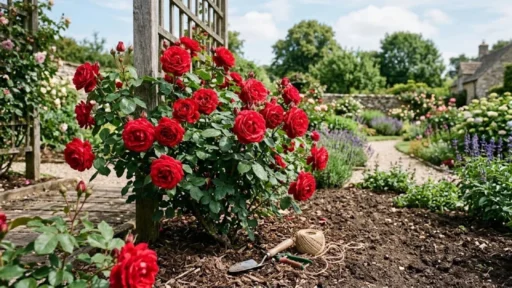
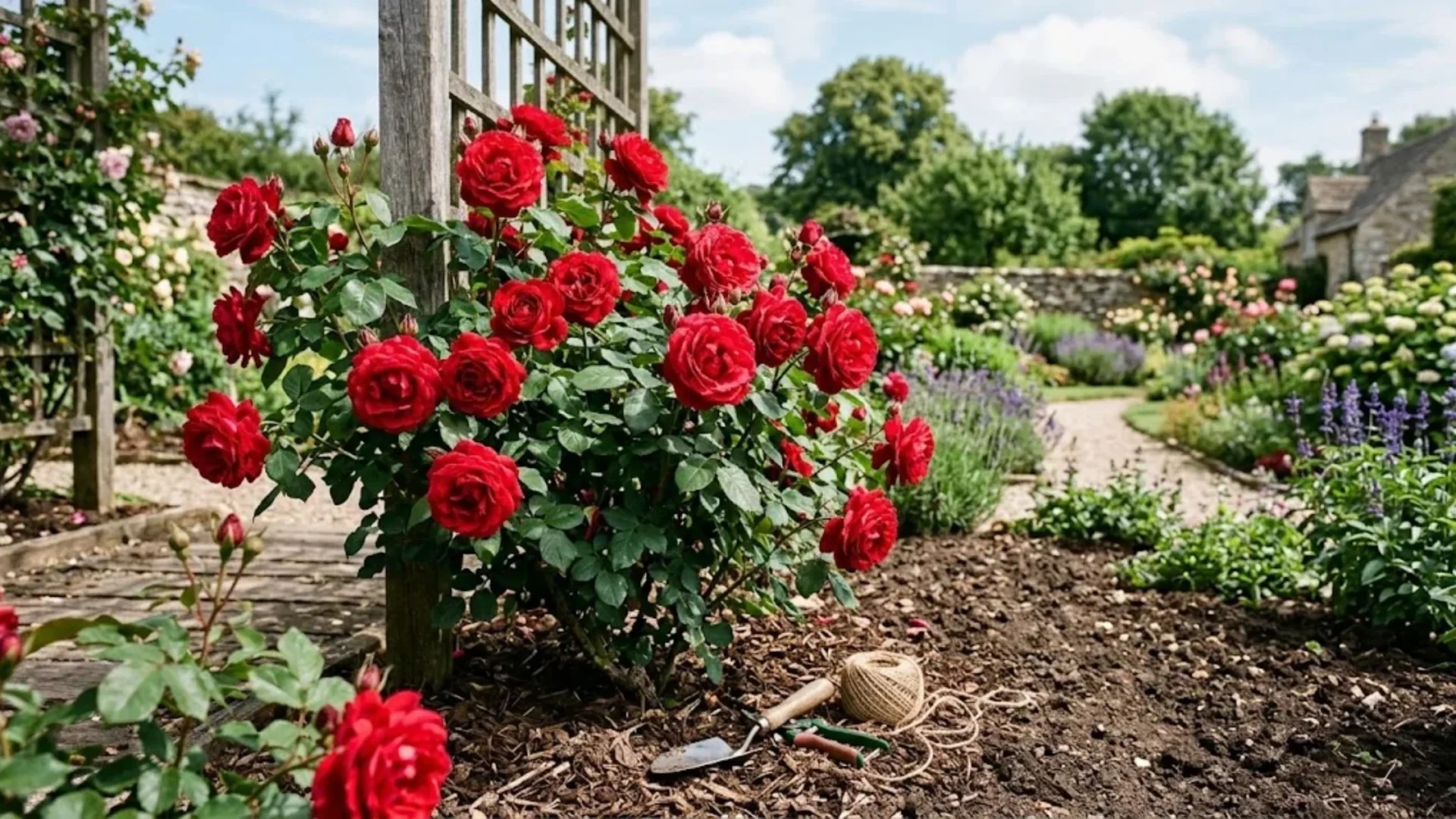
The best time to plant red roses is when the plant can grow roots before it has to support leaves and flowers. For most temperate gardens, that means early spring for bare-root roses, just as the ground thaws and before buds break. Container-grown roses do best in spring or early fall. Here at Solera Garden, we’ve found that the answer depends less on the calendar date and more on three things you can check yourself: what form your rose comes in, your local frost dates, and whether your soil is ready to dig.
This guide shows you how to work out your exact red rose planting season, which months to avoid, and how timing affects the health and color of your roses in their first year.
Why planting time matters for red roses
A newly planted rose lives on its roots. During the first several weeks it needs to grow new feeder roots into the surrounding soil. If you plant when the soil is cold and waterlogged, those roots stall. If you plant in high heat, the leaves lose water faster than the young roots can replace it. That’s the main cause of transplant shock.
Good timing gives you:
- Stronger root establishment before the plant spends energy on blooms
- Less transplant shock, so leaves stay on and canes don’t die back
- Better first-season flowering, because the plant isn’t recovering from stress
- Better color, which matters more for red roses than for most others (see below)
The best time to plant roses depends on how you buy them
Roses are usually sold in two forms, and each one has its own planting window.
| Rose form | What it is | Best planting window | Why |
|---|---|---|---|
| Bare-root | A dormant plant sold with no soil around the roots | Late winter to early spring, once the soil is workable and before buds swell | The plant is dormant, so it can root without supporting leaves |
| Container-grown | A rose actively growing in a pot | Spring and early fall are best; possible through the growing season | The root ball stays intact, so timing is more flexible, but heat is still a risk |
| Own-root vs. grafted | How the plant was propagated (applies to both forms above) | Same windows | Propagation changes planting depth, not planting time |
Bare-root red roses are the most time-sensitive. Plant them while they are still dormant. If you buy bare-root roses before your soil is ready, keep the roots moist and cool and plant as soon as conditions allow. Soak the roots in water for several hours before planting.
Container red roses are more forgiving, which makes them a good choice if you missed the bare-root season. Avoid moving them into the ground during a heat wave or a dry spell.
Red rose planting season by climate
Your climate decides how those general windows translate into actual months. Use the hardiness zone or local frost dates for your area.
| Climate | Example zones (USDA) | Best time for bare-root | Best time for container roses | Avoid |
|---|---|---|---|---|
| Cold winters | Zones 3–5 | Mid to late spring, after the ground thaws | Late spring through early summer | Fall planting, because roots may not establish before the ground freezes |
| Moderate winters | Zones 6–7 | Early spring | Spring, or early fall about 6 weeks before your first frost | Mid-summer heat |
| Mild winters | Zones 8–9 | Late winter | Fall or late winter | Late spring through summer |
| Hot, dry or subtropical | Zones 10+ and similar climates | Winter, during the coolest months | Late fall through winter | Any time daytime heat is intense |
Southern Hemisphere readers: reverse the months. Bare-root season usually falls in mid-winter (around June to August), and spring planting happens around September to October.
How to calculate your planting window from frost dates
Frost dates are the most reliable way to set your timing. Look up your area’s average last spring frost and average first fall frost from a local extension service or weather source, then count from those dates.
For spring planting (bare-root or container):
- Start once the soil can be worked, which is often a few weeks before your last frost for dormant bare-root roses.
- For container roses that are already in leaf, wait until hard frosts are unlikely, since tender new growth can be damaged.
For fall planting (container roses, moderate and mild climates):
- Count back about 6 weeks from your average first fall frost. That gives roots time to grow before the soil gets cold.
Example: Suppose your average first fall frost is November 1. Counting back six weeks puts your target at about September 20, so late September is your latest comfortable fall planting date. If that week is still very hot, wait a few days for cooler weather rather than planting into heat.
How to tell if your soil is ready for planting roses
The calendar can be wrong in an unusual year, so check the soil before you dig:
- Do the squeeze test. Take a handful of soil from planting depth and squeeze it. If it stays as a sticky ball or drips water, it’s too wet. Wait a few days. If it crumbles when you poke it, it’s ready.
- Make sure it isn’t frozen. You should be able to dig a full-depth hole without hitting frozen ground.
- Check drainage. Fill the hole with water. If water is still standing many hours later, improve drainage before planting. Roses don’t tolerate waterlogged roots.
If you haven’t tested your soil’s pH or structure yet, do it before planting season. Our guide to testing and preparing your garden soil shows you how to do that step by step.
When you should not plant red roses
Avoid planting when:
- The ground is frozen or soggy. Roots can’t grow and may rot.
- A heat wave is forecast. New roots can’t keep up with water loss from the leaves.
- It’s late fall in a cold climate. The rose won’t have time to anchor before winter, and frost heave can push it out of the ground.
- A bare-root rose has already leafed out heavily. It’s no longer dormant. Plant it carefully, shade it for the first week or two, and keep it evenly moist.
If you have to plant at a bad time, such as a gift rose arriving in July, keep it in its container in partial shade and water it consistently until conditions improve.
Why timing matters even more for red roses
Planting time affects how your red roses look as well as how well they establish. Dark red petals absorb more heat than pale petals. When a stressed young rose blooms in hot weather, red flowers often:
- Scorch or crisp at the petal edges
- Fade or “blue,” shifting from true red toward purple or magenta
- Open quickly and drop early
Planting in spring or early fall means the rose’s first flush usually opens in milder weather, when color is richer and petals last longer. Cool nights generally deepen red tones. If you’re choosing a variety for a hot climate, look for red cultivars described as heat-tolerant or sun-fast. Our guide to the main types of roses, from hybrid teas to shrub roses can help you compare your options before you buy.
Your first weeks after planting
Good timing gets the rose off to a strong start, and early care helps it keep going:
- Water deeply right after planting, then keep the soil evenly moist (not soaked) while new growth develops.
- Mulch with 2–3 inches of organic material, keeping it a few inches away from the canes. That helps even out soil moisture and temperature. See how to mulch a garden properly for the best materials to use.
- Hold off on heavy fertilizer until you see active new growth. Strong feeding too early can push leaves before the roots can support them.
- Pinch off a few early buds on very young plants if you want them to put more energy into roots. This is optional, but it can help a rose that went in late.
For the full care routine, including site selection, pruning and keeping blooms deep red through the season, see our guide on how to grow red roses at home.
Frequently asked questions
Can you plant red roses in summer?
You can plant container-grown roses in summer, but it’s the riskiest season. Choose a cool, overcast stretch, plant in the evening, water deeply, and give temporary afternoon shade for the first week or two.
Is fall or spring better for planting roses?
In moderate and mild climates, early fall is often excellent for container roses because the soil is warm and the air is cool, which favors root growth. In cold climates, spring is safer because fall-planted roses may not establish before the ground freezes.
How soon will a newly planted red rose bloom?
Container roses often bloom in their first season. Bare-root roses usually bloom the same year as well, once they leaf out, though the first flowers may be fewer or smaller while the plant settles in.
Does the best time differ for planting red roses as a memorial or gift plant?
No, the timing rules are the same. If a rose arrives outside the planting window, keep it healthy in its pot and plant it when conditions are right. If you’re choosing a rose for its symbolism, our guide to what red roses symbolize covers the meanings behind them.
Your next step
Look up your average last spring and first fall frost dates today, then check which form of red rose you plan to buy. If it’s bare-root, plan to order it so it arrives as your soil becomes workable. If it’s container-grown, set a spring date, or a fall date about six weeks before your first frost, and prepare the planting bed a couple of weeks ahead.