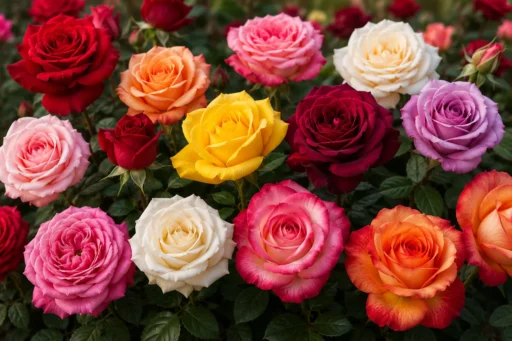
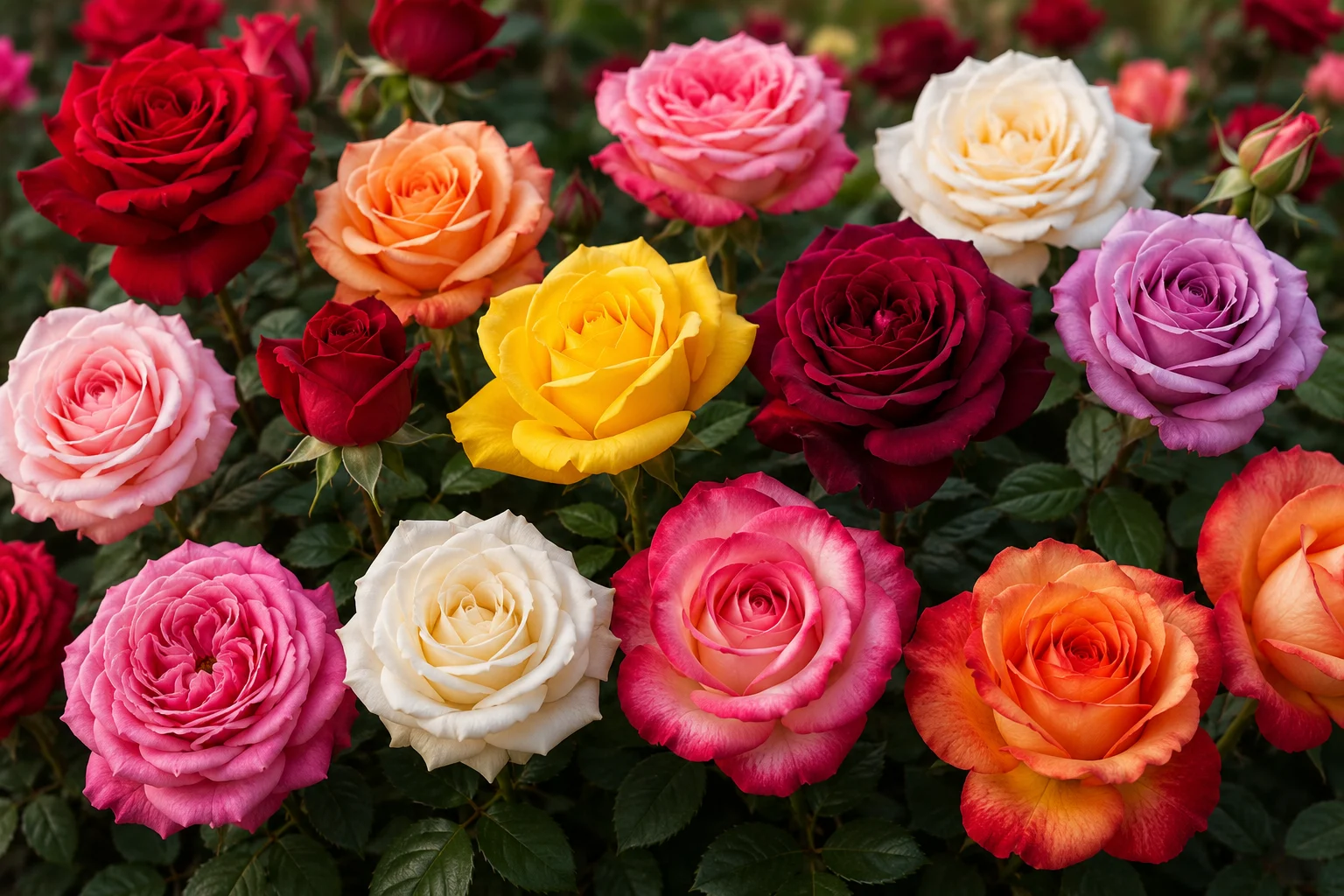
Rarely does a plant carry the kind of romantic allure and history associated with the rose. Whether you’re filling in a bare wall, planting a self-sufficient border, or growing your first cutting garden, getting the right variety for your purpose is what makes or breaks the result. Understanding the different types of roses — including well-known names like David Austin and Knock Out — gives you the insight to find what will actually thrive in your zone and suit your gardening goals. At Solera Gardens, we think growing these magnificent plants should be an enjoyable experience.
What Are the Most Common Types of Roses?
Choosing the right roses starts with understanding the basic categories. According to the American Rose Society’s classification system, roses fall into three groups: Wild (Species) Roses, Old Garden Roses (classes established before 1867), and Modern Roses (classes established after 1867). Each group has distinct growth habits, flowering patterns, and frost tolerance, all of which shape how a given rose will perform in your garden.
With that framework in mind, let’s walk through the fifteen most popular types of roses.
Why We Selected These Varieties
To guide you through the diverse world of the genus Rosa, we chose these fifteen varieties for their garden performance, disease resistance, climate adaptability, and distinct growth habits — not just for how the flowers look in a photo. The goal here is real diversity: something for cutting gardens, pollinator gardens, containers, hedges, and everything in between.
1. Hybrid Tea Roses (Rosa hybrid)
USDA Hardiness Zones: 5 to 9
Mature Size: 3 to 6 feet tall, 2 to 4 feet wide
Bloom Time: Late spring to frost (repeat bloomer)
Toxicity: Non-toxic to pets (thorns can cause minor physical injury)
The hybrid tea rose is the quintessential modern rose, prized for its tall, upright stems and single central flower per stem. Classic cultivars like ‘Mister Lincoln’ (deep red, heavily fragrant) and ‘Peace’ (yellow with pink edges) made this class famous. It’s the top choice for cutting gardens, since the long stems hold up beautifully indoors. It does require consistent maintenance to prevent fungal issues.
Solera Gardens Tip: Space hybrid tea roses at least 3 feet apart to allow excellent air circulation. This simple spacing trick dramatically reduces black spot and powdery mildew on the foliage.
2. Floribunda Roses (Rosa hybrid)
USDA Hardiness Zones: 5 to 9
Mature Size: 3 to 5 feet tall, 3 to 4 feet wide
Bloom Time: Continuous from late spring to winter frost
Toxicity: Non-toxic to pets
Floribundas were bred by crossing hybrid tea roses with polyantha roses. Unlike hybrid teas, they bloom in clusters rather than one flower per stem. Popular cultivars like ‘Iceberg’ (pure white) and ‘Julia Child’ (golden yellow) show off the class’s range of color and continuous bloom. They’re easier to grow than hybrid teas and forgive more pruning mistakes.
3. Grandiflora Roses (Rosa hybrid)
USDA Hardiness Zones: 5 to 9
Mature Size: 5 to 8 feet tall, 3 to 5 feet wide
Bloom Time: Repeat blooms throughout summer and autumn
Toxicity: Non-toxic to pets
Grandifloras combine the strong, upright stems of hybrid teas with the cluster-blooming habit of floribundas. ‘Queen Elizabeth,’ the cultivar that started the class, is still one of the most widely planted grandifloras today. Because they grow tall, they make excellent background plants along fences or at the back of a perennial border.
4. Climbing Roses (Rosa hybrid)
USDA Hardiness Zones: 5 to 9 (depending on cultivar)
Mature Size: 8 to 15 feet tall (canes), 3 to 6 feet wide
Bloom Time: Late spring through autumn (many repeat bloom)
Toxicity: Non-toxic to pets
Climbing roses aren’t true vines — they have no tendrils — but their long, flexible canes can be trained and tied to almost any structure. ‘New Dawn’ (soft pink, one of the most disease-resistant climbers available) and ‘Zéphirine Drouhin’ (thornless, deep pink, and shade-tolerant) are two of the most reliable cultivars to start with. Trained on trellises, arbors, pergolas, or fences, climbing roses create a dramatic vertical display that few other flowering plants can match.
Climber or rambler? The two are often confused. Climbing roses stay more compact (8-15 feet), repeat bloom through the season, and need to be actively tied to their support. Rambling roses (see #10) grow far larger, bloom once in a spectacular flush, and can often support themselves once established over a large structure like a mature tree.
To establish a new climbing rose, tie the canes horizontally rather than vertically during the first year — horizontal training encourages more flowering side shoots along the length of the cane, instead of just blooms at the very top.
If you want to keep the garden interesting after dark, planting evening-flowering vines alongside your climbing roses is a beautiful pairing. How to Plant and Grow Moonflowers covers everything you need for that combination.
5. Shrub Roses (Rosa hybrid)
USDA Hardiness Zones: 3 to 9 (highly cold hardy)
Mature Size: 3 to 7 feet tall, 3 to 6 feet wide
Bloom Time: Continuous repeat bloomer
Toxicity: Non-toxic to pets
Shrub roses are a broad, highly variable class known for excellent health and strong disease resistance. The best-known example is the Knock Out rose series, introduced in 2000 and now one of the most widely planted roses in the country thanks to its near-continuous bloom, strong disease resistance, and tolerance for neglect. Shrub roses in general need far less pruning than formal classes like hybrid teas, which makes them a strong choice for hedging.
6. Miniature Roses (Rosa hybrid)
USDA Hardiness Zones: 5 to 9
Mature Size: 1 to 2 feet tall, 1 to 2 feet wide
Bloom Time: Continuous repeat bloomer
Toxicity: Non-toxic to pets
Miniature roses are scaled-down versions of modern roses, with small leaves and proportionally small flowers. They’re the best option for containers, sunny balconies, front-yard plantings, and small suburban gardens where a full-size shrub rose wouldn’t fit.
7. Groundcover Roses (Rosa hybrid)
USDA Hardiness Zones: 5 to 9
Mature Size: 1 to 2 feet tall, 3 to 6 feet wide (spreading)
Bloom Time: Spring to late autumn
Toxicity: Non-toxic to pets
Often sold under the name “landscape” or “drift” roses (the Drift series is the most common in nurseries), these roses have a low, spreading habit that’s highly effective on sunny banks, bare ground, or cascading over retaining walls. They’re also notably disease-resistant.
8. David Austin (English) Roses (Rosa hybrid / David Austin)
USDA Hardiness Zones: 5 to 9
Mature Size: 3 to 6 feet tall (some can climb), 3 to 5 feet wide
Bloom Time: Strong repeat bloomer from spring to frost
Toxicity: Non-toxic to pets
David Austin roses — sometimes called English roses — were bred by David Austin to combine the old-fashioned, densely petaled flower form and strong fragrance of Old Garden roses with the repeat-blooming habit of modern roses. Popular cultivars include ‘Gertrude Jekyll’ (deeply fragrant, rose-pink), ‘Graham Thomas’ (rich yellow, one of the most popular yellow roses ever bred), and ‘Olivia Rose Austin’ (soft pink, exceptional disease resistance). If you’re searching for the classic “cabbage rose” look with modern reliability, this is the class to start with.
When designing a cottage garden border, pairing David Austin roses with airy companions like daisies helps hide bare lower stems. Check out 26 Types of Daisies to Grow in Your Garden for varieties that pair well by size and color.
9. Polyantha Roses (Rosa hybrid)
USDA Hardiness Zones: 5 to 9
Mature Size: 2 to 3 feet tall, 2 to 3 feet wide
Bloom Time: Late spring to frost
Toxicity: Non-toxic to pets
Polyanthas are sturdy, compact shrubs that grow close together and produce large numbers of small single or double flowers. ‘The Fairy’ (soft pink) is the most widely available cultivar today. Highly disease-resistant, polyanthas make an excellent long-lived substitute for annual bedding plants.
10. Rambling Roses (Rosa hybrid)
USDA Hardiness Zones: 4 to 9
Mature Size: 15 to 30 feet tall (canes), 5 to 10 feet wide
Bloom Time: Single, spectacular flush in late spring or early summer
Toxicity: Non-toxic to pets
Ramblers are sturdier and far more vigorous than climbing roses, with extraordinarily long, flexible canes capable of scaling mature trees, large pergolas, or outbuildings. ‘Kiftsgate,’ famous for swallowing entire trees in the UK, is the most dramatic example of the class. Unlike climbers, ramblers typically bloom only once a year — but the sheer volume of flowers in that single spring flush is hard to match with any other rose.
11. Bourbon Roses (Rosa borboniana)
USDA Hardiness Zones: 5 to 9
Mature Size: 4 to 6 feet tall (can climb to 10 feet), 3 to 5 feet wide
Bloom Time: Strong spring flush with reliable autumn repeat
Toxicity: Non-toxic to pets
Bourbon roses originated on the Île de Bourbon in the Indian Ocean and are known for their strong, fruity fragrance and large, cup-shaped flowers. ‘Louise Odier’ is one of the most reliable cultivars available today. They thrive in rich, well-drained soil and appreciate a support structure for their semi-climbing stems.
12. Damask Roses (Rosa damascena)
USDA Hardiness Zones: 4 to 9
Mature Size: 4 to 6 feet tall, 3 to 5 feet wide
Bloom Time: Single summer flush (except Autumn Damask, which repeats)
Toxicity: Non-toxic to pets
Damask roses are the traditional source of rose water and rose oil, cultivated for that purpose for centuries. They have an airy growth habit, grey-green foliage, and richly scented pink or white flowers.
13. Alba Roses (Rosa alba)
USDA Hardiness Zones: 3 to 9 (exceptionally cold hardy)
Mature Size: 5 to 8 feet tall, 4 to 6 feet wide
Bloom Time: Once per year in late spring
Toxicity: Non-toxic to pets
Among the oldest cultivated roses still grown today, albas have attractive blue-green foliage and pink or white flowers. Notably, alba roses tolerate partial shade and poor soil better than almost any other rose class.
14. Noisette Roses (Rosa noisettiana)
USDA Hardiness Zones: 7 to 10 (prefers warm climates)
Mature Size: 8 to 20 feet tall (climbing), 4 to 6 feet wide
Bloom Time: Continuous from spring to autumn
Toxicity: Non-toxic to pets
Noisettes were the first roses bred in America, developed in South Carolina in the early 1800s. This repeat-blooming climber produces sweetly scented clusters of pastel flowers. Noisettes are heat-tolerant and well suited to warm climates, but they’re notably sensitive to cold.
15. Wild / Species Roses (Rosa species, e.g., Rosa rugosa)
USDA Hardiness Zones: 2 to 9 (depending on species)
Mature Size: 3 to 8 feet tall, 3 to 8 feet wide
Bloom Time: Late spring to early summer
Toxicity: Non-toxic to pets
Wild roses are the ancestors of every modern hybrid on this list. Their simple, five-petaled flowers are highly attractive to bees and other native pollinators, and they produce orange or red rose hips in autumn that feed local birds through winter. Rosa rugosa is the most widely available species rose for home gardens.
Comparison of Major Rose Classes
For quick reference, here’s how the major rose types compare on the qualities that matter most for planning your garden:
| Rose Class | Growth Habit | Bloom Frequency | Average Fragrance | Disease Resistance | Best Landscape Use |
| Hybrid Tea | Upright, stiff | High (Repeat) | Strong | Moderate to Low | Cutting gardens, specimen planting |
| Floribunda | Bushy, compact | High (Continuous) | Mild to Moderate | High | Mixed borders, low hedges, massing |
| Shrub / Drift | Spreading, mounded | High (Continuous) | Mild | Excellent | Slopes, borders, low-maintenance beds |
| Climber | Arching canes | High (Repeat) | Moderate to Strong | Moderate to High | Arbors, fences, vertical structures |
| Old Garden | Arching, large | Low (Mostly once) | Exceptionally Strong | Moderate to High | Cottage gardens, historical landscapes |
| Species | Wild, thorny | Low (Once) | Wild, spicy | Outstanding | Wildlife gardens, windbreaks, slopes |
Specialty Recommendations for Garden Goals
Every landscape has its own challenges and goals. Here’s how to match roses to what you’re actually trying to accomplish:
Best for Beginners: Shrub roses — especially Knock Out varieties — and groundcover roses like the Drift series tolerate imperfect pruning and carry strong genetic disease resistance.
Best for Pollinators: Wild species roses, such as Rosa rugosa and Rosa carolina, offer open, single-petaled flowers that give pollinators like bees, butterflies, and hoverflies easy access to pollen.
Best for Containers: Miniature and polyantha roses do well in pots, provided the container is at least 12 inches deep with good drainage.
Best for Cut Flowers: Hybrid tea roses remain unmatched for arrangements thanks to their long stems and elegant, single-bloom buds.
Best for Small Gardens: Patio roses, miniatures, and floribundas deliver color without competing for space.
Best for Low-Maintenance Landscapes: Groundcover and shrub roses need no deadheading, only light pruning, and thrive with regular mulching.
Comprehensive Guide to Planting and Growing Roses
Whatever types you bring into your garden, a few basic requirements determine whether they thrive.
Sun and Soil Requirements
Roses are demanding about sunlight — they need at least 6 hours of direct sun daily to produce full, healthy blooms. They perform best in fertile, loamy soil with a slightly acidic to neutral pH between 6.0 and 6.5.
Watering Guide
Roses need deep, infrequent watering rather than frequent shallow watering.
Frequency: 1 to 2 inches of water per week, adjusted for your climate and season. Method: Water at the soil level and avoid wetting the foliage — overhead watering promotes fungal disease.
Fertilizer Guide
Roses are heavy feeders and need a structured feeding schedule:
Early Spring: Apply a slow-acting, balanced organic fertilizer as new growth appears. During Bloom Cycle: Use a fertilizer with an N-P-K ratio around 4-4-4 or 5-5-5, supplemented with an organic liquid fertilizer high in potassium.
Late Summer: Stop fertilizing about six weeks before your area’s expected first frost, so tender new growth doesn’t emerge right before winter.
Pruning Guide
Regular pruning keeps roses healthy, shapely, and productive.
Timing: Do major structural pruning in late winter or early spring, just as leaf buds begin to swell but before they open.
Technique: Use sharp, sterilized bypass pruners to remove the three D’s — dead, damaged, and diseased wood. Cut at a 45-degree angle about a quarter inch above an outward-facing leaf bud.
Common Growing Mistakes and Solutions
Even experienced gardeners run into a handful of recurring rose problems:
Overwatering and poor drainage. Roses develop root rot in low, consistently wet spots. Plant in well-drained soil, or mound the bed if you’re working with heavy clay.
Crowding plants. Roses planted too close together trap moisture on the foliage and encourage black spot. Always plan for the plant’s mature spread, not its size at planting.
Pruning too late in the season. Autumn pruning triggers new growth that won’t survive winter frost. In fall, limit yourself to removing dead wood only.
Neglecting the graft union. In cold climates, the swollen graft union on grafted roses can freeze and kill the plant. Make sure the graft union sits one to two inches below the soil surface before winter.
Frequently Asked Questions
Can roses grow in full shade?
Roses generally don’t perform well in shade since they need light to fuel blooming. A few classes, like Albas, tolerate partial shade (around 4 hours of light) and still produce a solid flush of blooms.
How do I protect my roses from winter freeze damage?
Apply 3 to 4 inches of mulch — organic mulch, straw, or leaf compost — over the root zone in late fall. In areas with harsh winters, mound extra soil over the graft union of grafted roses for added protection.
Why are my rose leaves turning yellow with black spots?
That’s black spot, one of the most common rose diseases, caused by the fungus Diplocarpon rosae. Prune and remove infected leaves promptly, avoid overhead watering, and apply a fungicide labeled for black spot if the infection persists season over season. Choosing a disease-resistant class like shrub or groundcover roses reduces how often you’ll deal with it in the first place.
Are roses toxic to dogs or cats?
No — rose plants themselves are considered non-toxic to dogs and cats according to the ASPCA. The main risk isn’t toxicity but physical injury: thorns can cause scratches or punctures, and ingesting large amounts of plant material can occasionally cause mild stomach upset.
Do I need to deadhead all types of roses?
No. Newer hybrid tea and floribunda roses bloom more with old flowers removed, but groundcover and species roses are self-cleaning and don’t need it.
Are rose thorns poisonous to humans or pets?
No, rose thorns don’t contain any natural toxin. But scratches or punctures can introduce soil-borne bacteria or fungi, including Sporothrix schenckii, so thick, protective gardening gloves are always a good idea when handling roses.
What are the best companion plants for roses?
Lavender, salvia, catmint, and various daisies are excellent companions. Many help repel pests like aphids, and their fine foliage hides the bare, thorny lower stems that roses tend to develop.
How long do rose bushes live?
Well-kept modern rose bushes typically live 15 to 20 years. Many Old Garden and species roses are far longer-lived and can thrive for 50 years or more with minimal care.
Conclusion
Whether you’re training a fragrant Bourbon rose over a garden gate, planting a bed of continuously blooming Knock Out shrubs, or working in a David Austin cultivar for that classic cabbage-rose look, growing a mix of rose types gives your garden color and structure that’s hard to match with any other plant. Match the variety to your hardiness zone, give it full sun and deep watering at the soil level, and you’ll be enjoying these plants for decades.