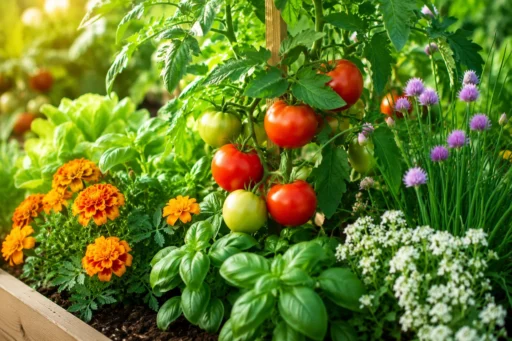
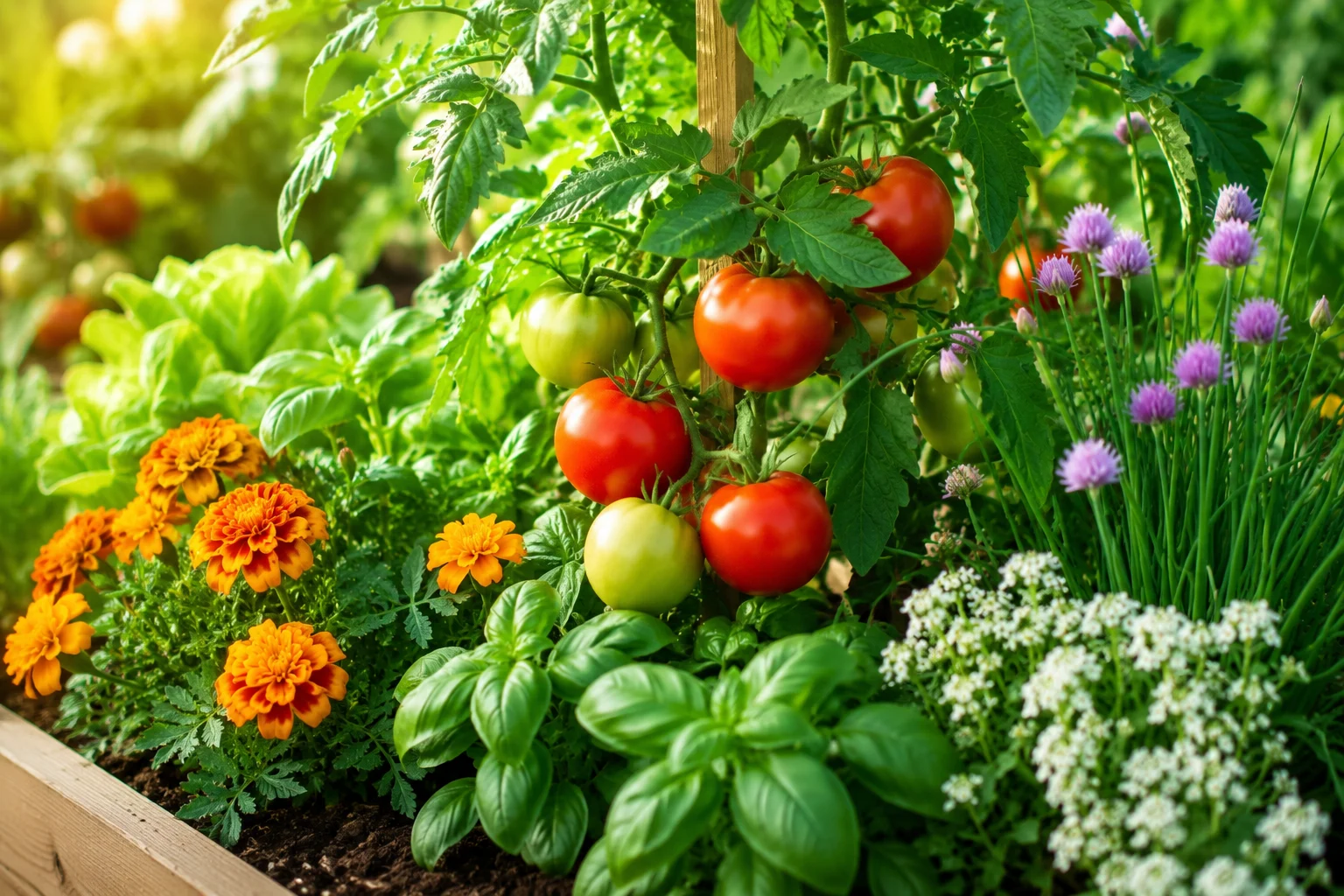
Want a backyard harvest bursting with sweet, tangy, vine-ripened tomatoes? One of the easiest and most organic ways to boost your yield, protect plants from pests, and make the most of your garden space is companion planting. Pairing tomatoes with plants they naturally get along with creates a small, self-supporting ecosystem right in your garden bed. If you’re new to growing your own food, our guide on how to plan a vegetable garden for beginners is a great place to start first.
What Are the Best Companion Plants for Tomatoes?
Successful tomato companion planting comes down to considering how plants interact both above and below ground. This practice, often called companion gardening, means choosing plants whose roots, growth habits, and scents complement your tomatoes, cutting down on the need for chemical fertilizers and pesticides.
A few natural mechanisms explain why this works so well:
- Pest-repelling scents: Certain aromatic herbs release volatile oils that mask the scent of tomato plants, making them harder for pests to locate.
- Beneficial predator attraction: Many flowering companion plants provide nectar that draws in parasitic wasps, lacewings, and ladybugs, all of which feed on common garden pests.
- Trap cropping: Some companion plants are more attractive to pests than tomatoes themselves. Planted a short distance away, they lure pests away from your main crop.
- Physical and soil synergy: Low-growing ground covers act as living mulch, helping retain soil moisture and preventing soilborne fungal spores from splashing up onto tomato foliage during watering.
Top Companion Plants for Tomatoes: Detailed Botanical Profiles
Here are six standout companion plants, grouped by their primary benefit, to help you choose based on your garden’s specific needs.
1. Sweet Basil (Ocimum basilicum): The Classic Flavor Enhancer
Primary Benefit: Best for beginners and flavor.
USDA Hardiness Zones: Grown as a warm-season annual in zones 2 through 11.
Mature Height & Spread: 12 to 24 inches tall, 12 inches wide.
Toxicity: Completely non-toxic to dogs, cats, and humans.
Growing Requirements: Full sun (6 to 8 hours daily); rich, well-draining soil; consistent moisture.
Why we selected it: Basil may be the best partner a tomato plant can ask for. Many gardeners swear that basil planted nearby improves tomato flavor, and while the exact science behind that claim is still debated, basil’s practical benefits are well established. Its sharp, sweet scent helps deter common pests like thrips, hornworms, and whiteflies. Letting a few stems flower late in the season also draws in bees that help pollinate nearby tomato blossoms.
How to plant it next to tomatoes: Set basil seedlings about 1 to 1.5 feet from the base of your tomato plants. Since tomatoes grow tall and wide, position basil along the south or west side of your support structure so it still gets afternoon light without sitting entirely in the tomato plant’s shadow.
Solera Gardens Tip: Regularly harvesting basil keeps the plant focused on producing fragrant leaves rather than going to seed. Pinch back the top set of leaves every couple of weeks.
2. French Marigold (Tagetes patula): The Natural Pest Guard
Primary Benefit: Best for pest control and root protection.
USDA Hardiness Zones: Grown as an annual in zones 2 through 11.
Mature Height & Spread: 6 to 12 inches tall, 6 to 9 inches wide.
Toxicity: Mildly toxic to pets; sap can cause minor skin irritation, and ingestion may cause mild stomach upset.
Growing Requirements: Full sun; adaptable to average soil; drought-tolerant once established.
Why we selected it: French marigolds offer pest protection both above and below ground. Their roots release alpha-terthienyl, a compound that’s effective against root-knot nematodes, tiny soil-dwelling roundworms that damage tomato roots, stunt growth, and reduce fruit production. Their fragrance also helps repel aerial pests like whiteflies and tomato hornworm moths.
How to plant it next to tomatoes: Marigolds do well planted directly between tomato plants, spaced about a foot to a foot and a half apart. They also work nicely in containers. If you’re growing tomatoes in a pot, tucking a single marigold in alongside saves space while still offering pest protection at ground level.
3. Nasturtium (Tropaeolum majus): The Ultimate Trap Crop
Primary Benefit: Best for trap cropping and attracting pollinators.
USDA Hardiness Zones: Grown as a warm-season annual in zones 2 through 11.
Mature Height & Spread: Trailing varieties spread 3 to 10 feet; dwarf varieties grow 12 inches tall and wide.
Toxicity: Non-toxic to cats, dogs, and humans; both leaves and flowers are edible with a peppery flavor.
Growing Requirements: Full sun to partial shade; prefers poor, sandy, well-draining soil; avoid high-nitrogen fertilizer.
Why we selected it: Nasturtiums make an excellent trap crop for common tomato pests like aphids and caterpillars. Planted a foot or two from your tomatoes, they draw aphids toward their own succulent leaves instead. Their bright red and orange blooms also attract pollinators and beneficial predator insects.
How to plant it next to tomatoes: Position nasturtiums 3 to 4 feet from your tomato plants when using them as a trap crop, close enough to lure pests but far enough that pests are unlikely to move on to the tomatoes themselves. Dwarf varieties also work well planted at the base of tomatoes as a living ground cover to help retain moisture during hot weather.
4. Borage (Borago officinalis): The Bee Magnet
Primary Benefit: Best for pollinators and wildlife.
USDA Hardiness Zones: Self-seeding annual in zones 2 through 11.
Mature Height & Spread: 2 to 3 feet tall, 1.5 to 2 feet wide.
Toxicity: Mildly toxic to cats and dogs in large quantities, due to pyrrolizidine alkaloids that can cause mild liver irritation.
Growing Requirements: Full sun to partial shade; average, well-draining soil; drought-tolerant
Why we selected it: Borage is one of the best plants for drawing beneficial pollinators into a tomato patch. Its star-shaped, pale blue blooms produce nectar all summer long, keeping local bees active and well fed. More pollinator activity generally means fuller, more evenly shaped tomatoes. Borage is also known to help repel tomato hornworms.
How to plant it next to tomatoes: Borage grows fairly large and can sprawl a bit, so plant it at least 24 inches from your tomatoes. This gives its broad, hairy leaves room to grow without crowding the lower branches of your tomato plants.
5. Garlic (Allium sativum): The Fungal Deterrent
Primary Benefit: Best for disease prevention and long-term protection.
USDA Hardiness Zones: Hardy perennial grown as an annual in zones 4 through 9.
Mature Height & Spread: 12 to 24 inches tall, 6 inches wide.
Toxicity: Toxic to cats and dogs; contains compounds that can damage red blood cells if ingested.
Growing Requirements: Full sun; rich, loose, deeply cultivated soil; regular watering in spring
Why we selected it: Garlic acts as a kind of natural bio-defense in the garden. Its sulfur-rich root system interferes with many soilborne pathogens, helping deter early blight, fusarium wilt, and other fungal diseases. The scent from its emerging leaves also discourages larger pests like deer and rabbits, along with spider mites and aphids.
How to plant it next to tomatoes: Plant garlic cloves in the fall, around October, near where you plan to grow tomatoes the following spring. By the time you transplant young tomato seedlings in May, the garlic will already be established nearby, offering protection through spring and into summer as it matures for a midsummer harvest.
6. Carrots (Daucus carota subsp. sativus): The Soil Aerator
Primary Benefit: Best for space optimization and soil structure.
USDA Hardiness Zones: Grown as a biennial in zones 2 through 11.
Mature Height & Spread: Foliage grows to 12 inches; roots spread 2 to 4 inches wide. Toxicity: Completely non-toxic to dogs, cats, and humans.
Growing Requirements: Full sun to light partial shade; loose, stone-free, sandy loam soil; consistent moisture
Why we selected it: Carrots and tomatoes make an efficient pair since they occupy completely different zones in the soil. While tomatoes are heavy feeders with deep root systems claiming the upper garden space, carrots stay confined mostly to the top 6 inches of soil. As their roots grow downward, they also help loosen and break up compacted clay soil.
How to plant it next to tomatoes: Direct sow carrot seeds about 12 inches from your tomato transplants. Make sure the soil is free of rocks and debris so the roots can grow straight down. By the time your tomato plants have grown tall enough to cast some shade, you’ll likely be harvesting sweet, crisp summer carrots underneath.
Quick-Reference Comparison Table for Tomato Companions
| Companion Plant | Botanical Name | Best For | USDA Zones | Height / Spread | Toxicity to Pets |
| Sweet Basil | Ocimum basilicum | Flavor & pollinators | 2 to 11 (annual) | 12 to 24″ / 12″ | Non-toxic |
| French Marigold | Tagetes patula | Nematode control | 2 to 11 (annual) | 6 to 12″ / 6 to 9″ | Mildly toxic (sap/ingestion) |
| Nasturtium | Tropaeolum majus | Trap cropping (aphids) | 2 to 11 (annual) | 1 to 10′ (trailing) / 12″ | Non-toxic |
| Borage | Borago officinalis | Bee attraction | 2 to 11 (annual) | 2 to 3′ / 1.5 to 2′ | Mildly toxic (ingestion) |
| Garlic | Allium sativum | Fungal prevention | 4 to 9 (perennial) | 12 to 24″ / 6″ | Toxic to pets |
| Carrot | Daucus carota | Soil aeration | 2 to 11 (biennial) | 12″ (foliage) / 3″ | Non-toxic |
What You Should Never Plant Near Your Tomatoes
Just as some plants make great neighbors for tomatoes, others can invite disease or compete for resources. Here’s what to avoid.
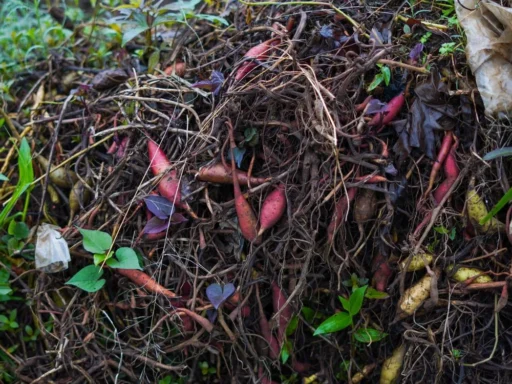
- Potatoes (Solanum tuberosum): As fellow nightshades, potatoes share many of the same vulnerabilities as tomatoes, particularly blight. Planting them close together lets fungal disease spread quickly between the two, putting both crops at risk.
- Fennel (Foeniculum vulgare): Fennel is a poor companion for nearly every garden plant. It releases allelopathic compounds into the surrounding soil that can stunt and weaken nearby tomato vines.
- Corn (Zea mays): Corn earworms and tomato fruitworms are essentially the same pest. Planting corn and tomatoes together gives this pest easy access to both crops, often resulting in damaged ears and ruined tomatoes.
- Brassicas (cabbage, broccoli, and cauliflower): These heavy feeders compete directly with tomatoes for nitrogen and phosphorus, the same nutrients tomatoes need to produce a strong fruit set.
Common Tomato Companion Planting Mistakes to Avoid
Even with good intentions, a few common mistakes tend to trip up beginner gardeners.
- Overcrowding the garden bed: It’s tempting to plant herbs and flowers right up against the base of a tomato plant, but tomatoes need good airflow around their stems to avoid powdery mildew and blight. Keep at least 12 to 18 inches of clearance around the base of each plant.
- Planting invasive companions directly in the ground: Mint repels many pests effectively, but its aggressive underground runners can quickly take over a bed. Keep mint contained in a separate pot near, rather than inside, the garden.
- Ignoring soil moisture differences: Drought-loving herbs like lavender or rosemary don’t belong in the same consistently moist section as water-hungry tomatoes. Water tomatoes deeply and evenly to help prevent blossom end rot, without overwatering neighboring plants that prefer drier conditions.
Frequently Asked Questions About Tomato Companion Planting
Can you plant basil and tomatoes together?
Yes, it’s a classic and effective pairing. Basil thrives in the same heat and sun tomatoes enjoy, and its natural oils help repel several harmful insects, including hornworms.
Do marigolds actually help tomatoes grow?
Yes. Marigold roots release a compound that suppresses root-knot nematodes, and their blooms attract beneficial predator insects that feed on aphids and spider mites.
What should you not plant next to tomatoes?
Avoid potatoes, fennel, corn, and brassicas near tomatoes. Several of these, particularly potatoes, share susceptibility to blight, which can spread rapidly between related plants.
Can you plant cucumbers and tomatoes next to each other?
It’s best to avoid this pairing. Cucumbers are prone to some of the same diseases as tomatoes, including blight and anthracnose, and the two compete heavily for soil nutrients, water, and space.
How far away should companion plants be from tomatoes?
A general rule is 12 to 18 inches, giving both plants enough room for root development and sunlight while maintaining the airflow needed to prevent fungal issues.
Can you plant onions and tomatoes together?
Yes, onions make excellent tomato companions. Their strong scent helps repel aphids, thrips, and even rabbits, and their shallow root system doesn’t compete with the deeper roots of tomato plants.
Does companion planting actually work, or is it a myth?
Companion planting is grounded in real science. It won’t replace good general garden care entirely, but it meaningfully reduces pest pressure, improves soil health, and naturally attracts more pollinators to the garden.
Conclusion
Following the principles of tomato companion planting can lead to healthier, more productive plants with far less reliance on chemical pest control. Whether you’re pairing tomatoes with fragrant basil, protective French marigolds, or space-efficient carrots, thoughtful companion planting sets your whole garden up for a stronger season. For more organic gardening tips and techniques, follow along with Solera Gardens, and happy gardening.
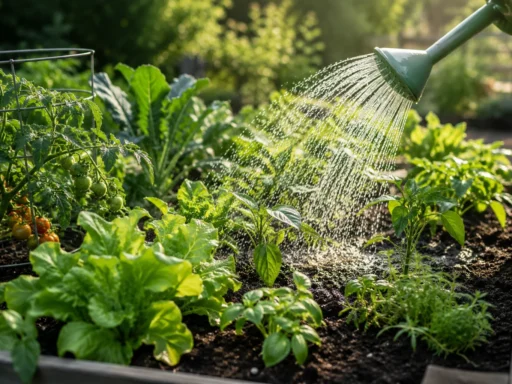
For vegetable beds, our watering guide explains how to check moisture before adding more water.