The buds were almost ready to open. By morning, several stems are bare. Before replacing the flowers or spraying the whole border, work out what ate them and how much protection that planting needs.
To protect flowers from deer, confirm browsing damage, use a suitable physical barrier where losses are unacceptable, and support it with thoughtful plant selection and correctly used repellents. A repellent can discourage feeding, but it is not equivalent to a deer-exclusion fence. A “deer-resistant” label is not a guarantee.
This guide focuses on flower beds and ornamental plants in US home gardens. The goal is a practical protection plan, not removing wildlife from the neighborhood or promising that every bud will survive.
Check whether deer are actually eating the flowers
Look closely at the damaged ends. University of Maryland Extension describes deer browsing as torn or jagged because deer tear vegetation rather than cutting it neatly. Rabbits and rodents more often leave clean, angled cuts. The height of the damage helps, but should not be your only clue.
Inspect the surrounding ground for tracks and note which plants were affected. A deer sighting proves deer visit the yard; it does not prove they caused every damaged leaf. Photograph the stem ends before trimming anything so you can compare later damage.
Try a short inspection in this order:
- Photograph the entire affected plant and a close-up of the missing growth.
- Look at neighboring plants, including those that were left untouched.
- Check for a path through the bed, tracks, or disturbed soil.
- Record whether the damage happened once or on several consecutive nights.
- If the evidence remains unclear, send the photographs to your local Extension office.
A note such as “three flower stalks missing beside the side gate, ragged ends, repeated overnight” gives you a much better starting point than “something is eating everything.”
Decide which flowers need the strongest protection
You do not have to solve the entire property at once. Identify the plants whose loss would be hardest to accept: a small cutting bed, recently purchased perennials, or flowers being grown for a particular occasion.
Draw a rough map showing those plants, garden entrances, and the route you use for watering. Mark each planting as one of three priorities:
- Must protect: losing the flowers would defeat the purpose of the planting.
- Can tolerate some browsing: occasional damage is acceptable if the plants remain useful.
- Can replace or redesign: repeated losses have made the current choice impractical.
This is a planning exercise, not a scientific rating. Its value is helping you spend effort where it matters. A protected group of favorite flowers may be more manageable than dozens of separate guards spread around a large yard.
For example, if your main goal is bouquets, start by pricing protection for the cutting bed. If your main goal is a low-maintenance front border, compare replacement planting costs with the ongoing work of treating every flush of new growth.
Choose a barrier suited to the space
University of Minnesota Extension identifies fencing as the most effective way to prevent deer from reaching vulnerable plantings. Its guidance recommends fences at least eight feet tall for larger areas and emphasizes checking gates and the whole fence for weak points. Local height and setback rules also need checking before installation.
That recommendation does not mean every small flower bed needs the same construction. The area enclosed, surrounding terrain, access requirements, and local deer behavior all affect the choice. Do not buy materials from height alone.
| Situation | Option to investigate | Question to settle first |
|---|---|---|
| A few especially valuable plants | Individual, securely supported guards | Can deer reach the leaves or buds through or over them? |
| A compact flower collection | A small, purpose-designed enclosure | Will the design work for the actual dimensions and local pressure? |
| A large bed with repeated losses | A properly designed perimeter deer fence | Can the whole boundary, including gates, be protected? |
| A rented or restricted property | Permitted removable protection and revised planting | What changes does the owner or association allow? |
Measure the mature spread of the planting as well as its current size. A guard that works around a small transplant may interfere with it later. Leave yourself a practical way to weed, water, and remove spent flowers.
Before ordering, sketch where you will enter with a watering can or wheelbarrow. A barrier that makes daily care awkward is more likely to be left open.
What about a short fence around a small bed?
Small enclosures can work differently from large perimeter fences. Minnesota Extension’s “Protecting plants from deer” describes micro-exclosures, which use the reluctance of deer to enter confined spaces. It also stresses monitoring because behavior varies and a design may need adjustment after a breach.
Do not translate that into “a short fence always keeps deer out.” Treat a compact enclosure as a specific design to evaluate, not a height rule that transfers to a whole backyard. Photograph the layout and record any entry point if it fails.
Use sturdy, maintained materials. Avoid loose loops, sagging netting, sharp exposed ends, or improvised obstacles across walkways. Choose a design that you can inspect without climbing over it.
Use repellents as a maintenance job, not a one-time fix
Repellents make the most sense when you are willing to check the planting and follow the product’s reapplication directions. Minnesota Extension’s small-garden protection guidance notes that heavy deer pressure can overcome deterrence and that rain and repeated exposure affect how a repellent program performs.
Read the entire label before selecting a product. Check that it is intended for deer and suitable for the plants and setting. The EPA’s pesticide safety guidance emphasizes following label directions and targeting the appropriate area. If herbs or vegetables share the bed, confirm any restrictions for those crops rather than assuming an ornamental-plant use covers them.
Make a small treatment record:
- Product name and the plants treated.
- Date and the relevant application instructions.
- Weather after treatment.
- New growth that appeared afterward.
- Whether fresh browsing continued.
Keep the record with your gardening notes, not just in your memory. “Sprayed recently” is hard to evaluate. A dated note lets you compare damage with rainfall, application timing, and plant growth.
Do not mix products or increase the dose in frustration. If a correctly maintained program is not protecting your highest-priority plants, reconsider the protection method rather than endlessly buying different bottles.
Choose less vulnerable plants without expecting a deer-proof garden
Rutgers Cooperative Extension rates landscape plants by observed deer damage, from rarely damaged to frequently severely damaged. It explicitly warns that no plant is deer-proof and that local deer populations and weather influence results. Use those ratings to make a shortlist, then check the exact species and your growing conditions.
For example, the Rutgers list includes anise hyssop and barrenwort in its rarely damaged category. That is useful screening information, not a reason to place either plant in an unsuitable location. Sun exposure, soil moisture, climate, mature size, and household safety still matter.
A sensible replacement worksheet has five columns: plant name, light requirement, soil requirement, mature size, and local browsing history. Ask a nearby Extension office or knowledgeable nursery about performance in your area. A plant that struggles with the site is not a successful replacement simply because deer ignore it.
If carnations are part of the bed, our carnation care guide covers their growing needs and the limits of deer resistance. Keep this protection plan separate from decisions about planting depth, watering, and flower production.
Likewise, use our guide to garden rose types to compare the form of plants you want to grow. Decide where protection will fit before adding another specimen to an already vulnerable border.
Skip deterrents that create a different problem
Do not scatter mothballs around flowers. The National Pesticide Information Center explains that mothballs are insecticides intended for specified enclosed uses, not wildlife repellents. Open use can expose people, pets, and wildlife to the chemicals.
Also avoid making a garden obstacle course from nearly invisible line or loose material. A method that visitors cannot see is a poor fit beside a path. If electric fencing is under consideration, seek an appropriate design and check local requirements; this guide is not an electrical installation plan.
Scare devices deserve realistic expectations. Minnesota Extension notes that deer can become accustomed to sights, smells, and sounds. If you test a permitted motion-activated device, record whether browsing changes instead of assuming that a device triggering means the flowers are protected.
Review the result using fresh damage
A damaged stem will still look damaged after you improve protection. Mark a few plants on your map and take photographs from the same position. Compare new losses, not the total number of old missing flowers.
Here is a practical review routine:
- After installation: inspect gates, attachments, and reachable foliage.
- After weather or garden work: look for anything displaced or left open.
- At a regular garden check: photograph the marked plants and note fresh damage.
- After a failure: identify whether the problem was entry, reach, product maintenance, or uncertain pest identification.
For example, if only the flowers pressed against a guard disappear, inspect reach and spacing before replacing the entire barrier. If damage appears well inside an enclosure, investigate access instead. These are different problems and call for different changes.
Frequently asked questions
Will planting aromatic flowers protect the flowers beside them?
Do not count on it. A lower-preference plant is not a physical barrier around its neighbors. Use resistance ratings to choose that plant, not as a promise that it will protect an adjacent favorite.
Can I rely on repellent while I am away?
Only if its directions and the expected conditions fit the absence, and someone can handle any necessary checks. If nobody can maintain the protection, make that limitation part of the decision before leaving.
Should I replace every plant that has been eaten?
No. First decide whether the plant is worth protecting and whether the protection is practical. Replacing flowers without changing the conditions may simply repeat the same expense. Keep a record of which choices work in your own yard.
What is the best first step?
Confirm the damage, pick one high-priority planting, and measure it. Then compare a suitable barrier with the time you can realistically spend maintaining repellents. A clear decision about one bed is more useful than applying several untracked remedies across the whole garden.
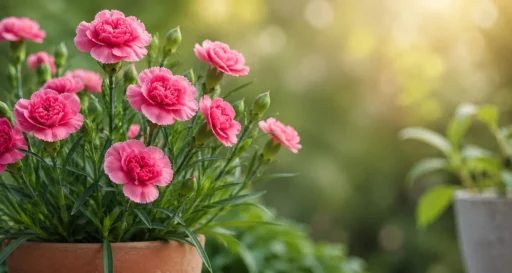
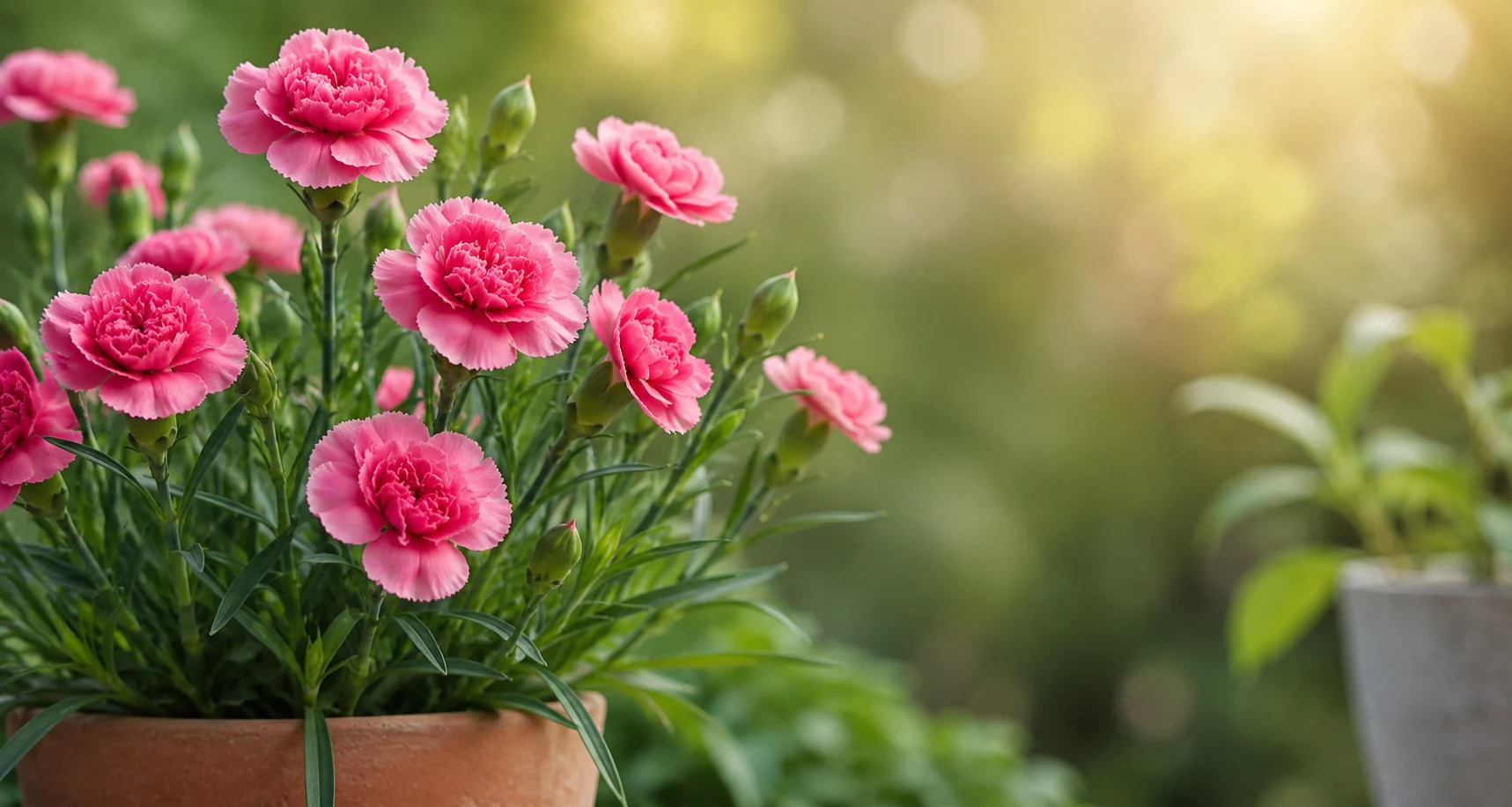
Featured image: carnation flowers from the Solera Garden media library. The photograph illustrates an ornamental planting, not deer damage.