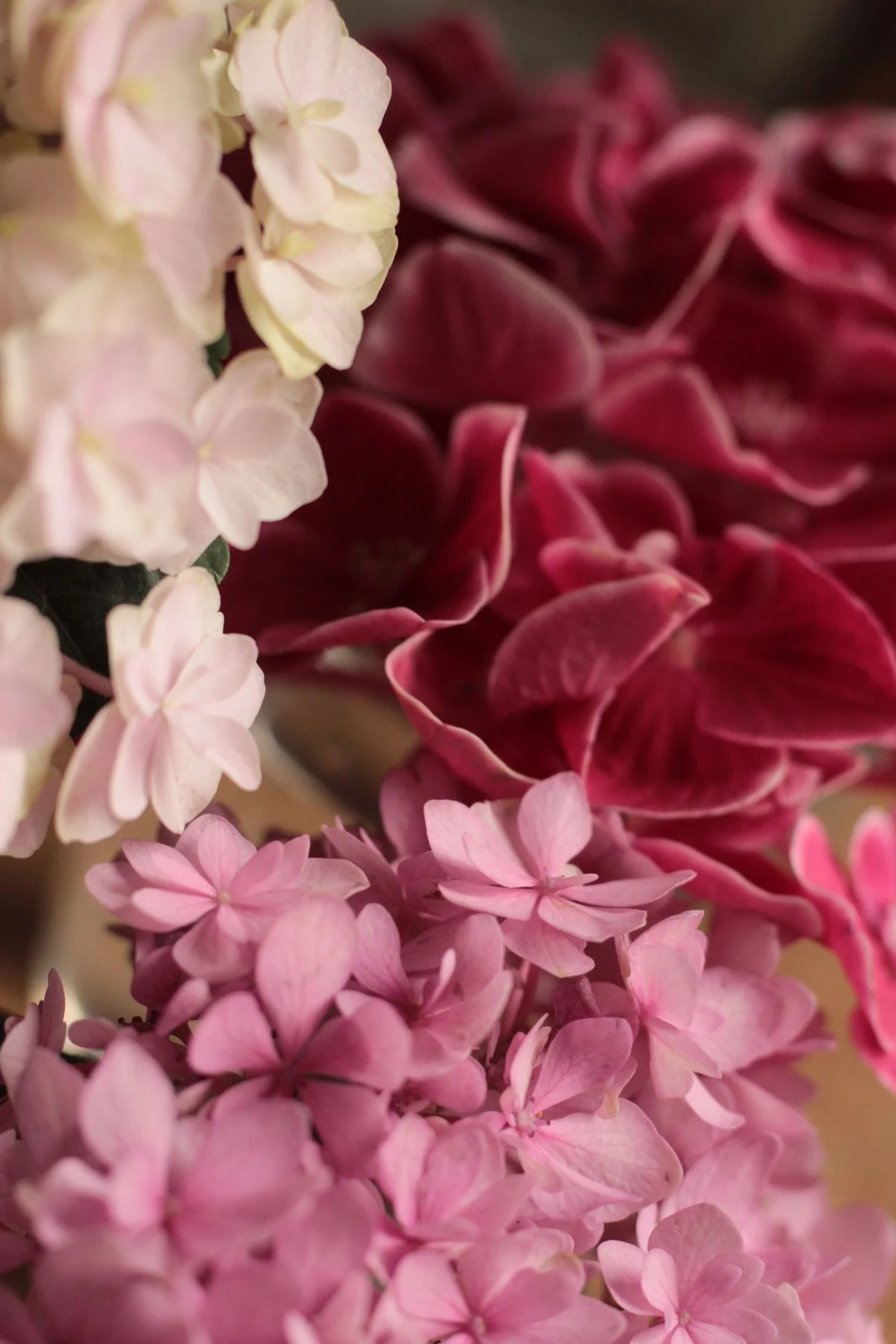
The safest way to prune a hydrangea is to identify which kind you have before making major cuts. Bigleaf, mountain, oakleaf, and climbing hydrangeas usually form flowers on older stems. Smooth and panicle hydrangeas flower on growth produced in the current season. Cutting an old-wood hydrangea in fall or early spring can remove the buds that would have bloomed.
Many healthy hydrangeas do not need annual pruning. Remove dead or damaged wood, thin an overcrowded shrub when necessary, and reduce size only after considering whether the plant is simply too large for its location.
The quick pruning decision
- Identify the hydrangea group. Use the plant tag, cultivar name, leaves, flower shape, and growth habit together.
- Decide why you are pruning. Dead wood, renewal, shape, and size control require different cuts.
- Match the timing to the bloom wood. Old-wood types get their main pruning soon after flowering. New-wood types are normally pruned in late winter or early spring before active growth.
- If the identity is uncertain, prune lightly. Remove only wood you can confirm is dead and observe the plant through a full flowering season.
University of New Hampshire Extension recommends identifying the species before pruning because timing differs among the major groups. North Carolina State Extension gives the same basic division: spring-blooming or old-wood hydrangeas are generally pruned after flowering, while new-wood types can be pruned before spring growth.
Hydrangea pruning chart
| Hydrangea group | Typical botanical name | Where flowers form | Best main pruning window |
|---|---|---|---|
| Bigleaf, including mophead and lacecap | Hydrangea macrophylla | Mostly old wood; some cultivars also rebloom | After flowering; assess winter damage after growth starts |
| Mountain | Hydrangea serrata | Mostly old wood | After flowering; delay deadwood decisions until buds break |
| Oakleaf | Hydrangea quercifolia | Old wood | After flowering, and only as needed |
| Climbing | Hydrangea anomala subsp. petiolaris | Old wood | After flowering for size control |
| Smooth | Hydrangea arborescens | New wood | Late winter or early spring |
| Panicle | Hydrangea paniculata | New wood | Late winter or early spring |
These are group-level rules. A cultivar label can reveal whether a bigleaf or mountain hydrangea reblooms on both older and newer stems. Climate also changes when buds break and how much winter injury occurs, so use plant development rather than a rigid calendar date.
How to identify your hydrangea
The original label is the best evidence. Search the cultivar name, not just the flower color, because soil chemistry can alter color in some bigleaf cultivars. If the tag is gone, combine several clues:
- Bigleaf: broad, glossy, coarsely toothed leaves and round mophead or flat lacecap flower clusters are common.
- Mountain: often resembles a smaller, finer-textured bigleaf hydrangea and commonly has lacecap flowers.
- Oakleaf: deeply lobed leaves are the clearest clue; peeling mature bark and cone-shaped flowers offer support.
- Panicle: cone-shaped flower clusters grow on an upright, often large shrub or small tree form.
- Smooth: rounded shrubs with opposite, matte leaves and dome-shaped flower clusters are typical.
- Climbing: a woody vine attaches to walls, trees, or supports with aerial rootlets.
No single flower shape is foolproof. Panicle and oakleaf hydrangeas both have elongated clusters, while different cultivars can blur familiar distinctions. Photograph the whole plant, leaves, stems, and flowers, then compare them with a university Extension identification guide or ask a local Extension office.
Do you need to prune at all?
Skip routine pruning when the shrub is healthy, flowering, and fits its space. Deadheading old flower heads is optional and is not the same as shortening the framework of the plant.
Pruning is useful when you need to:
- remove wood killed by winter, breakage, or disease;
- thin a congested plant so stems have room;
- renew an older shrub gradually;
- keep a climbing hydrangea away from windows, gutters, or siding edges; or
- develop a strong framework on a panicle hydrangea.
If the shrub must be cut hard every year to stay within its allotted space, pruning is treating a siting problem. A smaller cultivar or a different location is a more durable answer.
Tools and clean cuts
Use sharp bypass pruners for small stems and loppers or a pruning saw for thicker wood. Wear eye protection and gloves. Clean soil and plant debris from tools before work; disinfect blades when moving from suspicious or diseased tissue to healthy stems.
For a heading cut, cut just above a healthy pair of buds without leaving a long stub. When removing a branch completely, cut just outside the swollen branch collar rather than flush against the trunk or main stem. Do not coat normal pruning cuts with household paint or sealer.
How to prune old-wood hydrangeas
Bigleaf and mountain hydrangeas
Wait for spring growth before deciding that a bare stem is dead. Buds near the top may be winter-killed while buds lower on the same cane remain alive. University of New Hampshire Extension advises cutting damaged stems just above the first healthy buds. A light scratch on questionable bark may reveal green living tissue; brown, dry tissue alone is not viable.
After flowering, remove a small number of the oldest stems at ground level if the shrub is crowded. This gradual renewal keeps more of the flower-bearing framework than cutting the entire plant down. Finish major shaping soon enough for the plant to develop and mature the stems that will carry next year’s flowers.
Reblooming cultivars can flower on old and new wood, but that is not permission for careless pruning. A hard cut can still delay or reduce the first flush. Treat an unknown cultivar conservatively.
Oakleaf hydrangeas
Oakleaf hydrangeas usually need little more than deadwood removal and occasional thinning. Preserve the naturally arching structure. If size reduction is unavoidable, make selective cuts after flowering instead of shearing the exterior into a tight ball.
Climbing hydrangeas
Let a young climbing hydrangea establish its framework. Once mature, shorten long lateral shoots after flowering where they interfere with a structure. Avoid severing the main framework unless a stem is dead or the vine must be redirected. Check the support and building surface before allowing mature woody growth to spread.
How to prune new-wood hydrangeas
Smooth hydrangeas
Smooth hydrangeas bloom on shoots made that season, so late-winter or early-spring pruning does not remove established flower buds. They tolerate hard pruning, but tolerance is not the same as necessity. Cutting every stem to the ground can produce vigorous shoots that may bend under large flowers.
For a sturdier framework, remove dead and weak stems, thin the oldest crowded stems, and shorten remaining stems to healthy buds while leaving useful structure. If winter regularly kills the stems to the ground in your climate, remove dead tops before new shoots expand.
Panicle hydrangeas
Panicle hydrangeas also flower on new growth. In late winter or early spring, remove crossing, inward-growing, damaged, and weak shoots. Then shorten selected branches to outward-facing buds while preserving a balanced framework. Tree-form panicle hydrangeas need special care to protect the trained trunk and main scaffold branches.
An old, congested panicle hydrangea can be renewed gradually. University of New Hampshire Extension describes a staged approach that removes portions of the oldest growth over several years. This spreads the stress and keeps more structure than one drastic cut.
What to do when you do not know the type
Do not guess with a hard fall prune. Mark the shrub, take photos through the seasons, and remove only branches that are broken or certainly dead. Record when flowers appear and whether they emerge from older canes or fresh basal growth. By the next flowering cycle, the answer is usually clearer.
If you need to clear a path, shorten only the obstructing stems. Tie back flexible growth temporarily when practical. A year of observation costs less than removing a full season of flowers.
Deadheading without sacrificing buds
Old flower heads can remain for winter interest, or they can be removed. On old-wood types, follow the flower stem downward and make a light cut above the first strong pair of buds. Do not keep cutting deeper just to create a uniform height.
For wildlife-friendly fall care, leaving sound stems and some garden structure can also provide habitat. When spring arrives, work carefully around emerging buds and refresh the soil surface with our guide to mulching a garden. Keep mulch away from direct contact with woody stems.
Why a correctly pruned hydrangea may not bloom
Pruning is only one possibility. Bigleaf and mountain flower buds can be damaged by winter cold or late freezes even when the gardener made no cuts. Deep shade can limit flowering. Severe water stress while buds and shoots develop can also weaken performance.
Look for browsed tips as well. Deer can remove buds and tender growth while leaving ragged or torn ends. If browsing is part of the pattern, use a layered plan rather than blaming the pruning date; our guide explains how to protect flowers from deer.
Excessive nitrogen can favor leafy growth, so review nearby lawn fertilizer applications and feeding history before adding more fertilizer. Confirm that the plant is suited to the site’s light, moisture, winter conditions, and growing zone. Diagnose the whole plant rather than responding to missing flowers with a harder cut.
Pruning mistakes to avoid
- Cutting every hydrangea in fall. This removes flower buds from old-wood types.
- Assuming all cone-shaped flowers are panicle hydrangeas. Oakleaf hydrangeas also carry elongated clusters.
- Shearing the shrub into a ball. Repeated surface cuts create crowded growth and erase the plant’s natural form.
- Removing bare canes too early. Some stems leaf out later, especially after a difficult winter.
- Taking off too much at once. Gradual renewal preserves structure and more flowering wood.
- Using fertilizer to compensate for pruning. Fertilizer cannot restore buds that were removed.
Frequently asked questions
What month should hydrangeas be pruned?
Use the plant’s growth stage, not a universal month. Prune smooth and panicle hydrangeas in late winter or early spring before vigorous growth. Prune old-wood types after flowering, with spring deadwood removal as needed.
Can I prune a hydrangea in fall?
Avoid major fall pruning unless you know it is a new-wood type and have a specific reason. Leaving the stems until late winter protects your options and preserves old-wood flower buds.
What happens if I cut a hydrangea to the ground?
A smooth hydrangea can usually regrow and flower, though the new stems may be less sturdy. A panicle hydrangea can regrow but may lose its trained structure. Old-wood types may produce foliage while losing the coming season’s flowers.
Should dead hydrangea flowers be removed?
Deadheading is optional. Leave the heads for winter interest or remove them with a shallow cut above healthy buds. Do not confuse deadheading with major size reduction.
How can I tell whether a branch is dead?
Wait for spring growth, check for swelling buds, and lightly test questionable bark for green tissue. Remove a cane at the base only when it is clearly dead along its length.
Research references: University of New Hampshire Cooperative Extension and North Carolina State Extension. Image credit: Tori Lavart / Pexels.