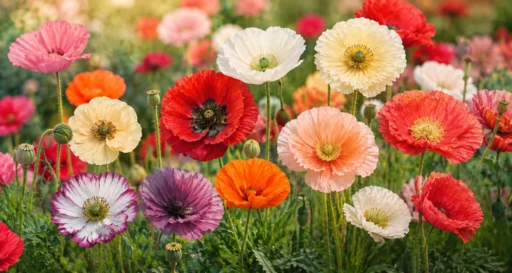
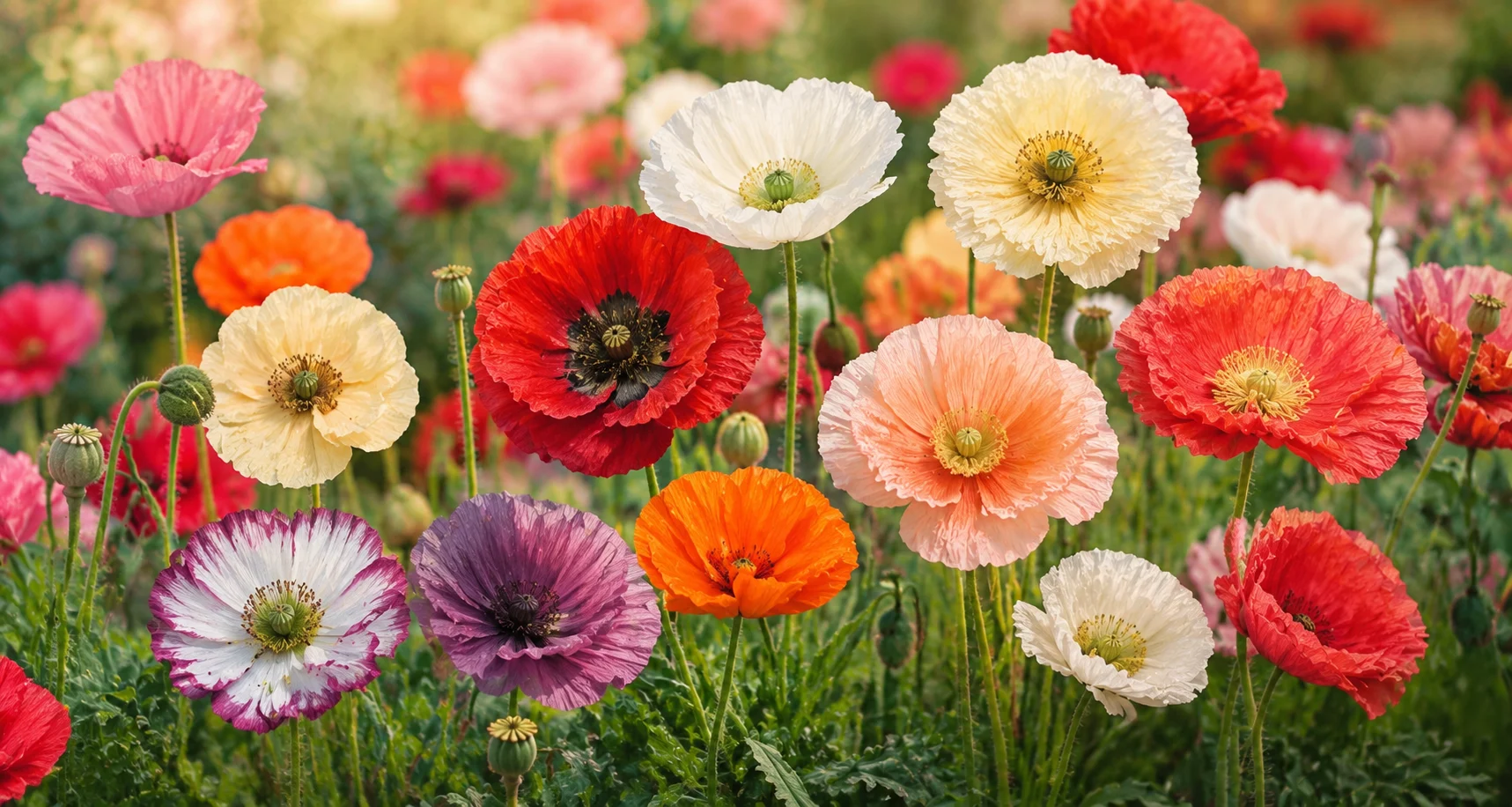
When I think of gardening, papery poppy petals catching a light breeze come to mind almost instantly. It’s one of the most iconic sights of spring. If you’re hoping to add these classics to your own garden, you’re in luck. There are dozens of stunning poppy varieties to choose from, from tough, drought-loving annuals to old-fashioned perennials that come back for decades. Success with any of the more than 70 poppy species (over two dozen of them native to North America) really just comes down to picking a variety suited to your soil and climate, as long as you’re planting in full sun with excellent drainage. That’s where Solera Gardens comes in. Understanding what you need is the easy part.
What Is the Most Common Type of Poppy Flower?
Most people picture the same two poppies when they think of these flowers: the bright red corn poppy or the showy, large Oriental poppy. Both have been garden staples for centuries thanks to their easy self-seeding and low maintenance needs. But the poppy family actually includes a huge range of exotic annuals and perennials that can elevate any garden design. Mix and match a few varieties, and you can keep poppies blooming from the very start of spring right through the heat of midsummer.
Why We Selected These Varieties
Poppies are remarkably versatile, but not every type suits every backyard. We chose these 26 varieties for their reliable growing history, broad visual appeal, wide availability, and ecological value, whether you’re gardening in a hot, dry climate, a frosty northern yard, or a small balcony.
If you’re narrowing it down to just a couple of options to start, we’d recommend California poppies for hot, dry spots and Oriental poppies for a permanent, cold-hardy garden border.
Complete Guide to 26 Exceptional Poppy Varieties
Perennial Oriental Poppies (Papaver orientale)
Oriental poppies are tough perennials known for their enormous, crepe-paper-like blooms in late spring and early summer. They go dormant for the rest of the season, so pair them with later-blooming plants to fill the gap.
1. ‘Patty’s Plum’
- Botanical Name: Papaver orientale ‘Patty’s Plum’
- USDA Hardiness Zones: 3 to 7
- Mature Height & Spread: 30 inches tall, 18 inches wide
- Bloom Time: Late spring to early summer
- Toxicity: Toxic to pets and livestock if ingested
Dusky plum-purple petals surround a dark, velvety center. This variety needs deep, rich soil with excellent drainage.
2. ‘Royal Wedding’
- Botanical Name: Papaver orientale ‘Royal Wedding’
- USDA Hardiness Zones: 3 to 7
- Mature Height & Spread: 30 inches tall, 20 inches wide
- Bloom Time: Late spring
- Toxicity: Toxic to pets
A clean, sophisticated choice with pure white, papery petals set against a bold dark purple center. Native bees and larger pollinators are drawn to it readily.
3. ‘Goliath’
- Botanical Name: Papaver orientale ‘Goliath’ (often sold as ‘Beauty of Livermere’)
- USDA Hardiness Zones: 3 to 8
- Mature Height & Spread: 36 to 40 inches tall, 24 inches wide
- Bloom Time: Late spring to early summer
- Toxicity: Toxic to pets
True to its name, this variety produces enormous, blood-red blooms on sturdy, upright stems that rarely need staking. A striking addition to any cottage garden border.
4. ‘Turkenlouis’
- Botanical Name: Papaver orientale ‘Turkenlouis’
- USDA Hardiness Zones: 3 to 7
- Mature Height & Spread: 28 inches tall, 18 inches wide
- Bloom Time: Late spring
- Toxicity: Toxic to pets
Vivid orange-red petals with delicately frilled edges give this variety real architectural interest in a perennial border.
5. ‘Princess Victoria Louise’
- Botanical Name: Papaver orientale ‘Princess Victoria Louise’
- USDA Hardiness Zones: 3 to 8
- Mature Height & Spread: 30 to 36 inches tall, 24 inches wide
- Bloom Time: Late spring to early summer
- Toxicity: Toxic to pets
A time-honored heirloom with pink-orange blooms marked by black dots near the base of each petal. It reblooms reliably year after year with minimal upkeep.
Solera Gardens Tip: To fill the gap Oriental poppies leave behind once they go dormant by midsummer, plant them just behind sprawling perennials like Russian sage, baby’s breath, or coneflowers. As the season progresses, these neighbors grow in to cover the poppy’s fading foliage.
Breadseed Poppies (Papaver somniferum)
One of the best self-seeding annuals around, breadseed poppies offer handsome foliage, showy blooms, and ornamental seed pods that bakers and dried-flower arrangers both love.
6. ‘Lauren’s Grape’
- Botanical Name: Papaver somniferum ‘Lauren’s Grape’
- USDA Hardiness Zones: Grown as a cool-season annual (all zones)
- Mature Height & Spread: 36 to 48 inches tall, 12 inches wide
- Bloom Time: Early to midsummer
- Toxicity: Highly toxic to pets and livestock
A garden favorite, with deep, velvety violet-purple petals that hold their color well through summer heat, paired with lovely blue-green foliage.
7. ‘Black Peony’
- Botanical Name: Papaver somniferum ‘Black Peony’
- USDA Hardiness Zones: Cool-season annual
- Mature Height & Spread: 36 inches tall, 12 inches wide
- Bloom Time: Early summer
- Toxicity: Highly toxic to pets
Deeply ruffled, fully double flowers that mimic a dark, nearly black peony. The heavy blooms benefit from a little support in windy spots.
8. ‘Danish Flag’
- Botanical Name: Papaver somniferum ‘Danish Flag’
- USDA Hardiness Zones: Cool-season annual
- Mature Height & Spread: 30 to 36 inches tall, 12 inches wide
- Bloom Time: Early summer
- Toxicity: Highly toxic to pets
An heirloom variety with bright red petals, a white cross at the center, and deeply fringed edges. A striking standout in any annual bed.
9. ‘Hungarian Blue’
- Botanical Name: Papaver somniferum ‘Hungarian Blue’
- USDA Hardiness Zones: Cool-season annual
- Mature Height & Spread: 30 inches tall, 10 inches wide
- Bloom Time: Early summer
- Toxicity: Highly toxic to pets
A European heirloom with fluffy lavender blooms marked by dark purple at the throat. It also produces edible seeds prized for cooking.
10. ‘Flemish Antique’
- Botanical Name: Papaver somniferum ‘Flemish Antique’
- USDA Hardiness Zones: Cool-season annual
- Mature Height & Spread: 36 to 40 inches tall, 12 inches wide
- Bloom Time: Midsummer
- Toxicity: Highly toxic to pets
A fully double variety with creamy white, rose, pink, and red striping, followed by large, ornamental seed pods.
Corn and Shirley Poppies (Papaver rhoeas)
Also called Flanders poppies, this well-known annual is a classic open-field colonizer. Shirley poppies are a garden-bred form, selected for softer pastel colors and double flowers.
11. ‘Amazing Grey’
- Botanical Name: Papaver rhoeas ‘Amazing Grey’
- USDA Hardiness Zones: Cool-season annual
- Mature Height & Spread: 24 inches tall, 10 inches wide
- Bloom Time: Late spring to early summer
- Toxicity: Toxic to pets
A genuinely unusual variety, offering single to semi-double blooms in slate grey, lavender-grey, and stormy silver tones.
12. ‘Mother of Pearl’
- Botanical Name: Papaver rhoeas ‘Mother of Pearl’
- USDA Hardiness Zones: Cool-season annual
- Mature Height & Spread: 24 inches tall, 12 inches wide
- Bloom Time: Late spring to summer
- Toxicity: Toxic to pets
Bred by the noted artist-gardener Sir Cedric Morris, this seed mix produces soft lilac, dusky pink, peach, and warm grey tones.
13. ‘Fairy Wings’
- Botanical Name: Papaver rhoeas ‘Fairy Wings’
- USDA Hardiness Zones: Cool-season annual
- Mature Height & Spread: 18 to 20 inches tall, 10 inches wide
- Bloom Time: Late spring
- Toxicity: Toxic to pets
A gentle blend of cream, peach, apricot, and pale rose in cup-shaped blooms, well suited to smaller garden beds.
14. ‘Angel’s Choir’
- Botanical Name: Papaver rhoeas ‘Angel’s Choir’
- USDA Hardiness Zones: Cool-season annual
- Mature Height & Spread: 24 to 30 inches tall, 12 inches wide
- Bloom Time: Late spring to midsummer
- Toxicity: Toxic to pets
A profusion of ruffled, fully double flowers in shades like bicolored apricot and white, pale pink, and deep coral, each resembling a small silk pom-pom.
California Poppies (Eschscholzia californica)
The California poppy is an exceptionally hardy, drought-tolerant bloomer that thrives even in poor, sandy soil. It can grow as a perennial in warmer climates, though most gardeners treat it as an annual.
15. ‘Golden West’
- Botanical Name: Eschscholzia californica ‘Golden West’
- USDA Hardiness Zones: 8 to 10 (usually grown as an annual)
- Mature Height & Spread: 12 to 15 inches tall, 12 inches wide
- Bloom Time: Spring through autumn
- Toxicity: Toxic to pets if consumed in large quantities
A classic favorite with bright golden-yellow cups tipped in burnt orange at the base. Drought tolerant, and it keeps blooming if you deadhead the spent flowers.
16. ‘Mikado’
- Botanical Name: Eschscholzia californica ‘Mikado’
- USDA Hardiness Zones: Annual
- Mature Height & Spread: 12 inches tall, 10 inches wide
- Bloom Time: Spring to late summer
- Toxicity: Toxic to pets
Dramatic, saturated coloring, with dark crimson-red on the outside of each bloom and glowing orange within. Mass planted, it makes a real visual statement.
17. ‘Thai Silk Series’
- Botanical Name: Eschscholzia californica ‘Thai Silk’
- USDA Hardiness Zones: Annual
- Mature Height & Spread: 10 to 12 inches tall, 12 inches wide
- Bloom Time: Late spring to frost
- Toxicity: Toxic to pets
Heavily ruffled, semi-double flowers with a subtle metallic sheen and strong heat tolerance. Available in rose, apricot, gold, and bronze.
18. ‘Apricot Chiffon’
- Botanical Name: Eschscholzia californica ‘Apricot Chiffon’
- USDA Hardiness Zones: Annual
- Mature Height & Spread: 12 inches tall, 12 inches wide
- Bloom Time: Spring through summer
- Toxicity: Toxic to pets
Creamy yellow, peach, and soft apricot-pink tones make this a lovely fit for coastal gardens and sunny containers alike.
Iceland Poppies (Papaver nudicaule)
These short-lived perennials love cooler weather and grow on long, hairy, leafless stems topped with fragrant, saucer-shaped blooms that make excellent cut flowers.
19. ‘Champagne Bubbles’
- Botanical Name: Papaver nudicaule ‘Champagne Bubbles’
- USDA Hardiness Zones: 2 to 9 (often grown as a cool-season annual or biennial)
- Mature Height & Spread: 12 to 15 inches tall, 10 inches wide
- Bloom Time: Early spring to early summer
- Toxicity: Toxic to pets
An outstanding, long-lasting strain in shades of yellow, orange, pink, white, and scarlet. A favorite among professional florists.
20. ‘Sherbet Mix’
- Botanical Name: Papaver nudicaule ‘Sherbet Mix’
- USDA Hardiness Zones: 2 to 8
- Mature Height & Spread: 18 inches tall, 12 inches wide
- Bloom Time: Spring
- Toxicity: Toxic to pets
Pastel yellow, pink, rose, coral, and salmon tones with a noticeably strong fragrance, and it does well in cool spring weather.
21. ‘Meadow Pastels’
- Botanical Name: Papaver nudicaule ‘Meadow Pastels’
- USDA Hardiness Zones: 2 to 8
- Mature Height & Spread: 12 inches tall, 10 inches wide
- Bloom Time: Spring to early summer
- Toxicity: Toxic to pets
A reliable, cold-hardy mix of pale cream, pink, yellow, and salmon that thrives in cooler summer climates.
22. ‘Gartenzwerg’ (Dwarf Iceland Poppy)
- Botanical Name: Papaver nudicaule ‘Gartenzwerg’
- USDA Hardiness Zones: 2 to 8
- Mature Height & Spread: 8 to 10 inches tall, 8 inches wide
- Bloom Time: Early spring
- Toxicity: Toxic to pets
A compact dwarf variety with stiff, upright stems in bright primary colors. Its strong wind tolerance makes it a good fit for exposed rock gardens.
Unique and Rare Poppy Species
For gardeners looking for something a bit more unusual, these species bring distinctive textures, rare colors, or unexpected growth habits.
23. Himalayan Blue Poppy
- Botanical Name: Meconopsis betonicifolia
- USDA Hardiness Zones: 3 to 7
- Mature Height & Spread: 36 to 48 inches tall, 18 inches wide
- Bloom Time: Late spring to midsummer
- Toxicity: Toxic to pets
A famously challenging plant to grow, rewarding the effort with striking blue flowers and sunny centers. It needs cool, damp, acidic soil in partial shade.
24. Alpine Poppy
- Botanical Name: Papaver alpinum
- USDA Hardiness Zones: 4 to 8
- Mature Height & Spread: 5 to 8 inches tall, 6 inches wide
- Bloom Time: Late spring to summer
- Toxicity: Toxic to pets
A small alpine perennial native to rocky slopes in the European Alps. Delicate white, yellow, or salmon flowers thrive in sharply drained, gravelly soil.
25. Spanish Poppy
- Botanical Name: Papaver rupifragum
- USDA Hardiness Zones: 5 to 9
- Mature Height & Spread: 15 to 18 inches tall, 10 inches wide
- Bloom Time: Late spring through autumn
- Toxicity: Toxic to pets
A hardy, drought-tolerant perennial with small, double, soft apricot-orange flowers on wiry stems. Unlike many poppies, it blooms all summer long.
26. Wood Poppy
- Botanical Name: Stylophorum diphyllum
- USDA Hardiness Zones: 4 to 9
- Mature Height & Spread: 12 to 18 inches tall, 12 inches wide
- Bloom Time: Mid-spring to early summer
- Toxicity: Toxic to pets
An underappreciated North American native perennial well suited to shaded gardens, with bright yellow, cup-shaped blooms and deeply lobed foliage.
Comparison of Major Poppy Types
| Poppy Group | Lifespan | Hardiness Zones | Preferred Soil | Key Visual Feature |
| Oriental Poppies | Perennial | 3 to 8 | Rich, deeply cultivated, well-draining | Giant, crepe-paper petals with dark central spots |
| Breadseed Poppies | Annual | Grown as annual | Average, well-draining garden soil | Large, rounded blue-green foliage and big seed pods |
| Corn/Shirley Poppies | Annual | Grown as annual | Light, sandy, or average loam | Translucent, cup-shaped flowers on thin, hairy stems |
| California Poppies | Annual / Tender Perennial | 8 to 10 (as perennial) | Poor, sandy, dry, rocky soil | Feathery grey-green leaves with satiny cup-shaped blooms |
| Iceland Poppies | Short-lived Perennial | 2 to 8 | Cool, moist, sandy loam | Saucer-like, fragrant flowers on tall, leafless stems |
Curated Recommendations for Your Gardening Goals
With so many varieties to choose from, here are some quick starting points based on what you’re hoping to achieve.
- Best for beginners: California poppies, especially ‘Mikado’ or ‘Golden West.’ About as easy and forgiving as poppies get, and they grow well straight from seed.
- Best for pollinators: Corn and Shirley poppies, particularly ‘Angel’s Choir.’ Their open, easily accessible cup shape is a favorite of bumblebees, honeybees, and hoverflies.
- Best for containers: Dwarf Iceland poppies (‘Gartenzwerg’) or miniature California poppies (‘Thai Silk’ series). Both have an upright habit and shallow roots that suit container life.
- Best for cut flowers: ‘Champagne Bubbles.’ These Iceland poppies have long, sturdy stems that stay fresh in a vase for up to a week once the stem ends are sealed.
- Best for small gardens: Shirley poppies (‘Fairy Wings’). Slim and upright, without spreading too much.
- Best for low-maintenance landscapes: Spanish poppy (Papaver rupifragum) or the reliable Oriental poppy ‘Princess Victoria Louise,’ both easygoing once established.
Practical Growing and Care Advice
Growing beautiful poppies, whether annual or perennial, comes down to understanding a few quirks in how they grow.
Planting and Soil Requirements
Rule number one with poppies: they hate being transplanted. Their thin, sensitive taproots don’t tolerate disturbance well, so always sow them directly where you want them to grow.
Poppy seeds typically need a period of cool weather before they’ll germinate, so plant in early spring, or in late autumn if your climate is mild. Scatter seeds across raked, loosened soil without burying them. They need light to germinate, so a light misting of water is all they need until the first shoots appear.
To keep color going all season, plant early bloomers like poppies alongside later-blooming perennials. For more on building a pollinator-friendly garden, check out our guides on how to care for gladiolus and how to attract luna moths to your garden.
Common Growing Mistakes and Solutions
Mistake 1: Transplanting mature nursery plants. Solution: Only buy young seedlings sold in disposable peat pots. Remove any plastic wrapping and plant the entire peat pot directly in the ground to avoid disturbing the roots.
Mistake 2: Overwatering or heavy clay soil. Solution: Poppies rot quickly in saturated, waterlogged clay. Work plenty of grit and compost into heavy soil, or build a raised bed to improve drainage.
Mistake 3: Covering seeds too deeply. Solution: Poppy seeds are tiny and need light to germinate. Press them gently into the soil surface rather than burying them.
Seasonal Care and Maintenance
Water moderately during the spring growing season. Once blooms fade, decide whether you want the plant to self-seed. Leave the seed heads in place if you’d like more volunteer poppies next spring, or cut spent stems back to the base for a tidier look.
For Oriental poppies, cut the plant back to the ground in midsummer once it goes dormant. Marking the spot with a small stake helps you avoid accidentally digging into the dormant crown later when planting other things nearby.
Frequently Asked Questions
Are poppy flowers easy to grow from seed?
Yes, poppies grow remarkably well from seed when sown directly in the garden. Because their taproots dislike disturbance, direct sowing into bare, well-draining soil in early spring gives the best results.
Do poppy flowers come back every year?
It depends on the type. Oriental, Spanish, and wood poppies are true perennials that return each year, while corn, Shirley, and breadseed poppies are annuals that die back in winter but often self-seed heavily, giving the appearance of returning on their own.
Do poppies need full sun to bloom?
Yes, nearly all poppy varieties need full sun, at least six to eight hours of direct light daily. The main exception is the North American wood poppy, which prefers shaded, woodland conditions.
Why did my poppy flowers stop blooming?
A sudden drop in blooms is usually caused by intense heat, waterlogged soil, or too much nitrogen fertilizer. High-nitrogen fertilizers encourage leafy growth at the expense of flowers, so switch to a balanced, phosphorus-rich organic fertilizer instead.
Are poppy plants poisonous to dogs and cats?
Yes, most poppy species contain alkaloids toxic to dogs, cats, and horses. Plant them where pets are supervised or unable to easily access and chew the foliage.
How do I prepare poppy flowers for a vase?
Harvest in the morning, just as buds begin cracking open and showing color. Sear the cut end of the stem with a flame, or dip it in boiling water for about ten seconds, to seal in the milky sap.
When is the best time to sow poppy seeds?
Late autumn or very early spring, roughly four to six weeks before your average last frost, works best. Poppy seeds need cool soil and natural freeze-thaw cycles to break dormancy.
Conclusion
From the plush, blotched petals of Oriental poppies to the resilient, colorful carpets of their California cousins, exploring different poppy varieties is genuinely rewarding. Sow your chosen seeds directly into well-drained soil suited to your climate, and you’ll have a beautiful planting in no time. These classic cottage garden flowers are well worth adding to your borders this year.
Plan access and planting space with our beginner garden planning guide.
When covering soil around plants, consult our garden mulching guide for materials and application advice.