
Carrot seeds usually fail to come up because the shallow seed layer dried out, became crusted, or was too hot or cold. They are also slower than many gardeners expect: Utah State University Extension says emergence commonly takes 14 to 21 days under suitable conditions. Before sowing again, check the age of the planting, the moisture just below the surface, and the soil temperature. A bare row after one week is not yet a failed row.
This is a diagnosis guide for carrots that never appeared or came up in scattered patches. It covers the first three weeks after sowing, when small changes in the top quarter inch of soil matter more than how the rest of the bed looks. If seedlings emerged and then collapsed, jump to the section on damping-off. That calls for a different response.
First, decide whether the seeds are actually late
Count from the day you watered the planted row, not the day you opened the seed packet. Carrots can germinate in cool soil, but cool conditions slow the process. Utah State University Extension places the best germination range around 55 to 65°F and notes that soil above 80°F reduces germination. Its home-garden guide gives a typical 14-to-21-day emergence window. University of Minnesota Extension likewise warns that carrot seed can take up to three weeks to appear.
A soil thermometer is more useful here than the afternoon air temperature. Check a few inches down in the planting bed in the morning, then repeat on another day if the weather is changing. A warm September afternoon does not tell you whether a shaded bed stays cool all morning or whether a bare raised bed overheats by midday. Do not treat one reading as a diagnosis; look for the pattern your seeds experienced.
| What you see | Likely next step |
|---|---|
| Nothing after 7 to 10 days, surface evenly moist | Keep the seed layer moist and wait. This can still be normal. |
| Nothing after about three weeks, surface repeatedly dry or hard | Inspect one small part of the row; plan to correct the seedbed before reseeding. |
| Seedlings appear only in shaded or lower spots | Look for uneven moisture, runoff, crusting, or hot soil elsewhere in the bed. |
| Tiny seedlings appear, then pinch off at the soil line | Consider damping-off and check for persistently saturated soil. |
These clues narrow the problem, but they are not a substitute for looking at the planting row. A patchy stand can have two causes at once: one end of the bed may dry faster while the other end crusts after heavy watering.
Check the row without destroying it
Choose a two-inch section near the end of the row. Gently brush away the loose covering with a fingertip or small spoon. You are looking for a seed that is still dry and firm, a swollen seed that began to germinate, or a compacted layer the shoot would have to push through. Carrot seed is tiny, so you may not find it. Stop after a small sample and replace the covering. Digging up the whole row will create more uncertainty than it solves.
Then press a finger into the top half inch of the bed. Is the surface pale and dusty while the soil lower down is damp? That is a common trap. The shallow carrot seed never reaches the moisture deeper-rooted vegetables use. Is the top muddy and shiny for long periods? Extra water is not a cure for slow germination. Saturated conditions can encourage seed and seedling problems.
If you are new to reading your garden soil, our beginner soil guide explains drainage and texture. The point here is narrower: pay attention to the thin layer covering the seeds, even when the rest of the bed seems fine.
Cause 1: The top layer dried between waterings
A carrot seed sits close to the surface. A deep soak every few days may wet the bed well but allow the seed layer to dry by the next afternoon, especially in wind, sun, or a raised bed. During germination, check that surface daily. Apply water gently enough to wet the covering without moving the seed. The frequency depends on the weather and your soil; there is no useful fixed schedule for every garden.
After seedlings are established, shift attention from the surface to the root zone. The vegetable-garden watering guide explains how to judge deeper watering for growing plants. Do not apply its mature-plant rhythm blindly to a newly seeded carrot row. Germination and established growth are different stages.
A thin covering of fine, weed-free material can slow surface drying. It must still let you see and water the row. Avoid piling coarse mulch directly over the seeds. If you use a temporary board or cover to hold moisture, lift it daily and remove it as soon as seedlings emerge. A cover that hides new sprouts for days can create another problem.
Cause 2: A hard crust formed after rain or heavy watering
Fine soil can seal into a firm cap after a downpour or a forceful hose spray. The seed may germinate underneath but the delicate shoot cannot break through. University of Minnesota Extension specifically describes crusting after heavy rain or excess watering as a barrier to carrot emergence. A gentle spray that softens the surface can help; scraping aggressively across a planted row can cut off shoots you cannot yet see.
For the next sowing, rake the row to a fine, even texture and cover the seed lightly with fine soil, screened compost, or fine sand according to local Extension advice. Utah State University Extension recommends a shallow sowing, about a quarter inch deep, and notes that radishes can mark the carrot row and help with crusting. Radishes are an option, not a required companion crop. Remove them promptly so they do not crowd the carrots.
Cause 3: The seed was too deep or washed away
Carrot seed does not have much stored energy to travel through a deep layer of soil. A rough furrow can put some seeds at the right depth and bury others under clods. Utah State University Extension advises roughly a quarter-inch sowing depth in its home-garden instructions. Follow the packet if it gives a variety-specific direction, but resist the instinct to bury tiny seed more deeply so it will “stay wet.” Fix the moisture problem at the surface instead.
At the other extreme, water can move seed into a low spot. If plants appear in a clump at the end of a sloped row or outside your marked line, the planting may have washed. Water with a fine rose or gentle sprinkler, or dampen the soil before sowing and finish with a light settling spray. When a storm is forecast, waiting a day can save a second sowing.
Cause 4: The soil temperature worked against you
Carrots are a cool-season crop, but “cool” is not the same as frozen. Seed can be sown once soil has warmed to around 40°F, according to Utah State University Extension, yet emergence is faster in its preferred range. At the other end, soil above 80°F can sharply reduce germination. Bare dark soil in a sunny late-summer bed may be hotter than expected even when the evening air feels comfortable.
For a fall crop in a warm region, sow when the seedbed is cooling rather than using a calendar date from another state. Keep the shallow layer evenly moist and consider a temporary light shade during the hottest part of the day while the seed germinates. Remove any shade that deprives established plants of the sun they need. In a cold region, a late-September sowing may germinate but not have enough growing season to make useful roots. Check your local frost dates and the variety’s days to harvest before investing in a late planting.
Cause 5: Old seed or an unsuitable seedbed
Seed quality matters most when the conditions are already difficult. If you are using a packet stored for several seasons in a hot shed, test a small sample on a damp paper towel in a container before trusting the rest to a full bed. A paper-towel test tells you whether some seed is alive under favorable conditions; it does not prove the soil conditions outside are suitable. If the test germinates but the row does not, look back at temperature, moisture, depth, and crusting.
Carrots also need room for their roots after they emerge. Stones, dense clay, or uncomposted debris are more likely to produce misshapen roots than to explain an entirely empty row, but a coarse surface can make seed placement uneven. Prepare a smooth sowing strip and remove large clods without turning the entire bed into powder. A surface that seals after the next rain is no improvement.
Cause 6: Seedlings emerged and died before you noticed
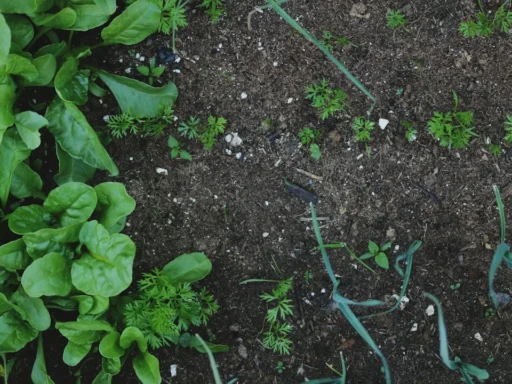
Look closely before declaring the row empty. A seedling with two narrow first leaves can blend into weeds or soil debris. University of Minnesota Extension describes the first carrot leaves as small and grass-like; the later leaves look more finely divided. Marking your row at planting makes this check much easier.
Seedlings that collapse at the soil line, with dark or shriveled stems, suggest damping-off rather than simple slow germination. Utah State University Extension says this problem can occur when the seedbed stays too wet. Remove affected seedlings, improve drainage and air movement, and avoid keeping the bed saturated. Do not treat every missing plant as disease: the pattern and stem symptoms matter.
A careful plan for reseeding
- Wait long enough. Give a reasonably moist row about three weeks in suitable temperatures before writing it off. Cold soil may take longer.
- Correct the likely cause first. If the surface dried, change how you water. If it crusted, improve the covering and use a gentler spray. If the bed is very hot, choose a cooler sowing window.
- Prepare only the strip you need. Loosen the top layer, level it, remove stones and clods, and premoisten dry soil. Avoid working wet soil into sticky lumps.
- Sow fresh seed shallowly. Place it thinly, cover to the packet’s recommended depth, and mark the line and date. A quarter inch is a common home-garden starting point.
- Keep the covering consistently moist. Check the top layer, not merely the weather forecast. Use a gentle spray and watch for runoff.
- Thin after emergence. Crowded seedlings can germinate perfectly and still produce poor roots. University of Minnesota Extension recommends leaving roughly two to four inches between plants when thinning, adjusted for mature variety size.
If you are planning a first vegetable bed, the broader garden-starting guide covers site choice and basic layout. For carrots, the smaller decision is more urgent: can you maintain a shallow, moist seedbed long enough for slow seed to emerge?
Common questions
Should I soak carrot seed before planting?
Pre-soaking is not required. It can be awkward with very small seed, and it will not fix a dry or overheated planting row. Focus first on fresh seed, a shallow even covering, and consistent surface moisture.
Why did only half my carrot row sprout?
Compare sun exposure, slope, watering reach, and surface crust from one end to the other. A patchy row often reflects patchy conditions. If the seedlings are healthy, you can fill gaps with a new sowing rather than disturbing the whole row.
Can I start carrots indoors and transplant them?
Direct seeding is the safer choice. University of Minnesota Extension explains that carrot taproots develop early and transplanting can damage or misdirect them. A transplant may survive but produce a forked or twisted root.
Is it too late to reseed carrots in fall?
It depends on your location and variety. Compare the packet’s days to harvest with the remaining growing season, then allow extra time for slower growth as days shorten. In a warm-climate garden, autumn may be a good sowing window; in a cold-climate garden, the same date may be too late for full-size roots.
The useful conclusion is simple: a failed carrot row usually points to conditions at the seed, not a mysterious defect in the whole garden. Check how long the seed has had, feel the surface, and look for crust or washed seed. Make one correction before you sow again so the next row has a genuinely better chance.