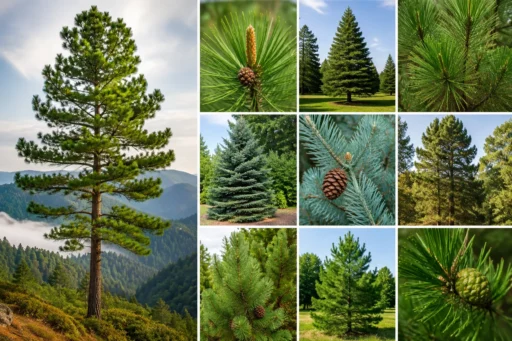
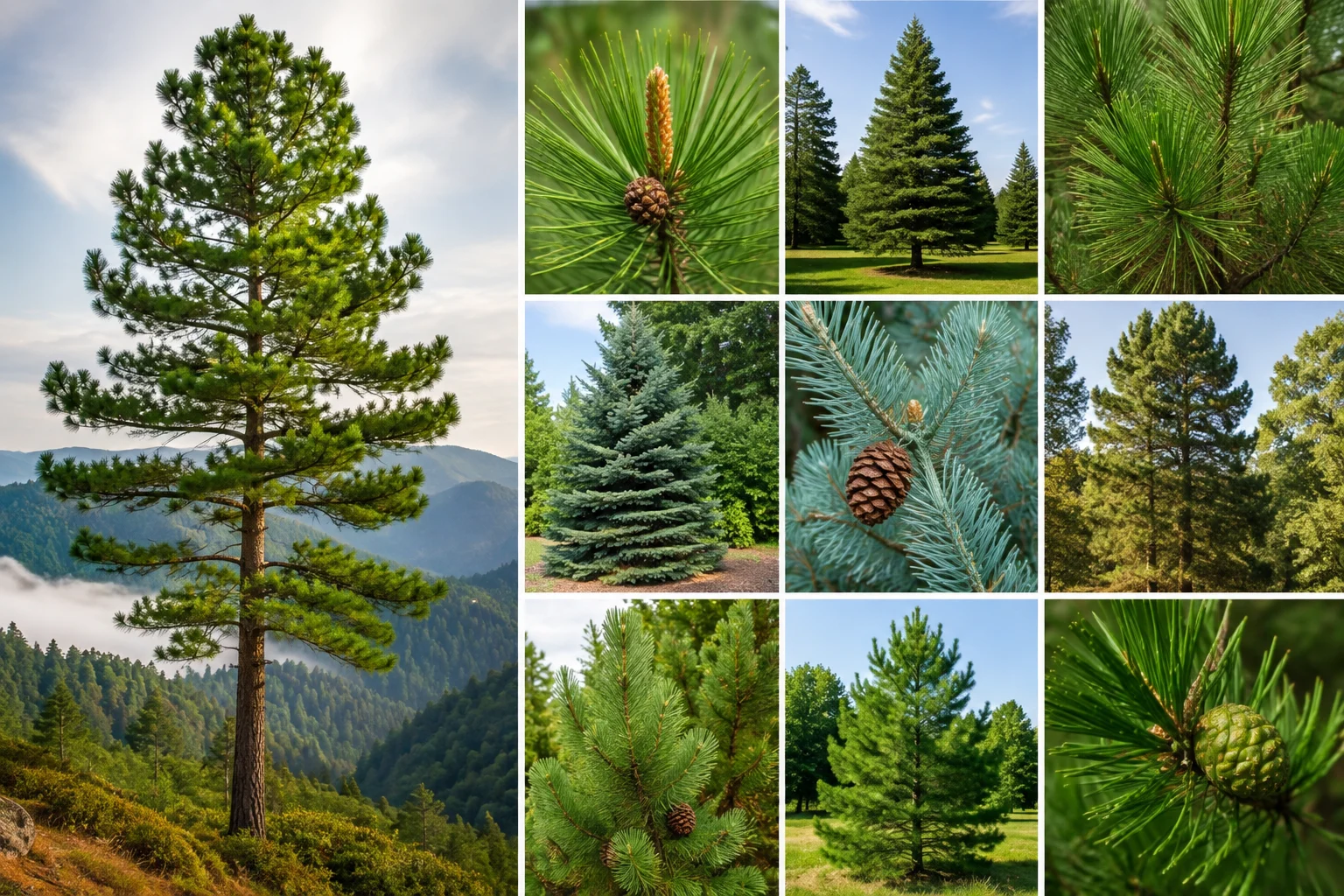
How many different pine trees do you think you could plant in your own garden? The genus Pinus has more than one hundred species worldwide, but about 40 of them are realistic choices for a home landscape — everything from towering native windbreaks to tiny varieties suited to a rock garden or patio pot. Choosing the right pine comes down to matching your USDA hardiness zone and soil drainage to the growth habits of these conifers.
At Solera Gardens, we’d love to help you find the right one for your space.
How Do You Identify a Pine Tree?
Telling pine trees apart from other evergreens is easier than it looks. Most people confuse any needle-bearing evergreen with a “pine,” but true pines (genus Pinus) have a distinct trait: their needles are joined to the branch in bundles, not individually.
The fastest way to confirm you’re looking at a true pine is to examine the base of a needle cluster. You’ll find a small, papery sheath called a fascicle. If the needles emerge in bundles of two, three, or five from a single fascicle, you’re looking at a pine. Spruces and firs, by contrast, grow their needles individually along the stem. Pine cones are also stiff and woody, while spruce cones stay flexible and fir cones grow upright on the branch and shatter apart rather than falling whole.
The Bundle Method: Two, Three, and Five-Needle Pines
Needle count is the industry-standard way to sort pines into groups:
Two-Needle Pines are known as “hard pines” — stiff, pointed needles and rough bark. Scots pine and Austrian pine are common examples.
Three-Needle Pines are widely grown across North America for timber and screening. Ponderosa pine and loblolly pine fall into this group.
Five-Needle Pines are called “soft pines” or “white pines” for their flexible needles and smooth young bark. Eastern white pine is the best-known example.
Quick-Reference: Which Pine Fits Your Goal?
Before diving into all 40 varieties, here’s a fast index by the goal that matters most to you. Every tree named below is covered in full further down the page.
Best for beginners (low-maintenance, forgiving of imperfect care): Austrian Pine, Virginia Pine, Mugo Pine, Bosnian Pine — all tolerate a wide range of soils and neglect once established.
Best for small gardens and containers: Mugo Pine, Dwarf Eastern White Pine, Dwarf Japanese Black Pine, Japanese White Pine ‘Adcock’s Dwarf.’
Best for fast privacy (windbreaks and screens): Slash Pine, Virginia Pine, Shortleaf Pine, Sand Pine, Aleppo Pine, Canary Island Pine — all in the Fast-Growing Screen section below.
Best for unique specimens: Lacebark Pine (peeling bark), Japanese Red Pine ‘Dragon’s Eye’ (variegated needles), Limber Pine ‘Vanderwolf’s Pyramid’ (bendable branches), Bristlecone Pine (gnarled, ancient form).
Best for tough conditions (drought or salt tolerance): Austrian Pine and Japanese Black Pine (salt and pollution), Aleppo Pine and Italian Stone Pine (drought and alkaline soil), Singleleaf Pinyon Pine (extreme aridity), Slash Pine (wet, boggy soil).
High-Performance Pine Comparison
Use this chart to compare top performers at a glance and make a quick decision based on your goals:
| Common Name | Botanical Name | USDA Zones | Mature Height | Growth Rate | Best Use Case |
| Eastern White Pine | Pinus strobus | 3 to 8 | 50 to 80 feet | Fast | Large privacy screens, windbreaks |
| Mugo Pine | Pinus mugo | 2 to 8 | 3 to 10 feet | Slow | Rock gardens, low borders, containers |
| Vanderwolf’s Limber Pine | Pinus flexilis ‘Vanderwolf’s’ | 4 to 7 | 20 to 30 feet | Medium | Small yards, blue-green focal point |
| Lacebark Pine | Pinus bungeana | 4 to 8 | 30 to 50 feet | Slow | Winter interest specimen (peeling bark) |
| Japanese Black Pine | Pinus thunbergii | 5 to 8 | 20 to 80 feet | Medium | Coastal windbreaks, salt-tolerant garden |
| Italian Stone Pine | Pinus pinea | 7 to 11 | 40 to 80 feet | Medium | Mediterranean themes, edible pine nuts |
Classic Landscape Giants (Large Pine Species)
These large native and naturalized pines suit wide gardens, farms, or big property perimeters where their expansive branches have room to spread.
1. Eastern White Pine (Pinus strobus) USDA Zones: 3 to 8 | Mature Size: 50 to 80 feet tall, 20 to 40 feet wide | Needle Count: 5 per bundle (soft, bluish-green) Best Use: Large windbreaks and privacy boundaries. Horticultural Insight: Soft, flexible needles whisper beautifully in the wind. Give it room — its rapid growth can crowd out neighboring plants within a decade.
2. Ponderosa Pine (Pinus ponderosa) USDA Zones: 3 to 8 | Mature Size: 60 to 100 feet tall, 25 to 30 feet wide | Needle Count: 3 per bundle (long, dark green) Best Use: Large, open sunny landscapes and forest backdrops. Horticultural Insight: Mature bark develops deep, orange-brown plates that smell distinctly of vanilla or butterscotch. Incredibly drought-hardy once established.
3. Loblolly Pine (Pinus taeda) USDA Zones: 6 to 9 | Mature Size: 60 to 90 feet tall, 30 to 40 feet wide | Needle Count: 3 per bundle (pale green, stiff) Best Use: Rapid shade production and reclamation of wet soils. Horticultural Insight: A staple of the American South, growing quickly on poor, damp clay soils. Often loses lower branches early, creating a high, vaulted canopy.
4. Scots Pine (Pinus sylvestris) USDA Zones: 3 to 7 | Mature Size: 30 to 60 feet tall, 30 to 40 feet wide | Needle Count: 2 per bundle (twisted, blue-green) Best Use: Specimen planting for artistic winter silhouettes. Horticultural Insight: The upper trunk peels to reveal striking, bright orange-red bark. Tolerates poor, sandy soils and wind beautifully.
5. Austrian Pine (Pinus nigra) USDA Zones: 4 to 7 | Mature Size: 50 to 60 feet tall, 20 to 40 feet wide | Needle Count: 2 per bundle (dark green, exceptionally stiff) Best Use: Coastal windbreaks and urban roadside screens. Horticultural Insight: Extremely tolerant of road salt, heavy clay, air pollution, and high winds. Dense crown provides excellent year-round noise reduction.
6. Longleaf Pine (Pinus palustris) USDA Zones: 7 to 10 | Mature Size: 60 to 80 feet tall, 30 to 40 feet wide | Needle Count: 3 per bundle (up to 18 inches long) Best Use: Historic restoration gardens and pine straw harvesting. Horticultural Insight: Spends its first few years in a “grass stage,” resembling ornamental grass while it establishes a deep taproot before shooting upward.
7. Red Pine (Pinus resinosa) USDA Zones: 2 to 5 | Mature Size: 50 to 80 feet tall, 20 to 30 feet wide | Needle Count: 2 per bundle (dark green, shiny) Best Use: Cold-climate windbreaks and sandy slope stabilization. Horticultural Insight: Easy to identify — its long, brittle needles snap cleanly when bent. Prefers cool summers and acidic, sandy soils.
8. Pitch Pine (Pinus rigida) USDA Zones: 4 to 7 | Mature Size: 40 to 60 feet tall, 30 to 50 feet wide | Needle Count: 3 per bundle (stiff, twisted) Best Use: Rocky slopes, sandy barrens, and fire-prone zones. Horticultural Insight: Known for its rugged, irregular shape — this scrubby pine can sprout needles directly from its thick, fire-resistant trunk bark.
Solera Gardens Tip: Plant large pine species at least 15 to 20 feet from your foundation and roofline. Mature root systems can lift walkways, and shedding needles will quickly clog gutters.
Dwarf & Compact Pines (Perfect for Small Gardens & Containers)
If you have a small suburban yard or want evergreens on a patio, these compact, slow-growing options add texture without demanding much space.
9. Mugo Pine (Pinus mugo) USDA Zones: 2 to 8 | Mature Size: 3 to 10 feet tall, 5 to 12 feet wide (cultivar dependent) | Needle Count: 2 per bundle (short, dark green) Best Use: Rock gardens, low foundation beds, and border plantings. Horticultural Insight: To keep Mugo pines dense and dome-shaped, snap the new spring growth (“candles”) in half before the needles open.
10. Dwarf Eastern White Pine (Pinus strobus ‘Nana’) USDA Zones: 3 to 8 | Mature Size: 3 to 7 feet tall, 5 to 10 feet wide | Needle Count: 5 per bundle (silvery, blue-green) Best Use: Foundation plantings and Asian-inspired gardens. Horticultural Insight: A slow-growing mound with the ultra-soft texture of the classic white pine in a fraction of the space. Appreciates protection from harsh, dry winter winds.
11. Dwarf Japanese Black Pine (Pinus thunbergii ‘Kotobuki’) USDA Zones: 5 to 8 | Mature Size: 4 to 6 feet tall, 2 to 3 feet wide | Needle Count: 2 per bundle (dense, rich green) Best Use: Narrow borders, formal entryways, and container specimen. Horticultural Insight: Grows naturally in a tight, narrow column with upright branches — it looks like a pre-styled bonsai tree.
12. Bristlecone Pine (Pinus aristata) USDA Zones: 4 to 7 | Mature Size: 8 to 20 feet tall, 6 to 15 feet wide | Needle Count: 5 per bundle (speckled with white resin) Best Use: Rock gardens, dry slopes, and architectural specimen. Horticultural Insight: Bristlecone pines are among the oldest known living organisms on Earth — researchers at the Rocky Mountain Tree-Ring Research group have dated wild specimens to nearly 5,000 years old. In the home garden, they grow exceptionally slowly, developing a gnarled, weathered appearance over decades.
13. Bosnian Pine (Pinus heldreichii ‘Compact Gem’) USDA Zones: 5 to 8 | Mature Size: 4 to 5 feet tall, 3 to 4 feet wide | Needle Count: 2 per bundle (glossy, dark green) Best Use: Tight urban spaces, rock gardens, and low hedges. Horticultural Insight: Maintains a clean, tight teardrop shape with minimal pruning and has outstanding resistance to pests and diseases.
14. Swiss Stone Pine (Pinus cembra) USDA Zones: 3 to 7 | Mature Size: 30 to 40 feet tall, 15 to 20 feet wide (very slow-growing) | Needle Count: 5 per bundle (soft, blue-green) Best Use: Slow privacy screening and tight corner specimen. Horticultural Insight: Often called the “aristocrat of pines,” growing just a few inches a year while retaining a narrow, dense, pyramidal shape into old age.
15. Japanese White Pine (Pinus parviflora ‘Adcock’s Dwarf’) USDA Zones: 5 to 8 | Mature Size: 3 to 4 feet tall, 3 to 4 feet wide | Needle Count: 5 per bundle (blue-green, short, twisted) Best Use: Rock gardens, raised beds, and permanent patio containers. Horticultural Insight: Tiny, curled needles in tight tufts give it a cloud-like appearance. Requires exceptionally well-drained soil.
16. Siberian Dwarf Pine (Pinus pumila) USDA Zones: 1 to 5 | Mature Size: 3 to 9 feet tall, 5 to 12 feet wide | Needle Count: 5 per bundle (blue-green, fine) Best Use: Ground cover on freezing, windy slopes. Horticultural Insight: A prostrate, spreading shrub native to freezing mountain ranges — one of the hardiest woody plants in existence.
Unique & Ornamental Pines (Exceptional Specimen Trees)
These varieties are grown specifically for unusual colors, striking bark patterns, or dramatic growth forms that make them natural conversation starters.
17. Japanese Red Pine (Pinus densiflora ‘Oculis-draconis’) USDA Zones: 3 to 7 | Mature Size: 15 to 25 feet tall, 10 to 15 feet wide | Needle Count: 2 per bundle (yellow and green variegated) Best Use: Visual focal point in sunny garden beds. Horticultural Insight: Commonly called “Dragon’s Eye Pine” — looking down the branches reveals alternating bands of yellow and green resembling an eye.
18. Japanese Black Pine (Pinus thunbergii) USDA Zones: 5 to 8 | Mature Size: 20 to 80 feet tall, 20 to 40 feet wide | Needle Count: 2 per bundle (stiff, dark green) Best Use: Traditional Japanese gardens, coastal windbreaks, or bonsai. Horticultural Insight: Rugged, horizontal branching creates a wind-swept, sculptural look, with high tolerance for salt spray.
19. Monterey Pine (Pinus radiata) USDA Zones: 7 to 10 | Mature Size: 40 to 100 feet tall, 25 to 35 feet wide | Needle Count: 3 per bundle (bright green) Best Use: Coastal California-style gardens and quick shade. Horticultural Insight: Loves cool summers, mild winters, and heavy coastal fog. Grows incredibly fast but struggles in dry, inland climates.
20. Limber Pine (Pinus flexilis ‘Vanderwolf’s Pyramid’) USDA Zones: 4 to 7 | Mature Size: 20 to 30 feet tall, 10 to 15 feet wide | Needle Count: 5 per bundle (twisting, blue-green) Best Use: Compact lawns and contrasting foliage backdrops. Horticultural Insight: Branches are so flexible they can be bent into loops without breaking. Blue-green needles carry a distinct silver stripe.
21. Lacebark Pine (Pinus bungeana) USDA Zones: 4 to 8 | Mature Size: 30 to 50 feet tall, 20 to 35 feet wide | Needle Count: 3 per bundle (dark green, stiff) Best Use: Specimen planting near patios or walkways. Horticultural Insight: The real show starts as the tree matures — bark peels away in jigsaw-like plates, revealing a patchwork of olive, cream, silver, and purple.
22. Italian Stone Pine (Pinus pinea) USDA Zones: 7 to 11 | Mature Size: 40 to 80 feet tall, 30 to 50 feet wide | Needle Count: 2 per bundle (bright green) Best Use: Mediterranean landscapes and edible gardening. Horticultural Insight: A dense globe in youth, maturing into a majestic, flat-topped green umbrella. The primary commercial source of pine nuts.
23. Singleleaf Pinyon Pine (Pinus monophylla) USDA Zones: 5 to 9 | Mature Size: 10 to 20 feet tall, 10 to 15 feet wide | Needle Count: 1 per bundle (blue-green, sharp) Best Use: Xeriscaping, rock gardens, and fire-wise landscapes. Horticultural Insight: The only pine in the world with a single needle per sheath, making it a unique collector’s plant. Grows slowly and thrives in arid conditions.
24. Jeffrey Pine (Pinus jeffreyi) USDA Zones: 5 to 8 | Mature Size: 60 to 100 feet tall, 25 to 30 feet wide | Needle Count: 3 per bundle (long, blue-green) Best Use: Mountain cabin landscapes and open, dry slopes. Horticultural Insight: Like Ponderosa, its deeply fissured, reddish-brown bark smells of lemon-vanilla, pineapple, or butterscotch when warmed by the sun.
Fast-Growing Screen Pines (Fast Growing Pine Trees for Windbreaks & Privacy)
When you need to block a neighbor’s view or stop cold winter winds fast, these fast growing pine trees deliver two to three feet of growth per year.
25. Slash Pine (Pinus elliottii) USDA Zones: 7 to 11 | Mature Size: 60 to 100 feet tall, 30 to 50 feet wide | Needle Count: 2 or 3 per bundle (long, glossy green) Best Use: High windbreaks and wet, boggy pine flatwoods. Horticultural Insight: Exceptionally strong and resilient against coastal storms. Thrives in wet, acidic soils where other pines would succumb to root rot.
26. Virginia Pine (Pinus virginiana) USDA Zones: 4 to 8 | Mature Size: 20 to 40 feet tall, 15 to 30 feet wide | Needle Count: 2 per bundle (short, twisted, yellowish-green) Best Use: Fast-growing screen on poor, eroded soil. Horticultural Insight: Often used as a classic Christmas tree in the South. Tough enough to readily colonize dry, sterile clay where nothing else grows.
27. Shortleaf Pine (Pinus echinata) USDA Zones: 6 to 9 | Mature Size: 50 to 80 feet tall, 20 to 30 feet wide | Needle Count: 2 or 3 per bundle (dark green, flexible) Best Use: Tall evergreen screens and reforestation. Horticultural Insight: Has an outstanding ability to sprout back from its base if damaged by fire or cut down young — a rare trait among evergreens.
28. Jack Pine (Pinus banksiana) USDA Zones: 2 to 6 | Mature Size: 30 to 50 feet tall, 20 to 30 feet wide | Needle Count: 2 per bundle (short, flat, spread apart) Best Use: Cold, sandy, and nutrient-poor sites. Horticultural Insight: A rugged pioneer tree. Its curved cones are sealed with resin and need intense fire heat to pop open and release seeds.
29. Sand Pine (Pinus clausa) USDA Zones: 8 to 10 | Mature Size: 20 to 40 feet tall, 15 to 25 feet wide | Needle Count: 2 per bundle (short, dark green) Best Use: Fast-growing privacy screen in deep sand or high heat. Horticultural Insight: Native to Florida, highly drought-resistant, and thrives in pure sand dunes and intense, humid heat.
30. Aleppo Pine (Pinus halepensis) USDA Zones: 8 to 11 | Mature Size: 30 to 60 feet tall, 20 to 40 feet wide | Needle Count: 2 per bundle (slender, light green) Best Use: Arid urban landscapes and dry windbreaks. Horticultural Insight: Highly drought-tolerant and adapted to alkaline soils. Twisting branches and an open canopy create striking silhouettes in hot, dry climates.
31. Canary Island Pine (Pinus canariensis) USDA Zones: 9 to 11 | Mature Size: 50 to 80 feet tall, 20 to 35 feet wide | Needle Count: 3 per bundle (long, weeping, bright green) Best Use: Dramatic architectural screen in warm-winter climates. Horticultural Insight: Upright, symmetrical form with long, weeping needles. Can resprout new needles directly from its trunk after fire damage.
32. Lodgepole Pine (Pinus contorta) USDA Zones: 4 to 8 | Mature Size: 40 to 80 feet tall, 15 to 25 feet wide | Needle Count: 2 per bundle (twisted, yellow-green) Best Use: Narrow privacy screens in cold, high-altitude climates. Horticultural Insight: Grows naturally as a narrow, straight column. Historically used by Native Americans to construct lodges and teepees.
Solera Gardens Tip: If you’re growing slow-growing pines like Lacebark or Bosnian pine, don’t plant fast-growing grass right up to the trunk — grass competes hard for water and nutrients. A 3-foot organic mulch circle around the base solves this.
Specialty & Collector Pines (Unique Botanical Gems)
For gardeners looking to grow something rare, historic, or ecologically important, these species carry fascinating histories and unusual growing habits.
33. Sugar Pine (Pinus lambertiana) USDA Zones: 6 to 8 | Mature Size: 80 to 150 feet tall, 30 to 50 feet wide (can grow larger in the wild) | Needle Count: 5 per bundle (blue-green, stiff) Best Use: Large estate properties and woodland margins. Horticultural Insight: The tallest pine species in the world, and it produces the longest cones of any conifer — up to 24 inches, according to U.S. Forest Service records.
34. Gray Pine (Pinus sabiniana) USDA Zones: 7 to 10 | Mature Size: 40 to 70 feet tall, 25 to 40 feet wide | Needle Count: 3 per bundle (long, drooping, gray-green) Best Use: Sunny, native, water-wise landscapes. Horticultural Insight: Also called “ghost pine” for its sparse, see-through canopy and gray needles. Produces heavy, spiked cones with large, edible seeds.
35. Torrey Pine (Pinus torreyana) USDA Zones: 8 to 10 | Mature Size: 30 to 50 feet tall, 20 to 40 feet wide | Needle Count: 5 per bundle (long, stiff, gray-green) Best Use: Coastal California-native gardens. Horticultural Insight: The rarest pine species in the United States. Wind twists it into gnarled shapes on wild coastal bluffs, but it grows straight and fast in deep garden soil.
36. Bishop Pine (Pinus muricata) USDA Zones: 7 to 9 | Mature Size: 40 to 60 feet tall, 20 to 35 feet wide | Needle Count: 2 per bundle (dense, dark green) Best Use: Coastal wind protection and salty environments. Horticultural Insight: Prickly, heavy cones grow in dense clusters and stay sealed on the branches for years, opening only after exposure to fire.
37. Whitebark Pine (Pinus albicaulis) USDA Zones: 2 to 5 | Mature Size: 20 to 40 feet tall, 15 to 25 feet wide | Needle Count: 5 per bundle (stiff, blue-green) Best Use: Cold, subalpine rock gardens and wildlife sanctuaries. Horticultural Insight: A keystone species of high western mountains — its seeds are a vital food source for grizzly bears and Clark’s nutcrackers. Grows slowly in cold climates.
38. Western White Pine (Pinus monticola) USDA Zones: 4 to 8 | Mature Size: 70 to 100 feet tall, 20 to 30 feet wide | Needle Count: 5 per bundle (soft, blue-green) Best Use: Deep windbreaks and woodland gardens. Horticultural Insight: Similar to Eastern white pine but grows in a narrower, more columnar shape. Highly valued for lightweight, clean lumber.
39. Chir Pine (Pinus roxburghii) USDA Zones: 8 to 11 | Mature Size: 60 to 80 feet tall, 30 to 40 feet wide | Needle Count: 3 per bundle (very long, weeping, pale green) Best Use: Deep-south specimen planting and park borders. Horticultural Insight: Native to the Himalayas, with exceptionally long, weeping needles that give the crown a soft, shaggy, elegant appearance.
40. Maritime Pine (Pinus pinaster) USDA Zones: 7 to 10 | Mature Size: 50 to 100 feet tall, 25 to 40 feet wide | Needle Count: 2 per bundle (thick, rigid, gray-green) Best Use: Sandy coastal stabilization and large sandy lawns. Horticultural Insight: Exceptionally strong in loose, sandy dunes, with thick, deeply fissured reddish bark that contrasts beautifully against dry coastal soils.
Pine Tree Care Guide
Pine trees aren’t hard to maintain once established, but the first two years are critical for helping them adapt to your site.
Soil and Sunlight Requirements
Pines need full sun — most varieties require at least six hours of direct sunlight daily to hold onto their needles and grow densely. Without enough light, a pine grows sparse and becomes more vulnerable to pests.
Drainage matters just as much. Pine roots can’t tolerate sitting in water; in heavy, wet clay, roots rot and the tree eventually dies. If your soil doesn’t drain well, plant on a raised mound.
Watering Guide
First year: Water deeply once a week, using roughly 10 gallons per inch of trunk diameter. This encourages deep roots instead of shallow ones near the surface.
Once established: Most pines are drought-tolerant and need no supplemental water beyond rainfall, except during extended multi-week heat waves.
Fertilizer Guide
Pines are light feeders and generally don’t need artificial fertilizer. Too much nitrogen produces weak wood that’s prone to breaking in winter storms. Instead, apply a 2-inch layer of organic compost or pine needle mulch around the root zone once a year.
Landscape Companion Planting
Fallen pine needles slowly acidify the surrounding soil as they break down, which makes the area under a pine ideal for acid-loving companions:
Shrubs: Rhododendrons, azaleas, blueberries, and hydrangeas all do well in this acidic soil.
Ground covers: Bunchberry, creeping phlox, and wild ginger fill in the space and conserve soil moisture.
Flowering contrast: For a pop of color against all that evergreen, smaller ornamental shrubs work well — or take a look at 15 Types of Roses for Your Garden for varieties that pair nicely with a pine’s acidic soil and dappled shade.
Common Growing Mistakes and Solutions
Even experienced gardeners make a few recurring mistakes with pine trees.
Mistake 1: Planting too deep. Burying the trunk flare under soil deprives the roots of oxygen and can kill the tree.
The solution: the trunk flare should sit 1 to 2 inches above the soil line when you plant.
Mistake 2: Pruning the central leader. Removing the main vertical stem on a pyramid-shaped pine distorts its natural form and triggers multiple weaker stems to compete for dominance.
The solution: never prune the central leader. If it’s damaged by cold or birds, select a healthy side stem and tie it upright to become the new leader.
Mistake 3: Poor pest and disease management. Ignoring early signs of pine needle scale or Diplodia tip blight can leave an otherwise mature tree damaged beyond recovery.
The solution: rake up and remove fallen needles each autumn to break the infection cycle, inspect new growth closely each spring, and prune out any infected branches promptly.
Frequently Asked Questions
What is the most common pine tree?
Eastern white pine (Pinus strobus) is one of the most widely planted pines in North American gardens, valued for its soft needles, fast growth rate, and adaptability.
How can I tell a pine tree from a spruce tree?
Pine needles grow in bundles of two, three, or five from a single papery sheath, while spruce needles grow individually, attached directly to the stem.
Do all pine trees have pine cones?
Yes. As gymnosperms, all pines produce both male and female cones. Male cones are small and soft and drop off soon after releasing pollen, while female cones remain large and woody.
How fast do pine trees grow?
It varies widely by species. Loblolly and Eastern white pine can grow 2 to 3 feet per year, while Mugo or Bristlecone pine may grow less than 3 inches annually.
Are pine needles bad for grass?
Yes — a thick layer of fallen needles blocks sunlight from reaching grass and traps excess moisture underneath, which can smother a lawn over time.
Can I grow a pine tree in a container?
Yes. Dwarf varieties like Mugo Pine, Dwarf Eastern White Pine, and Japanese White Pine thrive in large containers for many years.
Do pine trees lose their needles in the winter?
No — pines are evergreen and don’t shed all their needles at once. They typically shed only their oldest, innermost needles each autumn.
Conclusion
Whether you choose the towering Eastern White Pine as a privacy hedge, the gnarled Bristlecone Pine as a rock garden centerpiece, or the dwarf Mugo Pine for a patio pot, planting one of these versatile species gives your garden lasting color, toughness, and structure. Match the variety to your soil conditions and hardiness zone, and you’ll be enjoying these trees for decades to come
Plan access and planting space with our beginner garden planning guide.