

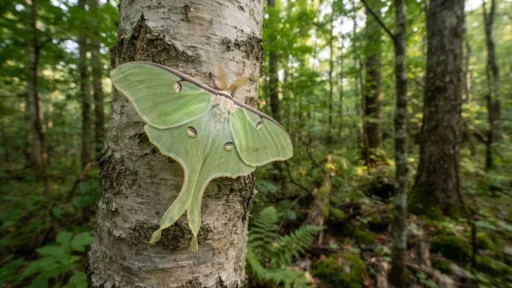
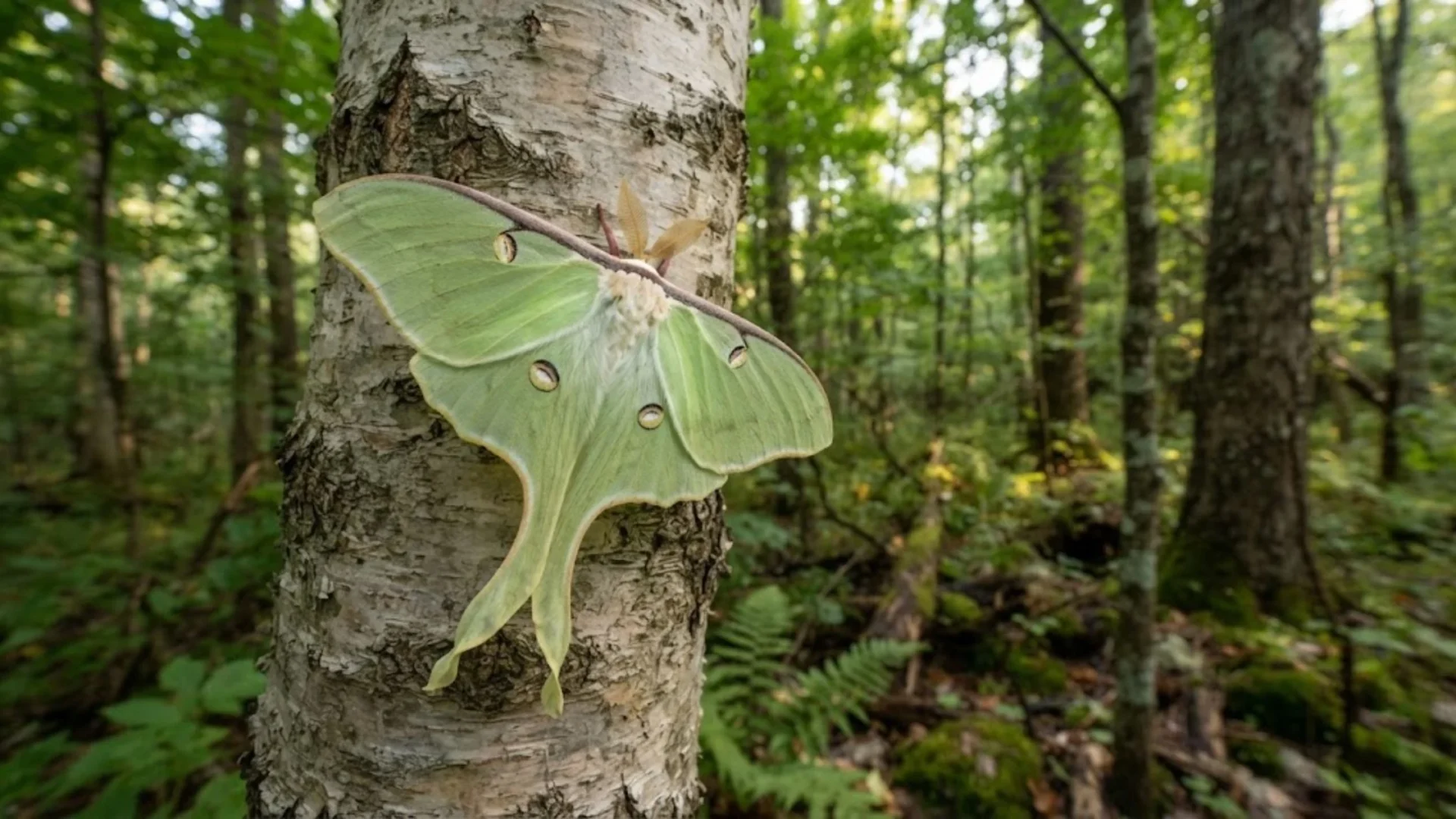
Luna Moths live in eastern North America. Their range runs from southern Canada, between Nova Scotia and Saskatchewan, south through every eastern U.S. state from Maine to Florida, and west to eastern Texas and eastern North Dakota. Their natural habitat is forest, and in practice that means woodland with the deciduous trees their caterpillars eat, such as birch, walnut, hickory, sweetgum, persimmon and sumac. At Solera Garden, we wrote this guide to help you check whether you’re inside the Luna Moth range, understand what a good habitat looks like at each life stage, and tell whether your own yard could support them.
The Short Answer
- Continent: North America only. Luna Moths aren’t native to Europe, Asia or the western U.S.
- Range: Southern Canada (Nova Scotia to Saskatchewan) and the eastern U.S. (Maine to Florida, west to eastern Texas and eastern North Dakota).
- Habitat: Forested areas with deciduous host trees, including forest edges and older suburban neighborhoods with mature trees.
- What they need most: Host trees for caterpillars, leaf litter for cocoons, and dark nights for adults to find mates.
Luna Moth Range: Where Luna Moths Live on the Map
The Luna Moth range covers most of the eastern half of the continent. If you live east of the Great Plains in the United States, or in the southern belt of central and eastern Canada, you’re likely inside it.
| Area | Inside the range? | Notes |
|---|---|---|
| Southern Canada, Nova Scotia to Saskatchewan | Yes | Northern populations rely mainly on white birch |
| U.S. Northeast and Great Lakes | Yes | One generation a year in the far north |
| U.S. Mid-Atlantic, Midwest and Ohio Valley | Yes | Usually two generations a year |
| U.S. Southeast, including Florida | Yes | Longer season; in Florida, adults can appear in any month |
| Eastern Texas and eastern North Dakota | Yes, at the western edge | The range thins out where forest gives way to open plains |
| Rocky Mountains, the Southwest and the Pacific Coast | No | Outside the native range |
One practical point: if you see a large pale-green moth with long tails far outside this range, compare it carefully against other green moths before you record it. Our guide on how to identify a Luna Moth covers the features that separate it from look-alikes.
What Is the Luna Moth’s Natural Habitat?
The Luna Moth habitat is forest, usually broadleaf or mixed woodland where deciduous host trees grow. The tie between moth and tree is direct: females lay eggs on host-tree leaves, caterpillars eat those leaves, and cocoons drop to the ground with them in autumn. So the habitat follows the host trees.
Host trees shape the habitat
The trees change across the range:
- In the north, Luna Moths most often use white birch (paper birch).
- Farther south, they use a wider mix, especially the walnut family (black walnut, hickories, pecan), along with sweetgum, persimmon and sumac.
That’s why a pine plantation or an open lawn, even inside the range, gives you little or no Luna Moth habitat. Without suitable broadleaf trees, the caterpillars have nothing to eat. You can find the full host list, and what each caterpillar stage eats, in our guide to what Luna Moth caterpillars eat.
Forest edges and older neighborhoods count too
You don’t need a deep forest. Luna Moths also live along woodland edges, in riverside tree belts, in parks and in older suburbs with mature hardwoods. A street lined with old hickories or sweetgums, close to a patch of woods, can support a local population.
Habitat by Life Stage: Canopy, Trunk and Leaf Litter
A single Luna Moth uses three layers of its habitat over its life. Thinking in layers explains why tidy yards often lose them even when the right trees are present.
| Life stage | Where it lives | What it needs from that spot |
|---|---|---|
| Egg | On the leaves of host trees | The right tree species |
| Caterpillar | In the canopy and lower branches, feeding on leaves | Plenty of untreated host-tree foliage |
| Cocoon (pupa) | Among leaves that fall to the ground, or in leaf litter | Undisturbed leaf litter, especially through winter |
| Adult | Resting on trunks or under leaves by day, flying at night | Shelter by day, darkness at night for finding mates |
The cocoon is spun among the leaves of the host tree but isn’t anchored to a twig, so it falls to the ground when the leaves drop in autumn. That puts the overwintering stage in your leaf litter, not up in the tree. Our article on the Luna Moth life cycle explains how long each stage lasts and when the overwintering cocoons hatch.
What Threatens Luna Moth Habitat?
Luna Moths are widespread, but local populations depend on the quality of the habitat around them. The main pressures are:
- Loss of host trees. Clearing woods or replacing native hardwoods with lawn or conifers removes the caterpillars’ food.
- Leaf removal. Raking and bagging every leaf under host trees removes cocoons along with them.
- Night lighting. Adults are strongly drawn to light, especially ultraviolet. Researchers have raised concern that bright lights such as mercury-vapor streetlights may interfere with mating in urban areas.
- Pesticides. Broad caterpillar sprays, including Bacillus thuringiensis (Bt) products aimed at other caterpillars, can also kill Luna Moth larvae on treated trees.
- Parasitoids. Luna Moth caterpillars are hosts for several parasitic flies and wasps. One introduced tachinid fly, Compsilura concinnata, has been studied as a parasitoid of Luna Moths in Virginia.
Does Your Yard Count as Luna Moth Habitat?
Use this quick check to see whether your yard could support Luna Moths:
- Are you inside the range? Check the table above. If you’re west of the Plains or on the Pacific side, the answer is no.
- Do you have a host tree nearby? Look for birch, walnut, hickory, pecan, sweetgum, persimmon or sumac within your yard or next to it.
- Do leaves stay on the ground under those trees? Some leaf litter left through winter gives cocoons a place to survive.
- Is your yard reasonably dark at night? Fewer bright lights mean adults can find each other.
- Do you avoid caterpillar sprays on those trees? Untreated leaves keep the larvae safe.
If you can answer yes to most of these, your yard is already part of the habitat. If not, our guide on how to attract Luna Moths covers which host trees to plant and how to set up lighting that’s safer for moths. And when autumn arrives, our guide to fall garden cleanup for pollinators shows you how to leave enough leaf cover under your trees for overwintering cocoons.
Frequently Asked Questions
Do Luna Moths live in the western United States?
No. Their native range stops around eastern Texas and eastern North Dakota. They aren’t native to the Rocky Mountain states, the Southwest or the Pacific Coast.
Can Luna Moths live in cities?
Yes, where there are mature host trees, some leaf litter and dark areas at night. Large parks, wooded neighborhoods and riverside tree belts can support them. Heavily lit areas with few native hardwoods are much less likely to.
Where do Luna Moths go during the day?
Adults rest motionless on tree trunks, under leaves or on walls. Their green color blends with foliage, which is one reason you rarely notice them even where they’re common.
Are Luna Moths endangered?
Luna Moths are generally considered widespread in eastern North America. Local numbers can still fall where host trees, leaf litter or dark nights are lost, so the habitat around your home matters.
Your Next Step
Walk your yard and the edge of the nearest woods, and note which host trees you already have. If you find birch, walnut, hickory, sweetgum, persimmon or sumac, leave the leaves under them this fall and switch off any outdoor lights you don’t need at night. Those two changes make your yard better Luna Moth habitat right away.