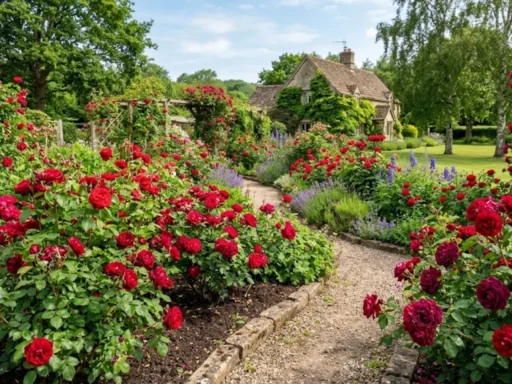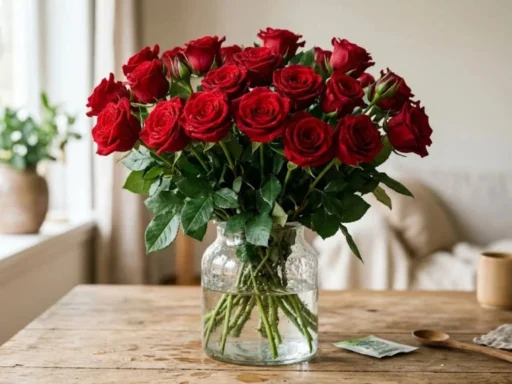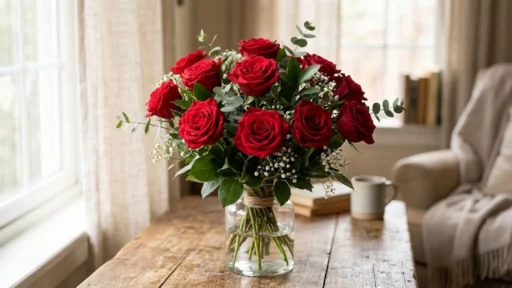
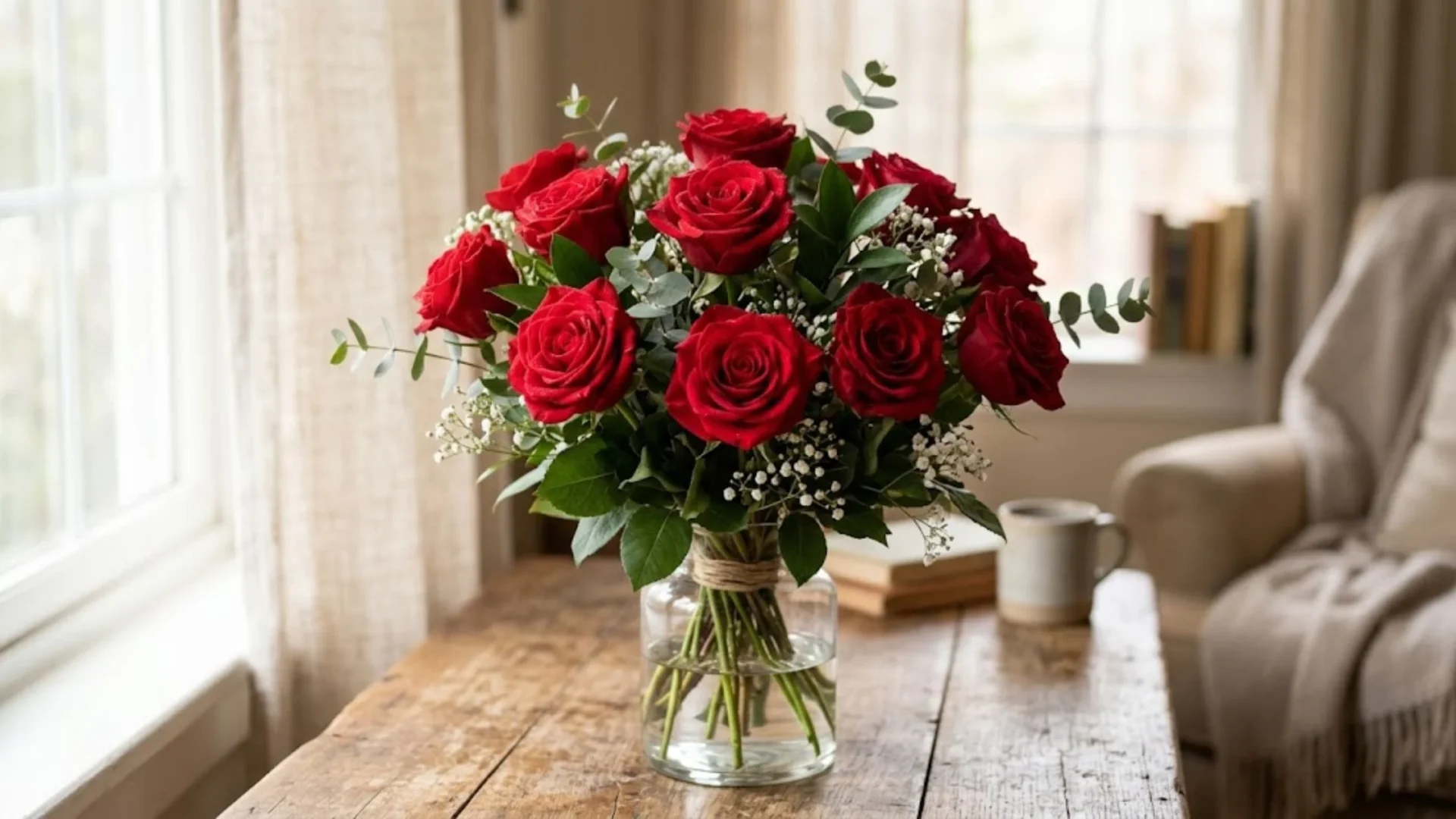
Red roses symbolize romantic love, passion, and deep devotion. They’re the clearest “I love you” in the flower world, which makes them the natural choice for Valentine’s Day, anniversaries, proposals, and other romantic milestones. They can also express respect, courage, and remembrance, so you’ll see them at memorials and funerals too. In this guide, we’ll explain where the red rose’s meaning comes from, which occasions suit it, when another color sends a clearer message, and how to give red roses from your own garden.
What is the meaning of a red rose?
The core red rose meaning is romantic love. Most people who receive red roses read them as a declaration of love or desire, and that strong, shared reading is the reason red roses are such a popular gift.
Red roses symbolism usually includes these related ideas:
| Meaning | What it communicates | Typical context |
|---|---|---|
| Romantic love | “I love you” | Valentine’s Day, anniversaries, dates |
| Passion and desire | Intensity and attraction | New or rekindled romance |
| Commitment and devotion | “I’m in this for the long run” | Proposals, weddings, milestone anniversaries |
| Respect and admiration | Deep regard for someone | Honoring a person’s achievement or courage |
| Remembrance and grief | Love for someone who has died | Funerals, memorials, graveside tributes |
The shade can shift the tone. Bright, clear reds usually read as passionate and celebratory. Deep crimson and burgundy reds tend to feel more serious and lasting, which is one reason they’re often chosen for long-term anniversaries and memorials. These are common associations, not fixed rules.
Why do red roses mean love?
The red rose has carried romantic meaning for a very long time, and several traditions point the same way:
- Classical mythology. Roses were linked to Aphrodite (Venus to the Romans), the goddess of love. Several retellings tie red roses to her story, which helped fix the flower’s romantic association in Western art and literature.
- Literature. Poets have used the red rose as shorthand for love for centuries. Robert Burns’s 1794 poem “A Red, Red Rose” is one of the best-known examples in English.
- Floriography. In the 19th century, the Victorian “language of flowers” gave specific meanings to flowers and colors. Red roses were consistently tied to love, and that coding carried into modern florist traditions.
- Valentine’s Day. As Valentine’s Day gifting grew, red roses became its signature flower, and that reinforced the meaning for each new generation.
Red roses also carry non-romantic meanings in some contexts. The red rose is the historic emblem of the House of Lancaster in England, and it has been used as a political symbol by several social democratic and labour parties. If you’re giving flowers, though, the romantic reading is the one your recipient will almost certainly assume.
When should you give red roses?
Give red roses when you want the recipient to read love, devotion, or deep respect without needing a card to explain it. Here’s how common occasions to give red roses compare:
| Occasion | Are red roses a good fit? | Why |
|---|---|---|
| Valentine’s Day | Excellent | The classic choice; the meaning is unmistakable |
| Anniversaries | Excellent | Signals continued love and commitment |
| Proposal or engagement | Excellent | Matches the moment’s intensity |
| First date | Use care | A single red rose is romantic; a full bouquet can feel like too much, too soon |
| Wedding (bridal bouquet, décor) | Very good | Pairs well with white for love and new beginnings |
| Apology to a partner | Good | Communicates that the relationship matters |
| Funeral or sympathy | Good, with context | Expresses love and respect for the person who died, especially from close family |
| Mother’s Day or for a parent | Possible | Red can show deep love, but pink is the more typical choice |
| Friend’s birthday | Usually not | Can be read as romantic; yellow or mixed colors are safer |
| Coworker, client, or teacher | Usually not | Risks an unintended romantic message |
A quick test before you buy
Ask yourself one question: would you be comfortable if the recipient read these roses as romantic? If yes, red roses are a strong choice. If not, choose another color or add a card that makes your intention clear.
Does the number of red roses have a meaning?
Florists often attach meanings to stem counts. These are popular conventions, not a standardized system, and different sources list different meanings. The most widely recognized are:
- 1 red rose: simple, sincere love or “love at first sight.” A good low-pressure romantic gesture.
- 12 red roses (a dozen): the classic full declaration of love.
- Larger bouquets (24, 50, or more): a bigger, more dramatic expression, often for proposals or major anniversaries.
If the number matters to you, choose it for the feeling it creates rather than relying on the recipient to know a specific code.
Which rose colors should you choose instead?
If red feels too romantic for your situation, another rose color can send a clearer message:
| Rose color | Common meaning | Best for |
|---|---|---|
| Pink | Gratitude, admiration, gentle affection | Mothers, mentors, thank-yous |
| Yellow | Friendship, joy, warmth | Friends, birthdays, congratulations |
| White | Purity, new beginnings, remembrance | Weddings, sympathy, new babies |
| Orange or coral | Enthusiasm, excitement | Celebrations, new ventures |
| Red and white together | Unity, partnership | Weddings and couple celebrations |
Roses aren’t your only option. Carnations are another long-lasting cut flower that comes in many colors. If you grow your own, our carnation care guide shows you how to raise blooms suited to the vase.
Can you give a living red rose plant instead of cut flowers?
Yes, and for many occasions it’s the more meaningful gift. A cut bouquet lasts about a week. A red rose bush can bloom for years, so the gift grows along with a relationship, or marks a memory in the garden.
A living red rose works well for:
- Anniversaries: plant one together and let it become a yearly marker.
- Memorials: a red rose planted in someone’s memory gives you a place to visit and care for.
- New homeowners or couples: a rose bush is a practical, lasting gift for a new garden.
Choose a variety that suits the recipient’s space and experience. A disease-resistant shrub rose is easier for beginners than a hybrid tea. Our guide to the main rose types, from hybrid teas to shrub roses helps you compare them. If the recipient doesn’t have a garden bed yet, you can point them to our steps on starting a garden from scratch.
Name check: rose of Sharon isn’t a true rose. It’s a hibiscus with different care needs and no shared rose symbolism. If you’re shopping for a living gift, check the plant label, and see our rose of Sharon care guide if that’s what you’ve bought.
How do you cut and prepare red roses from your garden?
Home-grown red roses make a personal gift, and a little preparation helps them last:
- Cut in the early morning, when stems are fully hydrated.
- Choose buds that are just starting to open, with the petals loosening but not fully spread. Fully open blooms drop petals sooner.
- Cut at an angle with clean, sharp pruners, and put the stems into water right away.
- Strip leaves that would sit below the waterline in the vase, since they rot and cloud the water.
- Recut the stems and change the water every one to two days.
- Keep the vase out of direct sun and away from heat, which speeds wilting and can fade red petals.
Frequently asked questions
Are red roses only for romantic partners?
Mostly, but not always. Red roses can honor someone’s courage or memory, and close family members often use them at funerals. Outside those contexts, most people will read red roses as romantic, so add a card if your meaning is different.
Is it appropriate to bring red roses to a funeral?
Yes, red roses are a common sympathy flower. They express love and respect for the person who died and are especially fitting from a spouse, partner, or close relative. White roses are a more neutral choice if you’re less close to the family.
Do dark red roses mean something different from bright red roses?
They share the same core meaning of love. Deep, dark reds often feel more solemn and committed, while bright reds feel more passionate and celebratory. Treat this as a matter of tone rather than a strict rule.
Your next step
Before you choose, think about how the recipient will read the gift. If the message is love, devotion, or deep remembrance, red roses say it clearly, and a single stem or a living rose bush can be as meaningful as a dozen. If your message is friendship or thanks, pick a color that fits it better, or add a short card so your red roses are read the way you mean them.