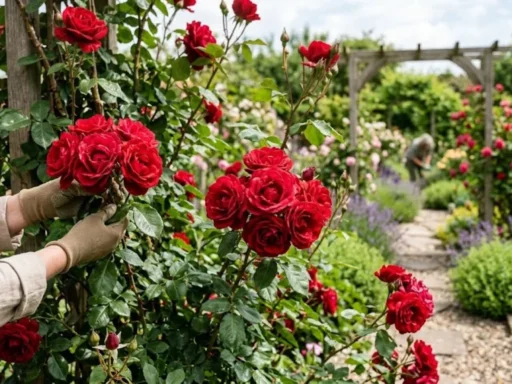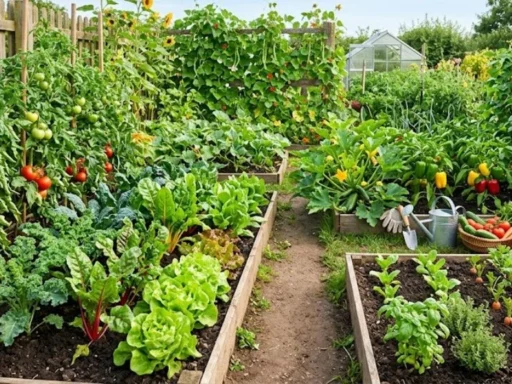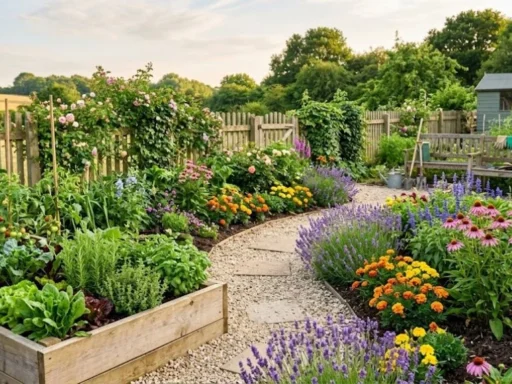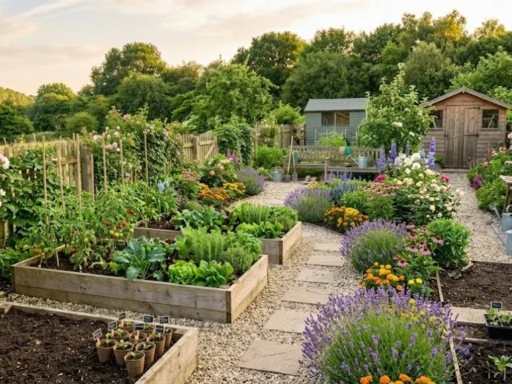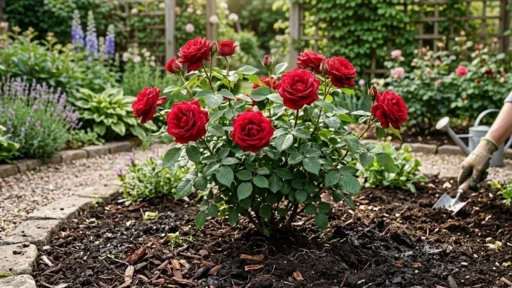
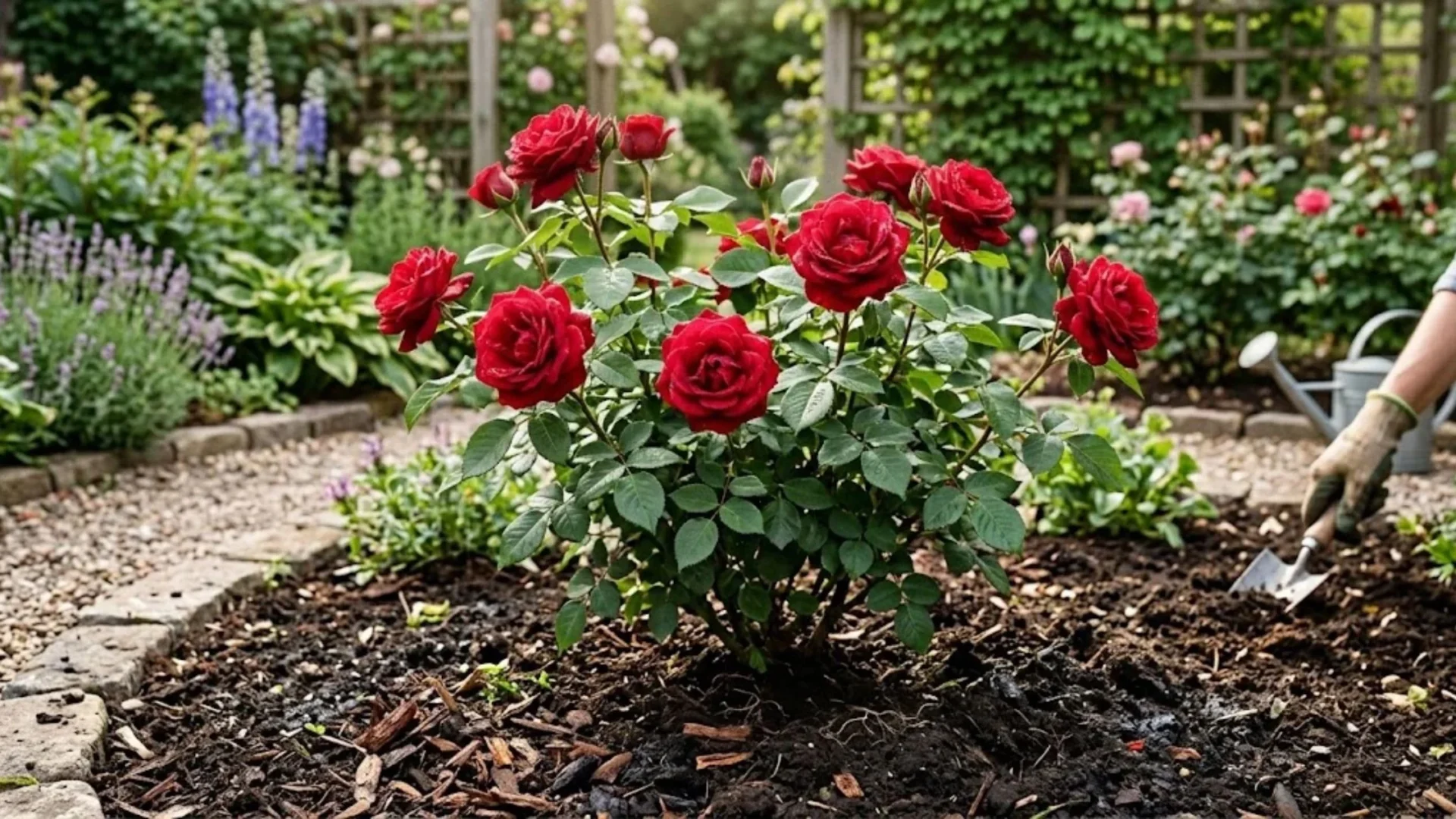
The best soil for red roses is a loose, well-drained loam that’s rich in organic matter and slightly acidic, with a pH of about 6.0 to 6.5. At Solera Garden, we see soil as the step most rose growers skip and the one that causes the most trouble later. Weak canes, yellow leaves, and thin blooms often trace back to what’s happening around the roots. In this guide, you’ll learn what red rose soil requirements actually mean, how to check your own soil in three simple tests, and how to fix clay, sandy, or wrong-pH soil before you plant.
Quick answer: ideal soil for red roses at a glance
| Soil factor | What red roses need | Why it matters |
|---|---|---|
| Texture | Loam: a balanced mix of sand, silt, and clay | Holds moisture and nutrients but still lets air reach the roots |
| Drainage | Water drains steadily, with no standing puddles hours later | Rose roots rot in soggy, airless soil |
| Organic matter | Generous compost worked deep into the bed | Feeds soil life, improves structure, buffers moisture swings |
| Soil pH | About 6.0–6.5 (slightly acidic) | Keeps nutrients like iron and phosphorus available to the plant |
| Depth | Loosened soil at least 12–18 inches deep | Rose roots grow deep when the soil allows it |
| Containers | Quality potting mix plus compost, never plain garden soil | Garden soil compacts in pots and drains poorly |
If your soil already matches most of this table, you only need light improvement. If it doesn’t, the sections below show you how to close the gap.
What do red roses need from their soil?
Red roses don’t need special soil compared with other garden roses. Red cultivars such as hybrid teas, floribundas, and climbers share the same basic root needs. What matters is that the soil does four jobs well at the same time.
1. It drains, but doesn’t dry out instantly
Drainage is the most important of the red rose soil requirements. Rose roots need oxygen, and waterlogged soil pushes oxygen out. Roots sitting in wet soil for days weaken and become prone to rot. At the other extreme, very fast-draining sand dries out so quickly that the plant is always stressed between waterings.
The goal is soil that soaks up water, lets the excess drain away, and keeps a steady, moderate moisture level. This is also why soil and watering are linked. If you’ve already read our guide on how much sunlight and water red roses need, you’ll notice that your watering schedule depends heavily on whether your soil is sandy or clay.
2. It’s rich in organic matter
Organic matter, mainly compost, well-rotted manure, and leaf mold, is what turns average soil into good rose soil. It helps clay soil break apart so water and air can move through it, and it helps sandy soil hold onto moisture and nutrients. It also feeds the soil organisms that make nutrients available to roots over time.
3. It has the right pH
Soil pH for roses affects how well the plant can take up the nutrients that are already in the soil. Roses do best in slightly acidic soil, around 6.0 to 6.5. They usually cope with soil a little outside that range, but the further you move from it, the more likely you are to see nutrient problems even if you fertilize.
4. It’s deep and loose
Roses are long-lived shrubs with deep roots. Compacted soil, hardpan layers, or a thin layer of topsoil over rubble limit root growth. Loosening the soil 12 to 18 inches deep gives the roots room to anchor the plant and find water during dry spells.
How do you test your soil before planting red roses?
You don’t need a lab to learn most of what you need to know. These three checks take a weekend and tell you exactly what to fix.
Check 1: The squeeze test for soil texture
- Take a handful of moist (not soaking) soil from about 6 inches down.
- Squeeze it firmly in your fist, then open your hand.
- Read the result:
- Falls apart immediately and feels gritty: sandy soil.
- Forms a sticky, smooth ball that holds its shape and smears when you rub it: clay soil.
- Holds together loosely, then crumbles when you poke it: loam, the soil type you want.
Check 2: The drainage (percolation) test
- Dig a hole about 12 inches deep and 12 inches wide where you plan to plant.
- Fill it with water and let it drain completely. This wets the surrounding soil.
- Fill it again and note how long the water takes to drain.
As a general guide, water that’s gone within a few hours means drainage is fine for roses. Water still standing much longer, especially the next day, means you have a drainage problem to fix before planting. Very fast drainage, where the hole empties in minutes, points to sandy soil that will need more organic matter.
Check 3: The pH and nutrient test
A home pH kit or meter gives you a quick reading. A soil test through a local lab or cooperative extension service gives you more: pH, major nutrients, and specific recommendations for how much lime, sulfur, or fertilizer to add. If you’re planting several roses or a new bed, the lab test is worth it, because it stops you from guessing.
For a full walkthrough of reading and acting on test results, see our guide to testing, fixing, and preparing garden soil.
How do you fix soil that isn’t right for red roses?
Once you know what you’re working with, match the fix to the problem. The table below gives you the starting point. The sections after it explain each fix.
| Soil problem | What you’ll notice | Main fix |
|---|---|---|
| Heavy clay | Sticky when wet, cracks when dry, slow drainage | Work compost through the whole bed; consider raised beds |
| Sandy soil | Dries out fast, roses wilt quickly, nutrients wash out | Add generous compost and keep it mulched |
| Compacted soil | Hard to dig, water runs off the surface | Loosen deeply, then add organic matter |
| pH too low (below ~6.0) | Test result; sometimes weak growth | Add garden lime as your soil test recommends |
| pH too high (above ~7.0) | Yellow leaves with green veins (often iron chlorosis) | Add elemental sulfur as your soil test recommends; use acidifying organic matter |
| Poor drainage you can’t fix | Water stands for a day or more | Plant in a raised bed or large container |
How to improve clay soil for roses
Clay soil is rich in nutrients, which is good news, but its tiny particles pack tightly and drain slowly. To improve it:
- Spread 2 to 3 inches of compost over the whole planting area, not just the planting hole.
- Dig or fork it into the top 12 to 18 inches of soil.
- Repeat with a compost top-dressing every year.
Avoid the common mistake of filling a single planting hole with rich, fluffy soil inside heavy clay. As our step-by-step guide to growing red roses explains, that pocket can collect water like a bucket and drown the roots. Improving the whole bed avoids the problem.
If your drainage test showed water standing for a day or more, organic matter alone may not be enough. A raised bed 12 inches or more high, filled with a blend of good topsoil and compost, is often the simplest solution.
How to improve sandy soil for roses
Sandy soil drains well but holds little water or nutrients. Your red roses will need more frequent watering and feeding unless you build up its organic content.
- Work in plenty of compost or well-rotted manure before planting.
- Top-dress with compost every spring.
- Keep a layer of organic mulch over the root zone to slow evaporation.
Shredded leaves are a cheap, effective way to keep adding organic matter to sandy beds. Our guide on how to compost leaves shows you how to turn fall leaves into material you can dig in or use as mulch.
How to adjust soil pH for roses
Change pH slowly and only when a test tells you to.
- To raise pH (make soil less acidic): use garden lime.
- To lower pH (make soil more acidic): use elemental sulfur.
Both work gradually, often over several months, because soil organisms have to process them. That’s why it helps to test and adjust in the season before you plant, if you can. Follow the amounts on your soil test report or product label rather than guessing, since adding too much can push the pH too far the other way. Retest after a few months to see where you’ve landed.
Should you add fertilizer to the soil before planting?
Mix compost in generously, but be careful with extra fertilizer at planting time. Strong fertilizers placed directly in the planting hole can damage new roots. If your soil test shows a specific deficiency, correct it as recommended. Otherwise, compost-rich soil gives a newly planted rose what it needs, and you can begin a regular feeding routine once the plant is established and growing.
What’s the best soil mix for red roses in containers?
Container roses need a different approach. Don’t fill pots with soil dug from your garden: it compacts, drains poorly, and can carry pests or disease.
A simple, reliable container mix for red roses:
- About two-thirds good-quality potting mix (a general-purpose or shrub-and-tree mix)
- About one-third compost for structure and slow-release nutrients
- A handful of perlite or fine bark per pot if the mix feels heavy
Use a large pot with drainage holes. Full-size red roses need plenty of root room, and smaller pots dry out very quickly in summer. Potting mix also breaks down over time, so plan to refresh the top layer with compost each spring and repot or replace the mix every few years.
Can you plant a new rose where an old rose grew?
You can, but be cautious. Gardeners have long noticed that a new rose planted in the exact spot where an old rose grew for years often struggles, a problem known as rose replant disease or “rose sickness.” The cause isn’t fully understood but is linked to soil organisms that build up around established rose roots.
If you need to use the same spot:
- Choose a new planting position in the bed if possible, even a few feet away.
- Or dig out and replace the soil in a large area around the old planting position with fresh soil from a part of the garden where roses haven’t grown.
- Add plenty of compost to the new soil before planting.
This is worth checking before you plant a replacement red rose in an older rose bed.
How do you keep rose soil healthy after planting?
Good soil isn’t a one-time project. A few yearly habits keep it in shape:
- Mulch every year. A 2 to 3 inch layer of organic mulch holds moisture, keeps roots cool, and slowly adds organic matter as it breaks down. Keep it a few inches away from the base of the canes. Our guide on how to mulch a garden covers the best materials and timing.
- Top-dress with compost each spring. Spread an inch or so over the root zone and let worms and rain work it in.
- Avoid walking on the bed. Foot traffic compacts the soil you worked to loosen.
- Retest pH every few years. Soil pH can drift, especially if you use certain fertilizers or your tap water is hard.
- Watch the leaves. Yellowing between green veins, weak growth, or poor flowering can point back to soil pH or drainage, not just a lack of fertilizer.
Frequently asked questions
Do red roses need acidic soil?
Red roses prefer slightly acidic soil, around pH 6.0 to 6.5. They don’t need strongly acidic soil like blueberries or azaleas. Soil close to neutral is usually manageable, but strongly alkaline soil can cause nutrient problems such as iron deficiency.
Is bagged “rose soil” worth buying?
Bagged rose or shrub mixes can be useful for containers, raised beds, or topping up a small planting area. For an in-ground bed, improving your existing soil with compost is usually more effective and much cheaper than replacing it. Check the bag for a mix that’s high in organic matter and drains well.
Can red roses grow in clay soil?
Yes. Many roses grow well in clay that has been improved with organic matter, because clay holds nutrients and moisture. The key is fixing the drainage. If water still stands for a day or more after improvement, use a raised bed.
Does soil affect the color of red rose blooms?
Petal color is mainly set by the variety you choose. Soil affects how well the plant grows overall, so a healthy rose in good soil generally produces fuller, better-quality blooms. If you’re still choosing a plant, our guide to red rose varieties for home gardens can help.
Your next step
Before you buy compost, lime, or bagged soil, run the three checks in this guide: the squeeze test, the drainage test, and a pH test. Write down what you find, then use the fix table to choose one or two changes for your bed. Improve the soil across the whole planting area, give any pH amendment time to work, and plant your red rose into soil that’s ready to support it for years.