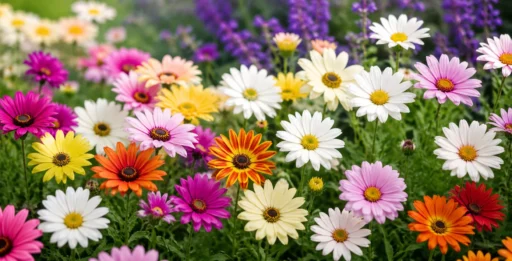
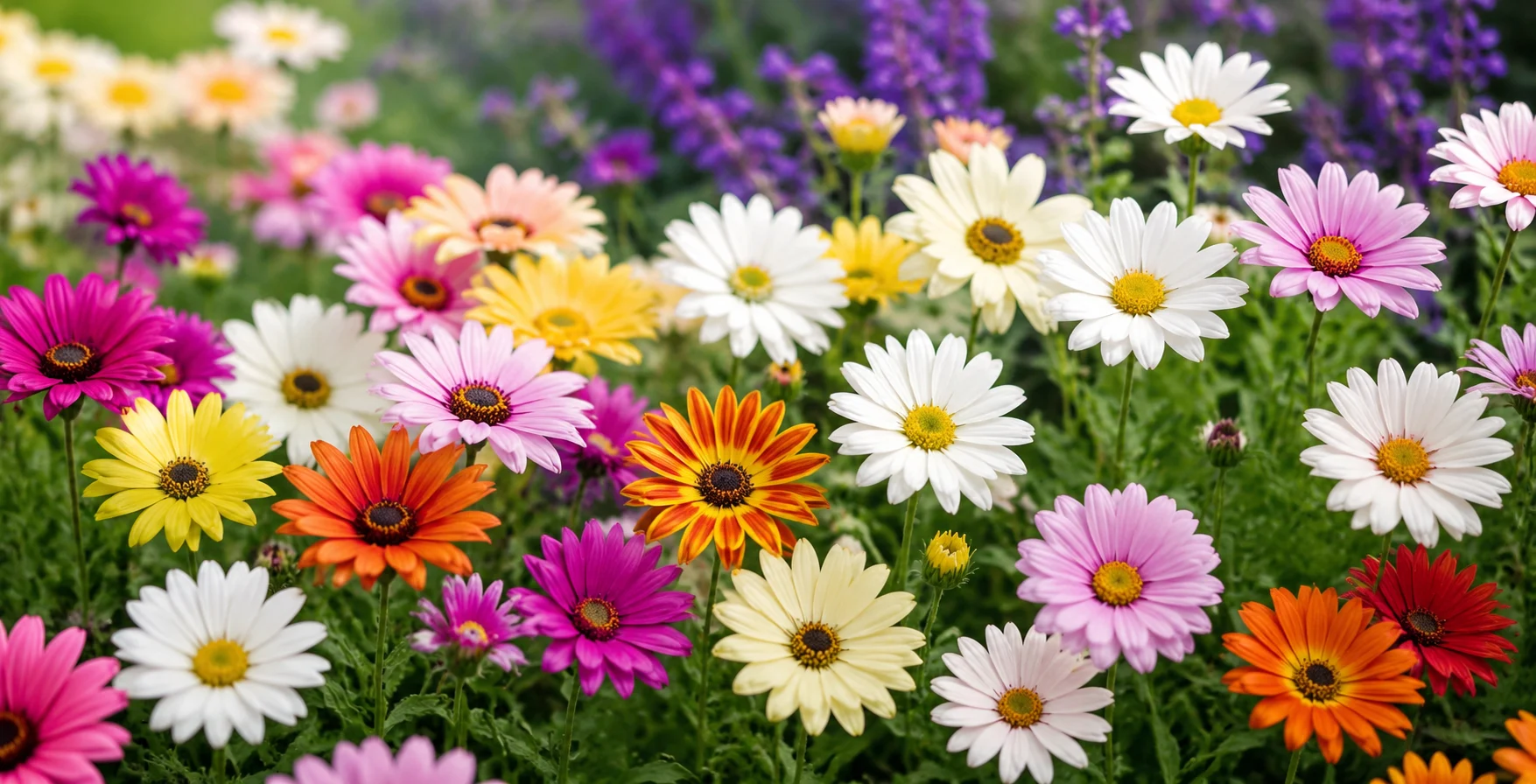
It is fascinating how a daisy makes eye contact. This candid and cheerful flower with its petals spreading wide from a gold core has delighted gardens, meadows, and window sills for ages. As you may be looking for the most perfect varieties of daisies for your garden, you should be excited to learn that the daisy family of plants, officially called Asteraceae, belongs to the biggest families of plants on Earth. There are more than 20,000 different species of the plant all over the world. No matter what type you want, there will always be a right daisy for you.
What Are the Most Popular Types of Daisies to Grow in a Garden?
For most people, daisies that can be grown in the garden remind them of the simplest white daisies with a center having the shape of a disk. This image is quite correct, but only because it shows just the tip of the iceberg. The daisies can be creeping, high-growing perennials, sun or shade flowers depending on the variety selected for planting. In any case, regardless of the purpose of the garden, whether cutting garden, pollinator garden, or landscape, there will always be a perfect daisy flower for you.
The similarity between all these daisies is the structure of their flowers, which includes the center having the shape of a disk full of florets surrounded by ray petals. Despite many differences in other features, all these daisies belong to the same family because of the same structure of flowers.
26 Types of Daisies to Know and Grow
1. Shasta Daisy (Leucanthemum x superbum)
It could be stated without any doubts that the Shasta daisy is one of the best-known garden daisies in North America. The breeding of this specific plant started in the last quarter of the 19th century and belongs to American horticulturist Luther Burbank. Burbank tried to cross-breed the oxeye daisy with English daisy and other plants to receive a hybrid with larger flowers and prolonged blooming period.
Shasta daisies flower during summer until autumn and have completely white petals that surround a bright yellow center. The stems of the flowers are able to reach up to 18-24 inches long. The shasta daisies are one of perennial plants that survive in USDA Zones 5-9 and prefer full sun and fertile well-drained soil. Such types of these flowers are: Becky (the winner of the award ‘Perennial Plant of the Year’ in 2003), Snowcap (a dwarf variety for small gardens) and Banana Cream (first the flowers are pale yellow but then turn white).
- Bloom time: Early summer to early fall
- Height: 18 to 36 inches
- USDA Zones: 5 to 9
- Best for: Borders, cutting gardens, pollinator beds
2. English Daisy (Bellis perennis)
Bellis perennis is the scientific name of the daisy flower which is used to make garland by children and also finds mention in poems. It is one of the perennial flowers that have been introduced into the meadows and lawns of Europe and North America. While other varieties of daisies are large in size, Bellis perennis is a very tiny flower that grows up to a maximum height of 3 to 6 inches.
The flowers of Bellis perennis are very attractive and pompom-shaped and have colors of white, pink and red. Flowers of English daisies are rather cold resistant and bloom during winter and spring. They love shadow and moisture, which is rarely found for most kinds of daisies. They seed very quickly and therefore need deadheading regularly.
3. Gerbera Daisy (Gerbera jamesonii)
To people looking for colorful flowers, it is recommended that they go for the Gerbera daisy flower. The Gerbera is an African flower and produces brightly colored flowers which come in different colors including red, orange, pink, yellow, salmon, or bicolor in diameter of about 2 to 5 inches. The Gerbera flower is one of the favorite flowers among florists all around the world.
The Gerberas are perennial in USDA Hardiness Zone 8 to 10 while elsewhere; they are grown as annual flowers. This kind of flower requires good drainage due to their ability to get root rot in wet soils. Under enough sunshine and watering of the soil from underneath while keeping the leaves dry, they can flower up until the frost.
4. African Daisy / Cape Daisy (Osteospermum)
The name of the flower can also be known as cape daisy or African daisy and was cultivated from South Africa. Flowering colors include colors such as purple, pink, white, orange, and yellow but most of the flowers have colors that are either blue or violet in their central disc. This makes the flower look artistic. Height of the flower is between one and three feet.
The flowers close when there is cloud cover and at night, making it even more beautiful especially in the mornings. They require full sun and drainage.
5. African Daisy (Arctotis)
Arctotis belongs to another genus of flowers despite resembling the Osteospermum. This flower grows in South Africa, and it is endowed with beautiful flowers that come in various colors, which include white, yellow, orange, red, and pink, having a contrasting center. The scientific name of this flower comes from the Greek words for bear ear because of the slightly hairy leaves of the flower.
The flower does well in dry, sandy soil and drought environments, hence, ideal for use in xeriscaping. Arctotis is a perennial flower growing in hardiness zones 9-11 but grows as an annual flower everywhere else. Like the Osteospermum flower, the flowers close in the absence of adequate sunlight, hence viewing the flowers should be done in the mornings.
6. Painted Daisy (Tanacetum coccineum)
One of the best looking daisies to grow is certainly the painted daisy which produces wonderful colored flowers in shades of deep pink, deep red, lavender, and white, all with the addition of yellow centers. Native to Central Asia, this flower grows up to two or three feet tall and has finely cut foliage that resembles ferns, making this flower attractive even without flowers.
This flower is considered a perennial plant which can thrive in zones 3 to 7 and prefers sunny locations where it can be grown in rich and well-drained soils with the addition of compost. It is known that deadheading of the flower after the first flowering season in summer helps in producing another set of flowers by early fall. In addition to these, the painted daisies can also ward off aphids and beetles from surrounding plants.
7. Coneflower (Echinacea purpurea)
The Purple Coneflower is certainly the most common plant among all perennial daisies, and for very many reasons. They have large drooping petals of dark purple-pink color, which form around a cone-shaped orange-brown center providing some unique textures even after the shedding of their petals. The Purple Coneflowers grow naturally on prairies and woodlands in the middle and eastern parts of North America.
These echinaceas bloom between mid-summer and fall and are hardy in Zones 3-9. But this flower has been used for its medicinal qualities by Native Americans for quite a while even before that. There are many varieties in modern times in white, orange, red, yellow, and bicolor varieties but the purple variety is the commonest one. It is loved by goldfinches because of the seeds in fall so it is better not to prune the dead flower heads at the end of the season.
8. Black-Eyed Susan (Rudbeckia hirta)
The most beautiful and durable plants are Black-eyed Susans. The petals of a Black-eyed Susan flower have golden yellow color and make excellent contrast with almost black-colored brown eyes. As Black-eyed Susans come from the prairie of America, they are tough, heat and drought-resistant plants that can survive in unfavorable soil.
Black-eyed Susans are summer and fall flowers found in USDA Zones 3-9. There are many different species of Rudbeckia that can be perennial or biennial plants and can self-sow easily. One of the most common varieties of Black-eyed Susans is the ‘Indian Summer’ variety with large flowers and another is the ‘Cherry Brandy’ with reddish-purple petals.
9. Blanket Flower (Gaillardia)
This species of flowers falls under daisies, and these flowers are named as such because of the colorfulness of these flowers that fill the grassland with their colorful display. These flowers have red, orange, and yellow flowers with combinations of two colors that are 2-4 inches tall. The flowers can grow up to 1-3 feet high and are found flowering during all times of the year starting from early summer till frost.
The daisy under the genus Gaillardia is hardy within zones 3 to 10 and is thus one of the most adaptive types of daisies. This daisy thrives in sunny places with well-drained and sandy soil instead of rich soil.
10. Oxeye Daisy (Leucanthemum vulgare)
The oxeye daisy is the parent plant of many types of garden daisies, including the famous Shasta type. The main characteristic of the flower is the typical color scheme consisting of two colors – white and yellow, as well as the tendency of fast growth in meadows, roadsides, and other similar environments.
The oxeye daisy grows up to 1-3 feet tall and blossoms at the end of spring and beginning of summer. It is a simple plant to grow which can grow in zones 3-8 and can be somewhat invasive in some parts of the US, even in some states.
11. Aster (Symphyotrichum / Aster spp.)
However, unlike that, the aster takes the position of being the fall star among the daisies since it is a flower that blossoms when other flowers wither. The starflowers have petals of varied colors such as blue, purple, white and pink having yellow centers. This helps them to attract butterflies and bees that help in their pollination before winter comes.
The garden asters are perennial plants which can grow well in zones 4-8. They grow up to a height of 1-4 feet depending on their varieties. There are two varieties of garden asters. These include New England aster (Symphyotrichum novae-angliae) and New York aster (Symphyotrichum novi-belgii).
12. Gloriosa Daisy / Black-Eyed Susan (Rudbeckia hirta ‘Indian Summer’)
Though similar to the traditional black-eyed Susan flower, Gloriosa daisies are a hybrid variety distinguished by their enormous and spectacular flowers which can grow up to 5 to 6 inches in diameter. These flowers come in colors of golden yellow and also other shades like mahogany and bronze as well as bi-colors. They bloom in their first year from seeds.
13. Marguerite Daisy (Argyranthemum frutescens)
Marguerite daisies are perennial plants that originate from the Canary Islands, and they are now commonly used as bedding and pot plants around the world. The buds that the perennial flower produces are relatively small in size and can range in color as white, light yellow, and sometimes pink colors. The flowering season of the plant is from spring through to early summer.
The Marguerite daisies are perennials in zone 10 to 11, but become annuals in other zones. They grow best in cool climates, hence, no flowering takes place during summer as it is the warmest part of the year. Through the process of pruning the plant during summer, the plant flowers during fall. Potted plants in patio and porch areas look very attractive since they are delicate plants.
14. Blue Daisy (Felicia amelloides)
Nevertheless, there is indeed a blue daisy and it should be sought out. The Felicia amelloides has sky blue petals, bright yellow center and grows up to 10-18 inches high. Blue daisy hails from Africa and is described as a perennial flower in zones 9-11; however, in all other zones it is an annual flower.
Blue daisy is also known as a pioneer plant because it is one of those plants which can grow in disturbed soil, such as post-fire soil. In addition, blue daisy is very adaptable to unfavorable conditions and thus is a very hardy garden plant. Blue daisies need full sun and well-draining soil.
15. Nippon Daisy / Montauk Daisy (Nipponanthemum nipponicum)
Nippon daisies are also often referred to as Montauk daisies because they bloom late in the season – usually in September and October while most other plants have started to slow down their growing process. They grow to be 2 to 3 feet high, have shiny and dark green leaves and give flowers of pure white color with yellow centers, making beautiful cut flowers.
Nippon daisies are cold hardy in Zones 5 to 9 and do not require much care after they become established. Pruning them at the height of 6 inches in early spring will promote the growth of bushes. It is also one of the best varieties for fall blooming gardens.
16. Dahlberg Daisy (Thymophylla tenuiloba)
It is a decorative plant, which grows in Texas and Mexico. It is a yearly plant or a perennial plant that grows into a dwarf herb plant. The dwarf herb can grow to a maximum height of 6-12 inches and possesses an attractive floral structure consisting of the tiny yellow blossoms that flower throughout the year, especially in spring and fall seasons.
The herb leaves are threadlike in shape and possess a sweet smell. It is a perennial plant in zones 9-10 whereas it is a yearly plant in other zones.
17. Chrysanthemum (Chrysanthemum spp.)
Chrysanthemums are the most extensively cultivated daisy relatives, especially in Asian gardening practices. Modern florist mums may exhibit very double blooms that are not recognizably like daisies at all; however, there are many traditional and species chrysanthemums that still bear flowers with the typical daisy form – that is, single or semi-double flowerheads surrounding a yellow disk.
Species chrysanthemums are hardy plants in Zones 5 to 9. These plants bloom in late summer and autumn, and they are available in any color in the rainbow – from white and yellow through to reds, bronzes, and lavenders. Native species of chrysanthemum will entice butterflies to your garden border when planted in a sunny spot.
18. Chamomile (Anthemis and Matricaria spp.)
Another one could be the chamomile flower found in the garden for different purposes. There are two types of chamomile flowers, which are Matricaria chamomilla and Chamaemelum nobile species of the flower that are very small and have white petals with yellow centers and are well known as herbal tea and medicines.
Both flowers thrive in sunny environments and thrive in poor soils. The German chamomile is an annual flower, while the Roman chamomile is a perennial flower in USDA zones 4-9.
Just as you might take time to understand the growing requirements of different herbs, How to Grow and Care for Rosemary covers a similarly rewarding plant with precise care tips that benefit both the kitchen and the garden border.
19. Sneezeweed (Helenium autumnale)
Although the sneezeweed flower may have an unpopular common name such that you will end up not planting the flower, the flower is a great flower that grows naturally in the North American regions. Petals of the flower resemble hanging petals with bright colors including yellow, orange, red, and bronze. The petals are colored brightly in the disc-like shaped center of the flower. It is a perennial flower that can grow up to three to five feet tall. The blooming season of the flower is late summer and fall.
The flower should be planted in zones 3 to 8 in well-drained soil under full sun. The flower attracts both bees and butterflies and therefore, the flower will make a great selection when planted along with fall asters and perennials. When you trim your sneezeweed flower to about a third of its size in late spring, you have bushier flowers.
20. Prairie Coneflower (Ratibida columnifera)
The distinguishing feature of this particular coneflower is that this particular flower has a long central cone measuring between 2 and 3 inches. Thus, the flower takes on the appearance of a thimble. The drooping petals can either be yellow, red-brown or bi-color. It is indigenous to the prairies of North America and thus grows well in similar environmental conditions such as plenty of sunlight, dry soil and drought conditions.
It can grow in zones 3 to 9 and grows to a height of 1 to 3 feet and flowers from mid-summer until late fall.
21. Swan River Daisy (Brachycome iberidifolia)
It is an annual flowering plant species originating from Australia. The flower is extremely delicate in colors such as blue, purple, pink, and even white. However, the flower centers are mostly of yellow coloration and are fairly small. The flower never exceeds 12 to 18 inches in height. They form clumps of flowers in spring and early summer seasons. Such types of flower blooms excellently in pots, hanging baskets, and borders.
Such flowers grow well in cold climates and hibernate in warm climatic conditions similar to those of Marguerite daisies. Such flowers grow both under direct and indirect sunlight in moist and well-drained soils.
22. Treasure Flower (Gazania rigens)
The treasure flower is an indigenous plant of South Africa whose flowers are among the most ornate in the entire daisy family. The large, 3-4 inches wide flowers, which come in a variety of colors ranging from orange, yellow, red, pink and white, can have striking contrasting stripes, spots or lines that originate from the center of the flower. The flowers only fully open in full sunshine and close up at night.
Gazanias grow up to 6-10 inches in height and are perennial plants in USDA hardiness zones 9 to 11 and annual plants in all other zones. Gazanias are very drought tolerant plants and will thrive in any poor sandy soils, making them suitable for planting in dry areas where no other plant would grow.
23. Cineraria (Pericallis x hybrida)
Cineraria is a daisy that thrives in cool climates and is grown in pots as a garden plant. Cineraria flowers are dense and colorful daisies which may appear in various colors including blue, purple, magenta, pink, and red. These flowers always have a white color at the center of the flower.
Cineraria plants thrive in cool and humid climates. The plants cannot withstand hot climates. This plant is normally grown as an annual flowering plant in winter and spring or as a pot plant that lasts a few years. This plant should be grown in areas that have weather conditions of less than 65°F.
24. Seaside Daisy (Erigeron glaucus)
The seaside daisy is a type of perennial flower which exists in the Pacific coastline of North America and adapts to the coastal conditions. This flower reaches a height of 6 inches to 12 inches and bears blossoms of tiny flowers with purple to pinkish-lavender with yellow centers during spring and summer season, and occasionally blooming in fall.
This flower is adapted to grow in zones 5-9 and can withstand salt spray, sandy soil, and windy coasts that hinder other species. The seaside daisy makes for an excellent ground cover plant, rock gardens, pathways and front of a mixed border garden.
25. Transvaal Daisy (Gerbera jamesonii hybrids)
Although the Transvaal daisy is very similar to the standard gerbera daisy, the name Transvaal daisy specifically pertains to the hybrids which produce larger flowers. This variety is cultivated to develop flowers with bigger, double, or ruffled petals which can be used for cut-flower arrangements because of their sturdy stems.
The hybrids have flowers in virtually any color that you could imagine, such as dark red and even light cream and many different bicolor varieties. The care is basically the same as the regular gerbera, in need of plenty of sunlight, good drainage, and being protected from water logged soils.
If you enjoy experimenting with unusual and beautiful flowering plants in your garden, How to Grow and Care For Moonflower is an excellent companion read that will add night-blooming drama to any outdoor space.
26. Crown Daisy (Glebionis coronaria)
The Crown Daisy originates from the Mediterranean region and has two different uses because apart from producing beautiful yellow and white flowers that make it a decorative plant, the Crown Daisy is also a vegetable in the East Asian cuisine that is referred to as chrysanthemum greens or shungiku.
The flower has a spiciness taste and the young leaves are used in making salads and other cooked food.
The plant grows up to a height of 1-3 feet and has flowers during the spring and early summer season when grown under full sun exposure and well-drained soil. The plant is one of the easiest to grow since it bears fruits and can even grow naturally in the regions with moderate winter seasons. When growing the plant, it is important to harvest the leaves before flowering.
Quick-Reference Guide: Daisy Types by Growing Condition
| Daisy Type | Sun Needs | Water Needs | USDA Zones | Annual or Perennial |
| Shasta Daisy | Full sun | Moderate | 5 to 9 | Perennial |
| English Daisy (Bellis perennis) | Part shade | Regular | 4 to 8 | Perennial |
| Gerbera Daisy | Full sun | Moderate | 8 to 10 | Annual/Perennial |
| Osteospermum | Full sun | Low-Moderate | 9 to 10 | Annual/Perennial |
| Coneflower (Echinacea) | Full sun | Low | 3 to 9 | Perennial |
| Black-Eyed Susan | Full sun | Low | 3 to 9 | Perennial |
| Blanket Flower (Gaillardia) | Full sun | Low | 3 to 10 | Annual/Perennial |
| Aster | Full sun | Moderate | 4 to 8 | Perennial |
| Blue Daisy (Felicia) | Full sun | Low-Moderate | 9 to 11 | Annual/Perennial |
| Painted Daisy | Full sun | Moderate | 3 to 7 | Perennial |
| Gazania | Full sun | Very low | 9 to 11 | Annual/Perennial |
| Chamomile | Full sun | Low | 4 to 9 | Annual/Perennial |
How to Grow Daisies Successfully: Care Tips That Actually Work
Growth of daisies is not difficult at all; nevertheless, several fundamental ideas distinguish the growth of a daisy just surviving from the one thriving. At first, the majority of daisies are sun-loving plants which need at least six hours of daily sunlight. On hot summer days, especially in the South, daisies can benefit from the afternoon shade which protects daisies from burning and premature wilting.
The right drainage is among the main conditions necessary for daisies in general. Almost all daisies do not like staying in the wet soil. It is important to prepare the bed before planting to make sure that no puddles will form after rains. When the soil is clay, the bed should be raised, or else sand and the organic material should be introduced into the soil. The organic mulch can help retain moisture on hot days, but not near the crown of the plant.
Here is a straightforward checklist for getting your daisies established well:
- Sow seeds after the last threat of frost is over during early spring for annuals, or later in summer/fall for perennial types
- Space out plants 12-18 inches apart for air circulation and to avoid fungal infections
- Water from the bottom of the plant, never overhead so that the foliage does not get wet
- Deadhead flowers regularly so that there is constant blooming through the season
- Separate clumps of perennials every two to three years to avoid overcrowding and keep them healthy
- Use an all-purpose fertilizer when you begin spring; do not use one high in nitrogen as this causes lush foliage growth
Daisies have a reputation of being resistant to pests; however, aphids, spider mites, and leaf miners may sometimes attack daisies. The most frequently occurring fungal disease affecting daisies is powdery mildew, which usually occurs due to improper ventilation or high humidity and lack of light.
Solera Gardens covers a wide range of flowering and ornamental plants in depth, making it a useful resource as you plan and expand your garden across the seasons.
Perennial Daisy Varieties vs. Annuals: Which Should You Choose?
The most common questions that gardeners have about daisies revolve around the question of which type of daisy – either annual or perennial – should be planted in the garden. Well, there are advantages to each type and the perfect garden will have both.
Perennial types of flowers like Shasta daisies, coneflowers, and asters come back yearly without a lot of fuss and create great masses of flowers. Ultimately, they will be cheap because their root system becomes more developed and therefore makes them more drought-resistant. The downside is that most of the perennials only flower for a limited amount of time in a year.
The annual types of daisies such as Gerberas (in most places), African daisies, and Swan River daisies have been known to flower over a longer period during their season. Some start blooming in late spring until frost without stopping. The only challenge is that they need to be replanted every year, but at the same time, you can switch around different colors and varieties every year.
One way of achieving this is by planting the perennials as the base, and then add annuals where there might be gaps. This means that there will always be something flowering during the season from the first English daisy in late winter to the last asters and Nippon daisies in October.
Daisies for Pollinators: Supporting Bees, Butterflies, and Beyond
One of the best things about raising daisies is the ease with which they attract pollinating insects. The central disc florets of their flowers serve as a perfect platform and nectar source for bees, especially those native varieties of bees that do not have access to nectar contained deep within tubular-shaped flowers.
To create the most pollinator-friendly daisy garden possible, focus on a few key strategies:
- Go for plants which will bear just one petal each. Though very lovely, the heavily double flowers do not provide any nectar or pollen to the pollinators.
- Flowering plants must be grown in clusters and not in isolation. Plants grown in clusters are far more attractive to pollinators than isolated plants.
- Make sure that the flowering periods differ so as to grow different varieties which flower early, mid and late, making sure nectar is available all through the season.
- Always make sure that some seeds are kept over in winters since they serve as food for finches and sparrows.
The coneflower, black-eyed susan, aster, and blanket flower have consistently been rated as some of the best plants for pollinator gardens in North America, so you might want to incorporate a few of these natives into your daisy garden.
Frequently Asked Questions
What is the easiest daisy to grow for beginners?
Shasta daisies and black-eyed Susans are two types that people generally regard as being easiest to grow. Both plants are very hardy, drought-resistant after becoming established, and tolerant of soil that isn’t particularly good. Apart from deadheading and dividing every couple of years, both of these need very little care at all.
Do daisies come back every year?
Most of the daisies are from the perennial family of flowers that can reappear every year if planted in the right USDA zone. These are the perennials within the daisy flower family: shasta daisies, coneflower, asters, and blanket flowers. Certain daisies are categorized as perennial under warm conditions but must be planted as annuals in cold conditions, such as Gerbera daisies and African daisies.
How long do daisies bloom?
Blooming time varies greatly from one type to another. The blanket flowers and African daisies are the longest blooming types of daisies, with their blooming period starting from the beginning of spring up to the first frost of the season. The Shasta daisies have a blooming period of six to eight weeks during early to mid-summer. Astres have a blooming period during late summer to autumn.
Can daisies grow in pots and containers?
Yes. The dwarf varieties including Gerbera daisies, Marguerite daisies, English daisies (Bellis perennis), Swan River daisies, and Gazanias can be easily grown in a container. However, just remember that the pot needs to contain a well-draining potting mix along with being placed in an area where it will get at least six hours of sunlight daily. Moreover, the daisy grown in the pot will need more water than that grown in the ground especially during summer days.
Are daisies toxic to pets?
There are some common types of daisies such as the Shasta daisies, painted daisies and Chrysanthemums that might result in gastrointestinal irritation in your pets like dogs and cats if they decide to consume them. Daisies might have some Pyrethrin chemicals that can be very dangerous for cats. If you have pets that love to feed on flowers, then you need to grow your daisies away from their reach.
Conclusion
There are numerous things to do, but be sure that nearly all of the daisy species included into the list are easy to grow, obtainable from gardening stores or seeds and enjoyable to the point where you can get addicted. After seeing your Shasta daisy blooming or a bumblebee eating purple coneflowers, you’ll understand why these flowers are chosen again and again by people gardening.
The proper type of daisies, of course, depends upon climate conditions, soil and your personal preferences. No matter if you are a lover of the Shasta daisy, wild black-eyed Susans or tropical gerberas in pots, there is the ideal daisy which waits for you and can help you make the most amazing garden possible. Select one or two types of daisies you like and discover how to grow them in your garden during various seasons.
Plan access and planting space with our beginner garden planning guide.
When covering soil around plants, consult our garden mulching guide for materials and application advice.