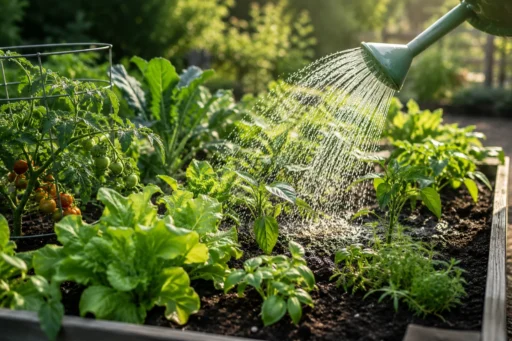
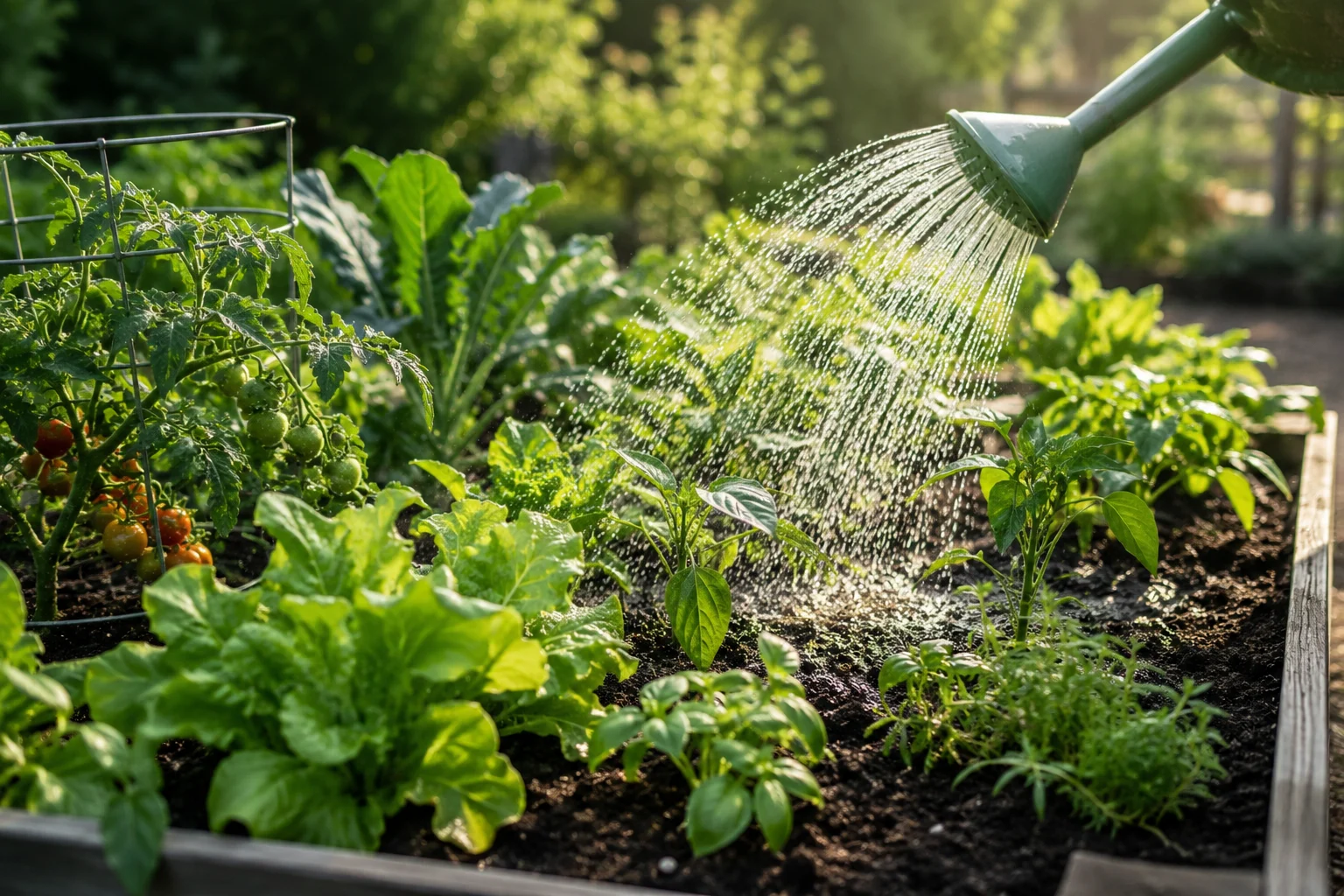
Imagine a gardener’s delight: plump trusses of tomatoes, crisp cucumbers, sweet red and green peppers spilling over the beds. More likely than not, the key to the entire operation is a relatively basic, yet often overlooked chore: watering. Getting this step down as an aspiring veggie grower is, without a doubt, the single best gardening skill that you can cultivate to yield both healthy, thriving plants and deter illness. How To Water a Vegetable Garden So to water your vegetable garden like an old hand, apply 1- to 1.5- inches of water directly to the roots every week, using fewer, longer watering periods rather than a daily sprinkling.
The “inch of water per week” guideline is useful as a basic starting point but should be adjusted according to your soil’s texture, seasonal temperature fluctuations, and a particular vegetable plant’s growing phase. Insufficient watering leads to stunted and withered plants, whereas overwatering suffocates root systems and predisposes them to damaging fungal disease. Achieving a proper balance requires a working knowledge of moisture’s flow in the soil and plants’ respective consumption.
At Solera Gardens, we focus on giving home gardeners science-based and actionable tips to ensure horticulture success year after year. Follow along for this read, and you’ll learn the inner-workings of the most fundamental horticultural aspect, recognize symptoms of overwatering, and adapt a watering strategy for your property.
How often should you water a vegetable garden?
Your watering schedule is mostly determined by your soil type and climate. The key to knowing how to water vegetables and the rest of your produce is responding to the needs of the soil in the present, not just on a schedule. If you have clay soil, it will absorb a lot of water, which it can’t give off as quickly as sandy soils can, so you need to give more of a soaking at one time. Sandy soils will need to be watered much more often, but less time at each application.
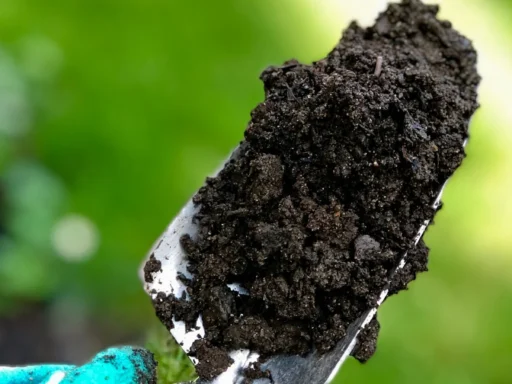
Figuring out how often to water is simple once you understand the soil profile: take a handful of moist soil from your garden and squeeze it into a ball. If it holds into a firm, smooth ball, it’s clay. If it’s instantly gritty and falls apart, it’s sand. Loamy, well-draining soil that is perfect for most plants, will hold together briefly before it’s easily cracked with a fingertip.
| Soil Type | Water Retention Level | Typical Weekly Watering Frequency | Recommended Application Style |
| Sandy Soil | Very Low | 2 to 3 times per week | Frequent, light watering to prevent deep drainage losses |
| Loam Soil | Balanced / Ideal | 1 to 2 times per week | Deep, slow watering to encourage extensive root growth |
| Clay Soil | Very High | Once every 7 to 10 days | Slow, cyclical applications to prevent surface runoff |
When first creating your garden beds, understanding your soil texture is the first and foremost principle. Knowing how to effectively build and amendment your soil will dictate how successful your gardening season will be! If you want to learn exactly how to begin growing from the ground up, check out this How to Start a Garden From Scratch.
How to Water a Vegetable Garden: Choosing the Best Irrigation Method
Let’s explore the ins and outs of watering the vegetable patch. Whether to use overhead sprinklers, soaker hoses or drip systems might seem like an unimportant decision but your harvest might hang on your choice. You need to be applying water to the base of your plants, and never to water the air using overhead sprinklers. Watering the soil reduces your losses to evaporation and more importantly it’s important that you keep your plant leaves dry to guard them against disease.
Drip Irrigation Systems
Drip Irrigation Drip irrigation is probably the “best-of-all-worlds” option for growing vegetables in your yard. It relies on plastic tubing and small emitters to distribute water slowly, one drop at a time, at the soil surface next to every vegetable plant. The slow watering also makes sure the moisture soaks down deeply into the ground and doesn’t run off. It prevents weed seeds from even being triggered, resulting in much less weeding.
Soaker Hoses
For a low-cost and effective substitute for personalized drip irrigation, consider soaker hoses. Porous hoses that gradually leak water out of the entire length of the hose once connected to a regular hose bib, soaker hoses are excellent for tightly packed rows of root crops, such as carrots (Daucus carota), or bush beans (Phaseolus vulgaris). Wrap the soaker hose closely around the plants’ bases and spread thick organic mulch over it for the most efficient water delivery.
Hand Watering with a Wand
Hand-watering Larger Beds Water from below is the simplest method for larger beds and small container beds; watering with a wand from above with a large, multi-pattern, gentle nozzle at the base of the plant is one of the easier watering methods. Move at a slow, steady pace over the surface to assure the water seeps down into the soil at the roots instead of the surface inch-1 2 inch.
Solera Gardens Tip:
- When you use any kind of hose for watering, let it run for a few minutes before aiming it at your plants if the hose has been resting in the sun all day. The water that’s sitting in your hose can get hotter than 130 degrees – and that’s enough to kill plant roots.
Critical Growth Stages: When Do Vegetables Need the Most Water?
Vegetable watering needs aren’t set in stone. The rate varies quite a bit over the life cycle of a plant. Knowledge of those differences helps you time your watering for a specific time in a plant’s life – flowering or fruit set.
Seed Germination and Seedling Development
Seeds, once germinated, need constant, consistent moisture to soften their seed coat to initiate a metabolism. If the tiny, germinating seedling is allowed to go dry even one time, the embryo will die. Water daily by way of the smallest mister nozzle on any garden hose for these tiny pockets. As seedlings emerge and then present their very first pair of “true leaves” then slowly change to a deeper watering that occurs less often, to spur these root systems downward.
Flowering and Fruit Development
When plants are producing fruits such as cucumbers (Cucumis sativus), peppers (Capsicum annuum), or tomatoes (Solanum lycopersicum), adequate watering during the start of flowering is most important to prevent blossoms from dropping and yielding a minimal harvest.
Similarly, plants whose fruits develop without adequate and consistent water will show rapid uneven growth in the wall of the fruit, a physical stress that in tomatoes has been shown to create fruit splitting and cracking and contribute to blossom end rot where the fruit bottom becomes black and leatherly. This condition actually results from a deficiency of calcium within the growing fruit, resulting from the plant’s ability to take up this nutrient being hampered by inconsistent soil moisture.
Root and Leaf Development
When it comes to leafy plants like lettuce and spinach (Spinacia oleracea and Lactuca sativa respectively) moisture is king in ensuring the produce is sweet and soft. If these grow hungry for water, not only does the lettuce or spinach produce chemical that is bitterly flavored and they bolt (flower and set seed) thus making the crop useless, it also results in less than appealing harvest for the carrots and parsnips (Pastinaca sativa) as they may grow as long, lean and straight root in the search for water with drier surface conditions and thus produce longer and thinner root.
How to Avoid Overwatering: The Signs of Excess Moisture
Often caused by overwatering (though it seems natural to help your vegetable plants), this is the quickest and easiest way to kill them. If your soil is consistently wet or waterlogged, all of the micro-air spaces that exist between the particles of your soil get flooded. Deprived of air, your plants’ roots suffocate and lose the ability to extract nutrients from the soil and begin to rot.
Recognizing the early signs of overwatering plants can help you intervene before permanent damage occurs:
- Wilting Despite Wet Soil: This If your plants look wilted and the soil they’re planted in is muddy, it probably means that the roots are rotting. Without roots that work, the plant can’t take in water and will wilt just like it’s thirsty!
- Yellowing Lower Leaves: Yellow or Falling Leaves Because the leaves won’t get the air they need, they begin to suffocate at the base of the plant and will start to turn yellow and fall off.
- Soft, Mushy Stems: Inspect the base of your plant close to the ground. If your stem feels mushy, boggy or slimy, fungus is on its way in.
- Fungal Growth and Gnats: Soil with a crust of green algae, small mushroom-like growths popping up around your plants, or the appearance of gnats and flies near your soil are definite signs you are over-watering frequently and for prolonged periods.
For overwatered plants: Discontinue watering and permit the top 2-3 inches of soil to dry before again resuming the cycle. Loosen the soil around your plant with a hand fork to get some oxygen into the root ball. In extreme cases you may need to remove your plants from the soil altogether so as to avoid the fungal invaders from creeping into adjacent healthy plants.
Practical Irrigation Guidelines and Best Practices
With a few garden watering practices in your week of garden chores, you’ll get the most from your water and your garden.
Water Early in the Morning
When Should you Water the Vegetable Garden “You absolutely must water your vegetable garden between 5 AM and 9 AM. That’s the hottest part of the day and evaporation rates are low then.” So virtually every drop of water you apply should reach the root of the plants, where it is needed most.
Also, whatever water may happen to splash onto leaves, is sure to dry off fairly quickly as the sun starts to rise. Preventing any moisture from sitting on your leaves all day is important to prevent fungal spores like powdery mildew from forming.
The Tuna Can Method for Calibration
If you have sprinkler heads you can’t really know when you reach an inch worth of water with those things, but you can figure out flow by watching what your sprinkler does in an empty tuna can.
- Place 3 or 4 clean, empty tuna cans in multiple locations on your vegetable beds.
- Start your sprinkler and sprinkler system on and set it to run for 30 minutes.
- After your sprinkler system automatically shuts off, measure the water depth in each can with a ruler.
- The average water depth being 0.5 inches you know that you must run for a total of 1 hour per week to provide your desired 1 inch.
Apply a Thick Layer of Mulch
Amongst water-conservation strategies available to us as gardeners, mulching is arguably the most efficient and easiest to use. Simply place a 2- to 3-inch layer of any organic matter like straw (free from weeds, seed heads or other undesirable organic material), wood chips or shredded leaf mold over the bare soil.
Mulch can suppress surface water evaporation by as much as 70 percent; it regulates soil temperature; prevents soil compaction after heavy rainfalls and discourages weeds from soaking up water and light that are essential to your plants. Organic mulch decomposes naturally in time and adds organic matter to your soil, which will allow it to retain water more effectively.
| Garden Layer | Recommended Practice | Benefit |
| Sun Exposure | Apply mulch around plants growing in full sun, especially during hot summer weather. Keep mulch 2–3 inches (5–8 cm) deep and leave a small gap around stems. | Protects the soil surface from direct sunlight and helps conserve moisture throughout the growing season. |
| Organic Mulch Layer | Use organic materials such as shredded bark, compost, straw, or leaf mulch in a 2–3 inch (5–8 cm) layer. | Can reduce soil moisture evaporation by up to 70%, suppress weeds, and gradually improve soil fertility as the mulch decomposes. |
| Moist Soil Layer | Maintain evenly moist, well-drained soil by watering deeply when the top 1–2 inches (2.5–5 cm) of soil begins to dry. | Stabilizes soil moisture and root-zone temperatures, reducing plant stress during periods of heat. |
| Deep Root System | Encourage deep root development through consistent, thorough watering rather than frequent shallow irrigation. | Promotes stronger, healthier roots that improve drought tolerance and support vigorous plant growth. |
| Best Practice | Combine deep watering with a 2–3 inch mulch layer throughout the growing season. | Creates a healthier growing environment by conserving water, moderating soil temperatures, and encouraging long-term root development. |
Solera Gardens Tip:
- Don’t pile mulch up against your plant stems; leave a 1-inch buffer zone of clear space around them, otherwise you’ll risk keeping bark wet and encouraging pests and disease.
Container Vegetable Gardening: Special Watering Rules
Container gardening on balconies, decks and patios is a great solution for growing your own vegetables, but it can make watering your plants tricky. Water gets pulled from container plants and drains away to the bottom and because containers lose water to warm air, it is important to be attentive.
At the height of summer it’s possible to water crops grown in containers such as patio tomatoes or eggplants (Solanum melongena) twice daily. You can use the finger test to work out if containers need watering. Insert the first finger into the potting mix to the second knuckle. If it feels dry at this depth you need to water.
Water containers until water runs freely from the bottom of the pot; this means you have saturated the entire ball of soil and that you are washing out fertilizer salts. Keep your containers from standing in water in a drainage saucer. They will then soon rot at the roots.
Frequently Asked Questions
How do I know if my vegetable garden needs water?
The best way to test is the finger test. Stick your finger 2-3 inches into the soil close to your plant. If your finger is dry there, you should water the garden. Also keep an eye out for signs of a plant’s lack of moisture; you may see your plants begin to have slightly dull looking leaves and wilt in the late afternoon.
Is it better to water vegetables every day or every other day?
Water your vegetable plants to a depth of six inches, one to two times per week. Shallow, frequent watering leads to shallow roots, which makes your vegetables more prone to the heat.
Can you water a vegetable garden in the heat of the day?
Yes, it is acceptable to water a vegetable garden during the hottest part of the day, as long as plants are severely wilting. The ideal time to water, however, is the morning – the priority is the garden not drying out. Concentrate water on the roots; a spray directed over the top would quickly evaporate and wet the foliage unnecessarily.
What are the symptoms of underwatering vs. overwatering?
Undewatered plants develop crisp, brown, and brittle leaves along with dried out soil, but will generally recover rapidly upon watering. Plants that are overwatered may result in floppy leaves that are also wilted and have a yellow lower surface along with damp soil and could create a musky or even a vinegary odor originating from the roots.
Does mulch help prevent overwatering in vegetable beds?
Even if you mulch a great job of keeping moisture around and in your plants will actually help prevent overwatering with the good thing is it can keep things wet for a while always check beneath your mulch for moisture and. Water accordingly
Should I water my vegetable garden after it rains?
Don’t water the garden after a rain unless it didn’t rain hard enough to reach the root zone. A light rain (less than 0.5 inches) requires supplemental watering so the roots receive adequate water.
Why are the leaves on my squash plants wilting during midday heat?
Large leaf plants such as pumpkins and squash will naturally droop in the hot sun in the afternoon. However, if they have revived themselves in the evening you may not have the need for more watering as they have enough moisture in the soil.
Conclusion
Proper watering technique is one of the most fundamental secrets to growing a happy and productive vegetable garden. Water in accordance to the needs of your soil and plants, utilize your water resources as efficiently as possible and water at the base of your plants, never overhead. Organic mulch is an additional key component that will help your vegetable garden maintain and retain moisture. Use these few basics and you’ll soon find yourself reaping what you sow and harvesting health and happiness.
When covering soil around plants, consult our garden mulching guide for materials and application advice.