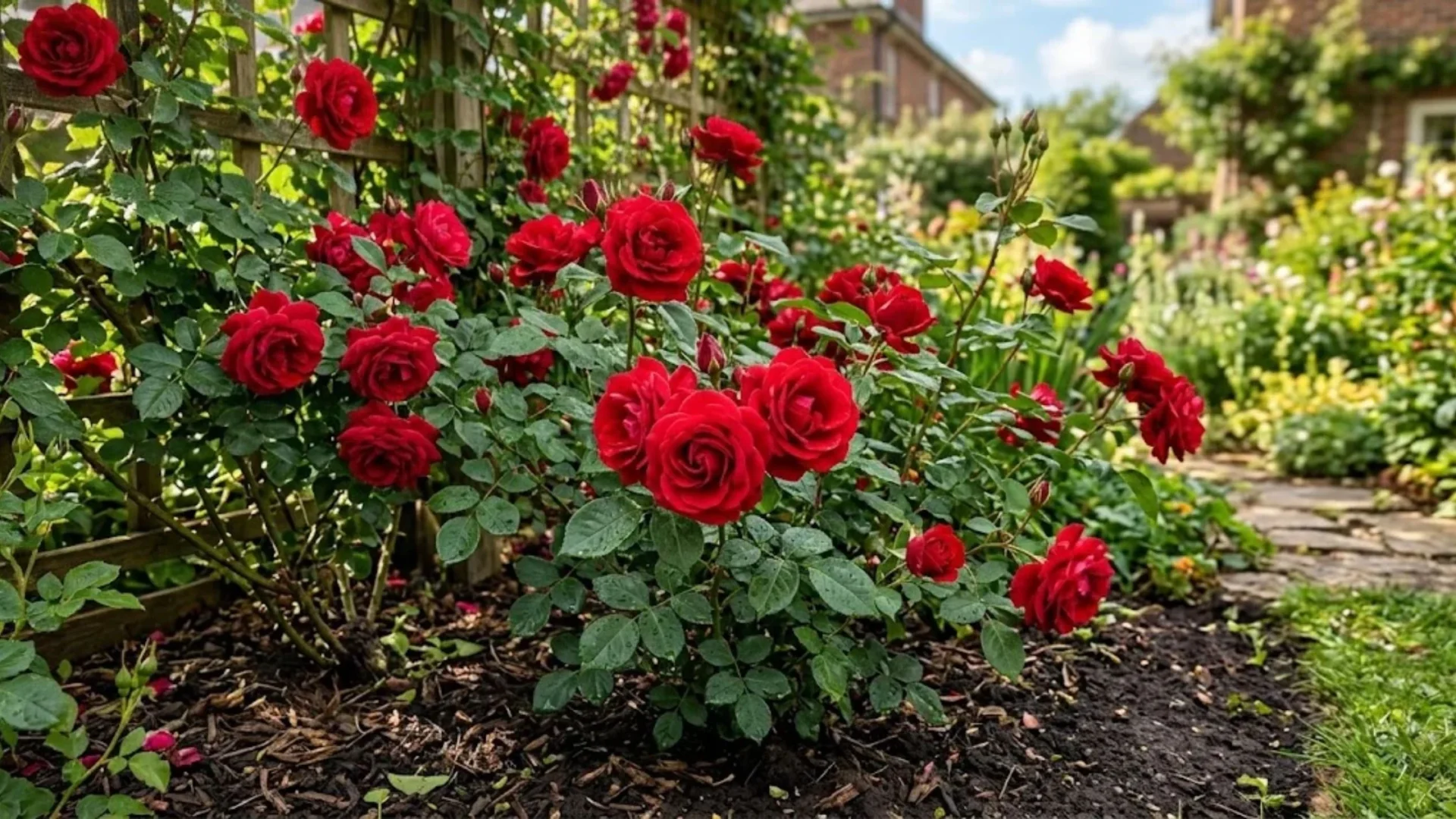
Red roses need at least 6 hours of direct sunlight a day, ideally with morning sun, and about 1 inch of water per week, delivered in one or two deep soakings rather than daily sprinkles. Those two numbers are the foundation for growing healthy rose plants, but your climate, soil and planting style change how you apply them. Here at Solera Garden, we’ll show you how to turn those baselines into a routine that fits your garden, including how to measure what your rose actually receives and how to spot when it’s getting too much or too little.
Quick answer: sunlight and water at a glance
| Need | Baseline | Adjust when |
|---|---|---|
| Direct sunlight | 6–8 hours a day | Give afternoon shade in very hot climates; aim for the full 8 in cool, cloudy climates |
| Best sun timing | Morning sun | Morning light dries dew from leaves and helps limit fungal disease |
| Water (established roses in the ground) | About 1 inch per week | More in heat, wind, sandy soil or during bloom; less in cool, rainy weather |
| Water (newly planted roses) | Keep soil evenly moist, often 2–3 deep waterings a week | Taper off as new growth appears over the first weeks |
| Water (roses in containers) | Check daily in warm weather | Pots can need water every day in summer heat |
How much sunlight do red roses need?
Sunlight for roses fuels flower production. A red rose that gets fewer than about 6 hours of direct sun usually produces fewer blooms, weaker canes and leggy growth as it stretches toward light. Disease pressure is often higher too, because the leaves stay damp for longer.
Why morning sun matters most
If you can only offer part of the day in full sun, choose a spot that gets morning sun. Early light dries overnight moisture off the leaves, which reduces the conditions that fungal diseases like black spot thrive in. Morning sun is also gentler than late-afternoon sun in hot weather.
Why red roses may need afternoon shade in hot climates
Dark red petals absorb more heat than pale ones. In regions with intense summer heat, strong afternoon sun can:
- Scorch petal edges until they look crisp or brown
- Fade or “blue” the color toward purple or magenta
- Shorten bloom life, so flowers open and drop quickly
If you garden somewhere hot, a site with full morning sun and light afternoon shade often gives you richer red color than all-day exposure. In cool or cloudy climates, the opposite is true: give your rose as much sun as possible.
How to check how much sun your spot really gets
Sun estimates are often wrong because trees, fences and buildings cast shadows that move through the day and change through the seasons. To check your site:
- Pick a clear day in the growing season.
- Note whether the planting spot is in direct sun or shade every hour from early morning to evening. You can take a phone photo of the spot each hour.
- Add up the hours of direct sun. Dappled light under trees doesn’t count as full sun.
If your total is under 6 hours, consider a different spot, a container you can move, or a red variety described as shade-tolerant. Our guide to 15 types of roses for your garden can help you compare rose classes before you choose.
What are the watering requirements for red roses?
Red rose watering requirements come down to one principle: water deeply and less often. Deep watering pushes roots down into cooler, more stable soil, which makes your rose more drought-tolerant. Frequent shallow watering keeps roots near the surface, where they dry out quickly.
How much water is “1 inch per week”?
“One inch of water” means enough to cover the root area to a depth of one inch. For a typical established rose with a root zone about 3 feet across, that works out to roughly 4–5 gallons a week:
- Root zone area: a 3-foot circle ≈ 7 square feet
- 1 inch of water over 1 square foot ≈ 0.6 gallons
- 7 × 0.6 ≈ 4.4 gallons per week
Use that as a starting point, then adjust for weather and soil. Rainfall counts toward the total, so a simple rain gauge helps you avoid watering when nature has already done it.
How to measure what your hose or sprinkler delivers
If you water with a sprinkler, place a few empty, straight-sided cans (tuna cans work well) around the bed. Run the sprinkler and time how long it takes to collect 1 inch of water. That’s your weekly run time, which you can split into one or two sessions.
If you hand-water, use a watering can or bucket of known size so you know how many gallons each rose receives.
How often should you water red roses?
| Situation | Typical frequency | What to watch |
|---|---|---|
| Newly planted (first few weeks) | 2–3 deep waterings a week | Soil should stay moist, not soggy |
| Established, mild weather | Once a week | Skip it if rain has supplied about 1 inch |
| Established, hot or windy weather | Twice a week or more | Wilting in the evening is a sign to increase |
| Sandy, fast-draining soil | More often, smaller amounts | Soil dries quickly a few inches down |
| Heavy clay soil | Less often | Water slowly so it soaks in rather than runs off |
| Containers | Check daily in warm weather | Water until it drains from the bottom |
The finger test: your most reliable guide
Before you water, push a finger 2–3 inches into the soil near the base of the rose. If it feels dry at that depth, water. If it still feels moist, wait. This simple check prevents most overwatering problems.
Best way and best time to water
- Water in the morning, so leaves that get splashed dry quickly in the sun.
- Water at the base, not over the foliage. Wet leaves, especially overnight, encourage fungal disease.
- Water slowly. A soaker hose or drip line lets water soak deep instead of running off.
- Mulch the bed with 2–3 inches of organic material to hold moisture and keep roots cooler. Keep mulch a few inches away from the canes. See how to mulch a garden properly for materials and common mistakes.
How sunlight and water work together
Sun and water aren’t separate settings. More sun means more growth and more water loss through the leaves, so a rose in full, hot sun needs more water than the same rose in a cooler, partly shaded spot. Soil links the two: well-drained soil rich in organic matter holds enough moisture between waterings without staying waterlogged. If your soil drains poorly or dries out too fast, fixing it will do more than changing your watering schedule. Our guide to testing and preparing your garden soil walks you through that process.
Signs your red rose is getting too much or too little
| Symptom | Likely cause | What to do |
|---|---|---|
| Leggy growth, few blooms, canes leaning one way | Too little sun | Move the rose or remove shade where possible |
| Scorched, crispy or purplish-faded petals | Too much heat or afternoon sun | Add afternoon shade; water consistently |
| Wilting in afternoon heat that recovers by morning | Normal heat stress | Check soil; water only if it’s dry below the surface |
| Wilting that doesn’t recover, dry crumbly soil | Underwatering | Water deeply and add mulch |
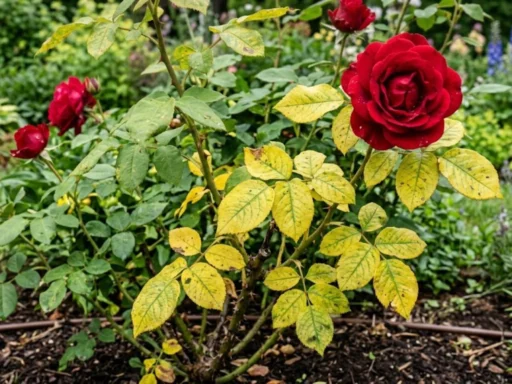
| Yellowing lower leaves, soggy soil | Overwatering or poor drainage | Let soil dry out; improve drainage |
| Black spots on leaves, frequent mildew | Leaves staying wet, low airflow or shade | Water at the base in the morning; improve sun and airflow |
Overwatering and underwatering can look surprisingly similar, since both cause wilting and yellow leaves. Always check the soil before you respond. For more on this, see our list of common beginner gardening mistakes and how to fix them.
Frequently asked questions
Can red roses grow in partial shade? They can survive with 4–6 hours of sun, but you’ll usually get fewer flowers and more disease. Choose a variety described as shade-tolerant if your garden can’t offer 6 hours.
Should you water roses every day? Not roses in the ground, except during the first days after planting or an extreme heat wave. Daily shallow watering encourages weak, shallow roots. Containers are the exception and may need daily water in summer.
Do red roses need less water in winter? Yes. Dormant roses use far less water. In dry winter climates, water occasionally so the roots don’t dry out completely, but don’t water frozen ground.
Does rainwater count toward the 1 inch per week? Yes. Measure rainfall with a gauge and water only to make up the difference.
Your next step
This week, track how many hours of direct sun your rose gets and do the finger test before each watering. Those two checks tell you more than any fixed schedule. Then set your routine: deep watering once or twice a week, at the base, in the morning, with mulch to hold the moisture in. For the rest of the care routine, including feeding, pruning and keeping blooms deep red, read our full guide on how to grow red roses at home.